
Key Takeaways
- The CM was safely recovered off Sriharikota, confirming the abort system works as intended.
- All telemetry data were good, showing no anomalies in the Crew Escape System and recovery sequence.
- The test validates a critical step toward India’s first manned spaceflight under the Gaganyaan programme.
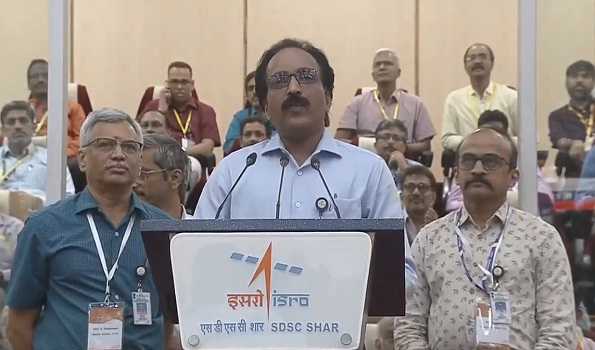
Chennai: Hours after successfully accomplishing the launch of first unmanned developmental test flight TV-D1 to demonstrate the Crew Escape System as part of Gaganyaan programme, ISRO Chairman S Somnath on Saturday said the crew module, has been successfully recovered after it splashed down into the sea and all the datas in it are good.
He said the Crew Module was successfully recovered from the sea and it was brought to the Chennai Port.
All data in it looks very good and there was no anomaly, he said. The entire flight sequence — from the test rocket’s lift off from the First Launch Pad to the crew module touchdown at the sea with deployment of parachutes – took about nine minutes.
This flight test marked a major milestone in the overall Gaganyaan programme–which will be India’s first manned mission to space–and was aimed at defining the in-flight abort demonstration of Crew Escape System (CES) at Mach Number 1.2 with the newly developed Test Vehicle followed by Crew Module Separation and Recovery.
The objective of the mission is Flight demonstration and evaluation of Test Vehicle sub systems, Crew Escape System including various separation systems and Crew Module characteristics & deceleration systems demonstration at higher altitude and its recovery, ISRO said.

The 35 m tall Liquid Propelled Single Stage Test Vehicle, weighing about 44 ton, used a modified Vikas engine with 4,520 kg Crew Module (CM)– a single walled unpressurised aluminium structure– and CES mounted at its fore end.
“The entire flight sequence, right from lift off to the crew module touchdown at sea about 10 km from Sriharikota, with the deployment of parachutes, took 531 seconds as planned”, ISRO said.
About 60 seconds after the lift off, the test vehicle — crew escape system got separated at an altitude of 11.7 km and another 30 seconds later, the CM-CES too got separated at an altitude of 16.7 km.
Subsequently, the abort sequence was executed autonomously commencing with the separation of CES and deployment of series of parachutes, finally culminating in the safe touchdown of the CM in the sea, about 10 km from the coast of Sriharikota, at a velocity of 8.5 m/s.
Later, it was safely recovered by the Navy and brought to the Chennai Port.