

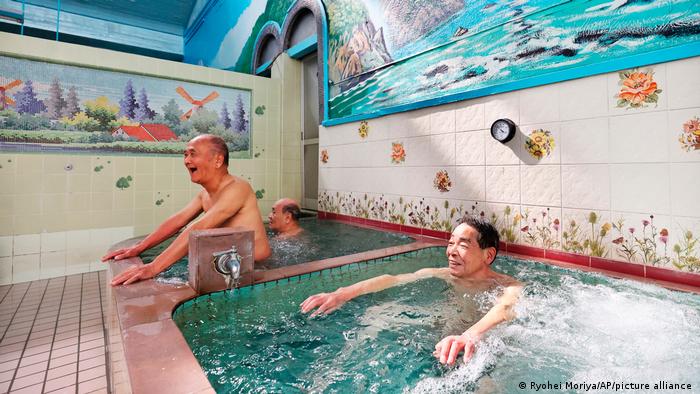

Japan has always been known for its traditions and culture, which includes the culture of bathing in public baths, which are called sento. Till the 1960s, most Japanese houses did not have a bathroom and people assembled to take baths in nearby public bath-houses. But now, with the rising costs and most people developing the habit of bathing in their own houses, sento culture is reducing.
Kenta Orihara, Director, Safety and Living section, Tokyo local government, has said that this culture can be saved only by helping the sento operators. “These bath-houses are our heritage and culture”, he added. The pandemic worsened their condition, following which, the arrangement of fuel and electricity became difficult due to rising prices. As per Orihara, earlier, only a few homes had bathrooms and therefore, people went to the local sento. This was also a place for people to meet and socialize, which helped them take a stock of what was happening in the neighbourhood.

In 1968, Tokyo’s population was 2.2 crore and a total of 2687 sento baths were registered. In last April, this number was found out to have dwindled to 476 only. In order to protect the sento culture, the government has introduced ‘Tokyo 1010’ under a coupon scheme, after downloading which, a QR code is received, with which, a sento can be used for free. Usually, a bath in a sento at Tokyo costs 282 rupees.
The sento chambers made out of wood display paintings of World War II and the temperature usually is 42-degree Celsius. It is believed by the people that spending a long time in hot water relieves the arteries and improves blood circulation.