


Orlando: NASA hopes it can maximize low Earth orbit (LEO) technology testing on the International Space Station (ISS) including by overlapping for a couple years with programs on new commercial platforms, the agency’s ISS Program Chief Scientist Kirt Costello told Sputnik.
Last year, NASA announced the extension of its presence at the America side of ISS through 2030. In late February, the Scientific and Technical Council of Roscosmos approved the decision to extend the operation of the Russian segment of the ISS through 2028.
“The ISS serves as a great platform in LEO [lower Orbit economy] to test out technologies that we need to make sure we’re going to operate either on transit to moon or Mars,” Costello said. “We are planning to continue to operate up till 2030 [ISS]. But we’re also trying to make space for commercial LEO developments. So a new space station platform or multiple space station platforms in low Earth orbit, and we hope to have an overlap between those programs and the ISS, so about two or so years of overlap is what we’re hoping for.”
NASA, he added, is getting ready for Artemis II and III missions, where the ISS is useful, he added. NASA is now officially targeting the Moon with the Artemis III mission as soon as 2025 and it is also under presidential orders to land humans on Mars by 2033.

With respect to the upcoming launch of SpaceX’s Crew-6, Costello said it illustrates the benefits of the US continuing space cooperation with Russia and other nations and making room for commercial partners.
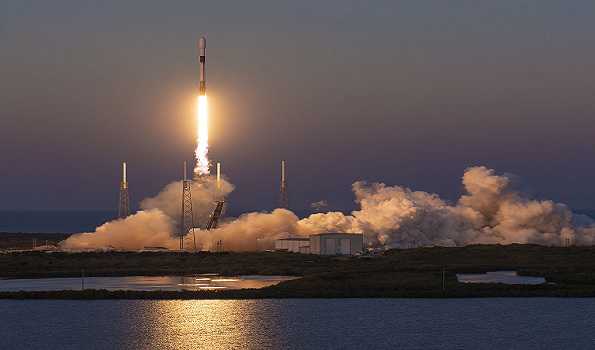
The SpaceX Crew-6 mission is now scheduled for takeoff on March 2 after two previous launches were canceled this week. Roscosmos cosmonaut Andrey Fedyaev will join United Arab Emirates astronaut Sultan Alneyadi and NASA astronauts Stephen Bowen and Warren Hoburg on the mission to the ISS for a duration of six months.
The launch initially scheduled to take off on February 26, then it was moved to February 27 from NASA’s Kennedy Space Center in Florida to the ISS. Two minutes before the start, however, the take-off was called off because of technical issues. The launch time is set for 12:34 a.m. EST (5:34 a.m. GMT) on Thursday.