
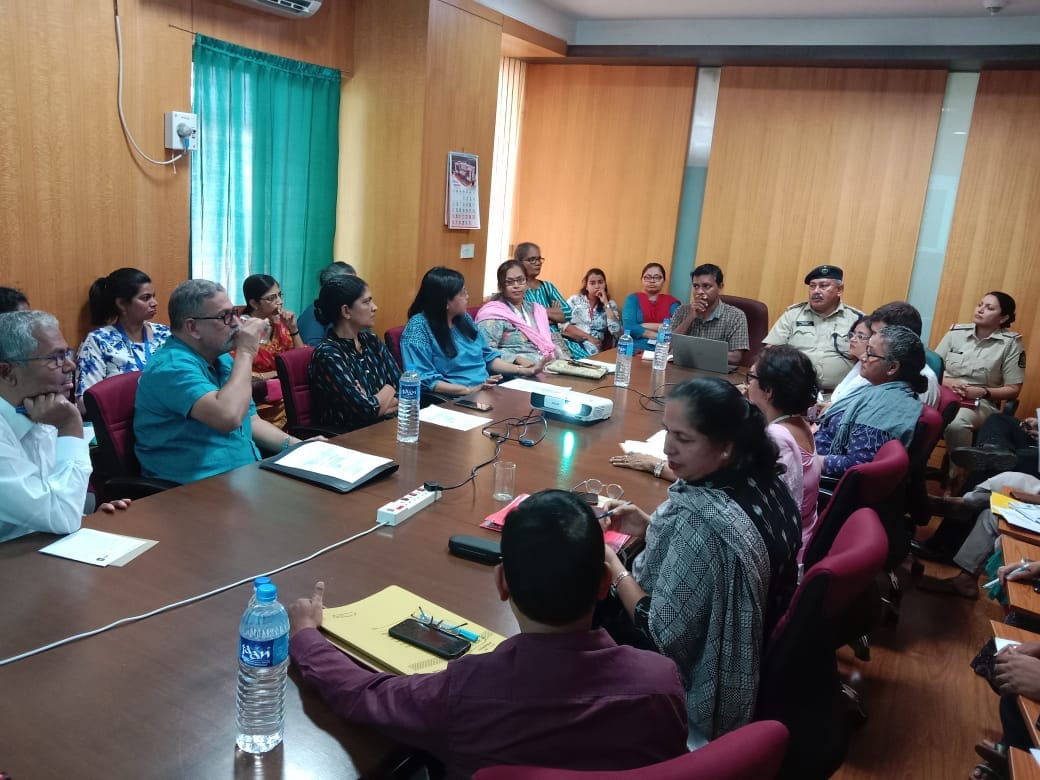

The Goa State Commission for Protection of Child Rights (Goa SCPCR) had a joint meeting with stakeholders on 3rd March 2023, at the Conference Hall, Secretariat, on the “Protocols of Medico Legal Care for POCSO Victims”. The meeting, chaired by Peter F. Borges, Honourable Chairperson, Goa SCPCR, focused on identifying gaps in current practices which need to be plugged through feedback received from various stakeholders and further improvements can be affected in them.
The meeting was attended by Members of the GSCPCR, Superintendent of Police, Women & Child, Directors of Prosecution, Pediatrics, Forensic Medicine, Obstetrics and Gynecology, Forensic Science Laboratory, Associate Professor, Forensic Medicine, Hospicio, Child Welfare Committees (North Goa & South Goa), Victim Assistance Units and other stakeholders.
The Chairperson, while addressing, highlighted the dual role that all health providers have to play to respond to sexual violence, i.e., providing therapeutic care to survivors, including addressing their sexual, reproductive, and mental health problems—and also play a critical role in the response of the criminal. justice system, by collecting forensic evidence for use during any criminal investigation and prosecution.
He appealed to the stakeholders to ensure that all forensic procedures and criminal justice processes respect survivors’ physical and mental integrity and dignity, calling for a ‘survivor-centered approach’, which prioritizes the rights, choices and needs of the victim, enhanced by well-coordinated responses.

The following actions were recommended as an outcome of the meeting: Standard Operating Procedures to be formulated by Directorate of Health Services to establish effective cooperation and coordination of medico-legal services to victims of sexual violence between health care providers, forensic medicine, forensic lab services, police, and the legal system, including lawyers and judges. This will help in providing services that is efficient, timely and of good quality, that encourages victims to access services and report cases, and that is more effective in holding offenders accountable.
Second, Capacity building of professionals involved in the provision of medico-legal services and skills and knowledge related to their function within the child protection system, in addition to other competencies that all those working with victims of sexual violence should possess.
Thirdly, minimum requirements for the health facilities offering clinical management of sexual assault and proper mechanisms for documenting transfer of specimens (chain of custody): what, to whom and when transfer occurred, including storage of specimens.