

Chennai: Indian Institute of Technology Madras (IIT-M) Researchers have developed a three-dimensional (3D) paper-based portable pocket-friendly device to detect adulteration in milk within 30 seconds.
The test could be even performed at home. It can detect multiple substances commonly used as adulterating agents including Urea, detergents, soap, starch, hydrogen peroxide, sodium- hydrogen-carbonate and salt, among others, an IIT-M release said today.
Unlike conventional laboratory-based methods to test the purity of milk, which are both expensive and time-consuming, this new technology is affordable and could also be used to test other liquids such as water, fresh juices and milkshakes for traces of adulteration.
Only a millilitre of any liquid would be as a sample to test for adulterants, it said.
The research was led by Dr. Pallab Sinha Mahapatra, Associate Professor, Department of Mechanical Engineering, IIT-M along with research scholars Mr. Subhashis Patari and Dr. Priyankan Datta.
Dr. Pallab Sinha Mahapatra said the 3D paper-based microfluidic device is made up of a top and bottom cover and a sandwich structure middle layer.

This 3D design works well for transporting denser liquids at a consistent speed. The paper is treated with reagents and is let to dry. Both paper layers are adhered to both sides of the support after drying, and the covers adhere with double-sided tape, he said, adding, Whatman filter paper grade 4 is used in this design, which aids liquid flow and allows
for the storage of more reagents.
He said all the reagents are dissolved either in distilled water or in ethanol, depending upon their solubility. Using colorimetric detection techniques, all the adulterants are detected in different liquid samples.
The reagent only reacts with the specific adulterant in this method and not with any milk ingredients. Hence, this analytical tool can help to monitor liquid food safety and thereby increases the traceability of tainted milk in remote areas of developing countries, he added.
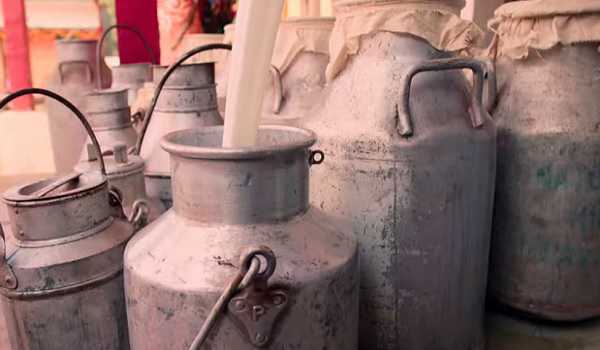
Milk is one of the most vital foods important to lead a healthy lifestyle and yet is the most adulterated food item in the world.
Pointing out that milk adulteration was a growing menace, especially in developing countries like India, Pakistan, China, and Brazil, the release said consumption of adulterated milk could cause medical complications such as kidney problems, infant death, gastrointestinal complications, diarrhoea, and even cancer.