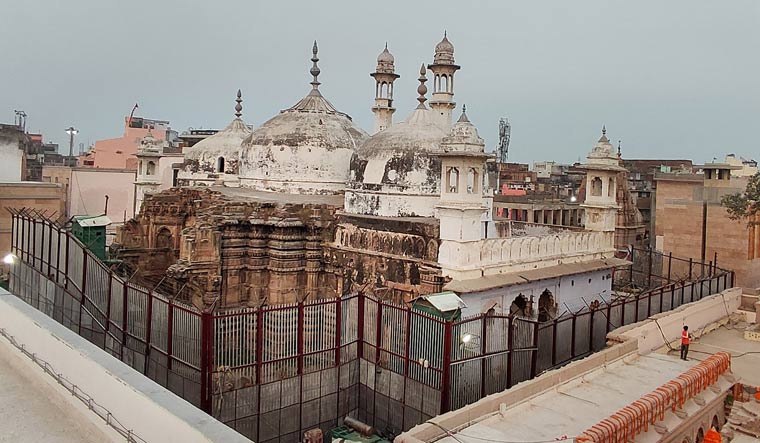

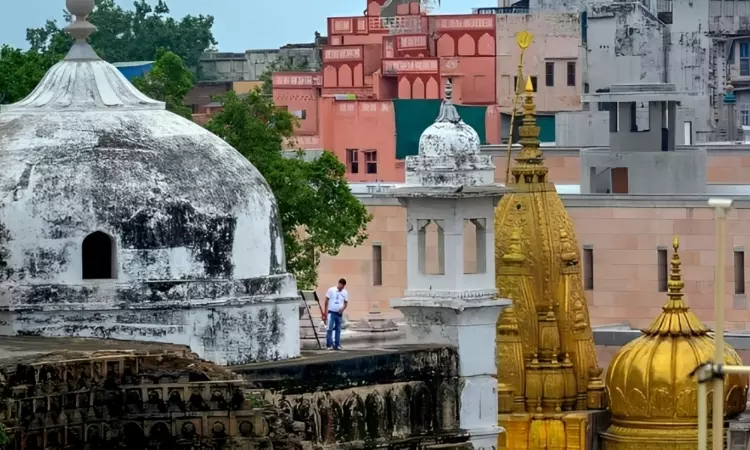

New Delhi: The Archaeological Survey of India’s (ASI) report about the Gyanvapi Mosque in Varanasi claims that there existed a large Hindu temple before the construction of the existing structure (the Gyanvapi Mosque).
The report says that based on the study of architectural remains, exposed features, artifacts, inscriptions, art, and sculptures, it can be said that there existed a Hindu temple prior to the construction of the existing structure where the Gyanvapi Mosque stands today.
According to the ASI Report, 34 inscriptions were discovered during its survey, with a significant number found on the stones of the pre-existing Hindu temple. These stones were subsequently reused in the construction or repair of the current structure.
Sculptures of Hindu deities and carved architectural structures were found buried under dumped soil in one of the cellars. “Reuse of earlier inscriptions in the structure suggests that the earlier structures were destroyed and their parts were reused in the construction or repair of the existing structure, the ASI report said.
The Gyanvapi Mosque, abutting the Kashi Vishwanath temple, is located in Varanasi, Uttar Pradesh, India. It is said to have been constructed by Aurangzeb in 1669 upon the demolition of an older Shiva temple.
On July 21, 2023, Varanasi District Judge directed the Director of the Archaeological Survey of India (ASI) to conduct a “scientific survey” of the Gyanvapi mosque premises and directed not to touch the area that was sealed earlier (wuzukhana) to find out if the same has been built over a pre-existing structure of a Hindu temple.

This order of the District Judge was upheld by the Allahabad High Court on August 3, 2023.
On August 4, a petition was filed by the Anjuman Intezamia Masjid Committee (which manages the Gyanvapi Mosque at Varanasi) challenging the Allahabad High Court order (of August 3), which permitted the ASI survey.
The Supreme Court, on the same day, August 4, 2023, though refused to stay the ASI survey, said that the ‘wuzukhana’ area where a shivling was claimed to have been found last year will not be damaged.
Taking on record an undertaking made on behalf of the ASI that no excavation would be done at the site and no damage would be caused to the structure, the Supreme Court allowed the survey to take place.
The ASI, after completing the survey, submitted its report to the District Court, which was made public today.
Copies of the ASI Survey report was handed over to all the parties in the case.