

Key Takeaways
- India signs the Biodiversity Beyond National Jurisdiction Agreement at the UN, marking a significant step towards marine biodiversity conservation.
- The BBNJ Agreement aims to address the growing concerns over the long-term protection of marine biodiversity in the high seas.
- The BBNJ Agreement will allow India to enhance its strategic presence in areas beyond the EEZ (Exclusive Economic Zone).
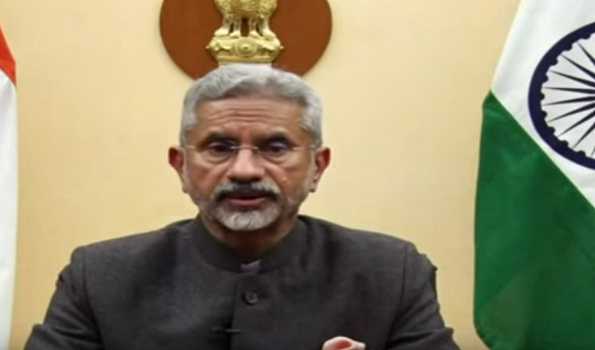
New York/New Delhi: India signed the Biodiversity Beyond National Jurisdiction (BBNJ) Agreement at the UN Headquarters, which EAM S Jaishankar described as an important step towards ensuring that the oceans remain healthy and resilient.
In a post on X, the EAM said: “Signed the Biodiversity Beyond National Jurisdiction (BBNJ) Agreement today the @UN HQ.
“India is proud to join the BBNJ Agreement, an important step towards ensuring that our oceans remain healthy and resilient.”
In July, the Union Cabinet, chaired by Prime Minister Narendra Modi, had given approval for India to sign the Biodiversity Beyond National Jurisdiction (BBNJ) Agreement. The Ministry of Earth Sciences will spearhead the country’s implementation of the BBNJ Agreement.
The BBNJ Agreement, or the ‘High Seas Treaty’, is an international treaty under the United Nations Convention on the Law of the Sea (UNCLOS). It marks a significant step towards the conservation and sustainable utilisation of marine biological diversity in areas beyond national jurisdiction in the ‘High Seas’, areas beyond national jurisdiction in the global common oceans open to all for internationally lawful purposes such as navigation, overflight, laying submarine cables and pipelines, etc.

The BBNJ Agreement aims to address the growing concerns over the long-term protection of marine biodiversity in the high seas. It sets precise mechanisms for the sustainable use of marine biological diversity through international cooperation and coordination, promoting an inclusive, integrated, ecosystem-centric approach based on the precautionary principle and traditional knowledge.
Parties cannot claim or exercise sovereign rights over marine resources derived from the high seas. It follows an inclusive, integrated, ecosystem-centric approach based on the precautionary principle and promotes using traditional knowledge and the best available scientific knowledge.
It helps minimise impacts on the marine environment through area-based management tools and establishes rules for conducting environmental impact assessments. It would also contribute to achieving several SDGs, particularly SDG14 (Life Below Water).
The BBNJ Agreement will allow India to enhance its strategic presence in areas beyond the EEZ (Exclusive Economic Zone). It will help strengthen marine conservation efforts and collaborations, open newer avenues for scientific research and development, provide access to samples, sequences and information, capacity building and technology transfer.