







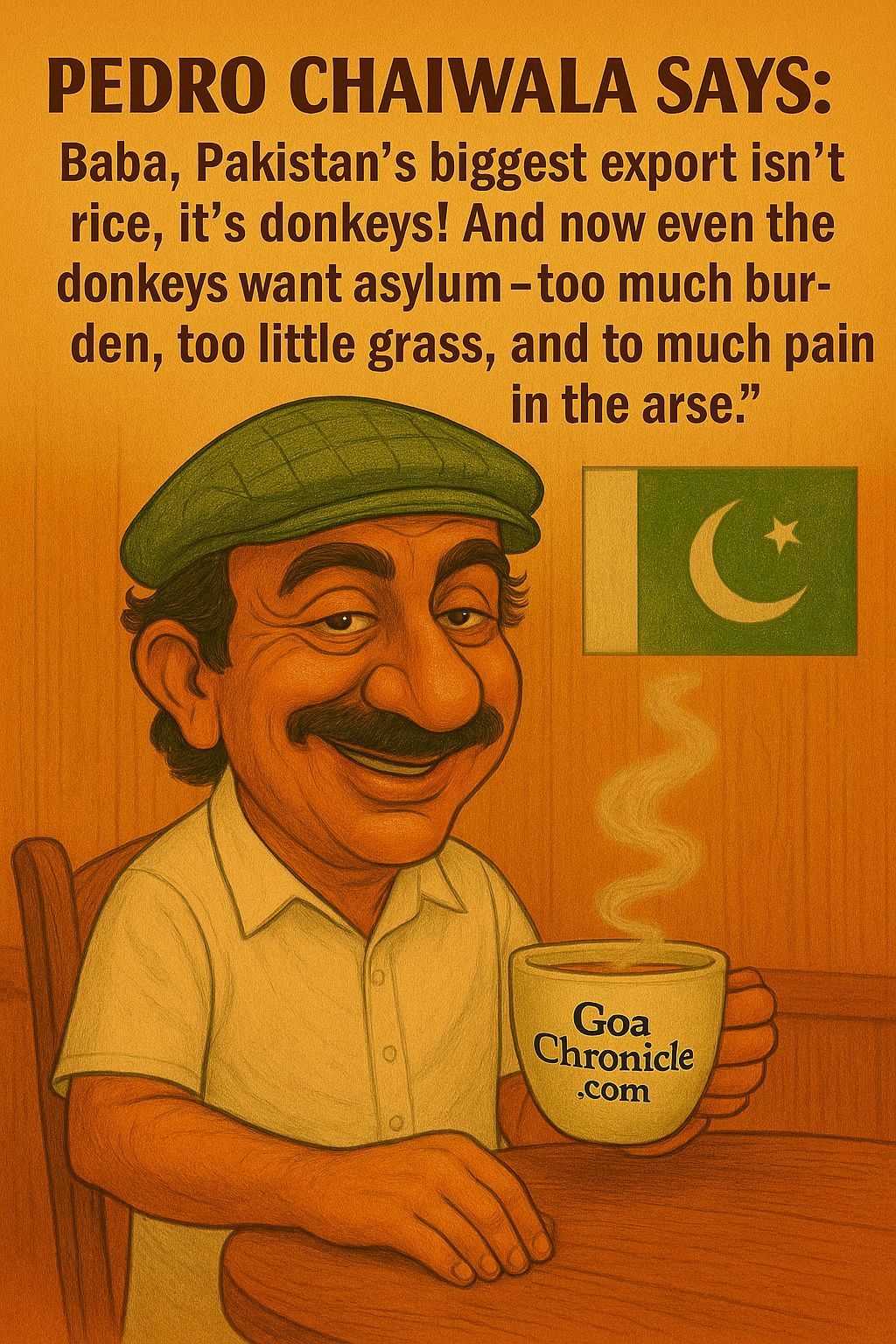

The International Monetary Fund (IMF), in what can only be seen as a diplomatic snub wrapped in bureaucratic language, has chosen to ignore India’s serious concerns and greenlighted a $1 billion bailout package for Pakistan. With the stroke of a pen and a carefully worded justification, the IMF has signaled to the world that economic accountability can take a backseat when geopolitics plays front and centre.
Let’s call it what it is — the IMF has cocked a snook at India.
The $1 billion disbursement, part of Pakistan’s Extended Fund Facility (EFF), comes at a time when the country teeters dangerously close to economic collapse. Yet, rather than demanding visible and verifiable systemic reforms or ensuring the end-use of funds contributes to sustainable development, the IMF has instead taken Islamabad’s word and rubber-stamped the cheque.
Julie Kozack, Director of the IMF’s Communications Department, tried her best to package the decision in diplomatic jargon: “Pakistan met all the targets. The Board found progress on reforms… hence the approval.”
Let us pause and unpack that for a moment.
Which “targets” did Pakistan meet? Is it the inflation that has crippled the common man? The economic mismanagement that has turned basic necessities into luxuries for its people? Or perhaps, it’s the military’s ever-tightening grip over civilian affairs, including the economy itself, that impressed the IMF’s Executive Board.
India had raised strong objections to the IMF’s financial assistance to Pakistan, especially given credible concerns that such bailouts indirectly embolden a state that has historically used international aid as a lifeline for its military-industrial complex. When a country has a proven record of using global funds to maintain strategic parity with its democratic neighbor through proxy conflicts and nuclear brinkmanship, it is not just fair — but responsible — to question the wisdom behind further funding.
But the IMF, in its ivory tower of financial dogma, has shown that it prefers selective amnesia over geopolitical responsibility.

Make no mistake, this isn’t about India playing the regional big brother. This is about accountability, transparency, and the repeated abuse of global financial systems by a state that refuses to put its house in order. Pakistan’s economic model is broken — built not on productivity, innovation, or reform, but on bailouts, borrowed time, and borrowed money.
And the IMF, rather than being a steward of fiscal prudence, is now complicit in enabling this unsustainable pattern.
This decision also raises fundamental questions about the credibility and neutrality of global financial institutions. One must wonder: Would the same leeway be granted to India if it were in Pakistan’s shoes? Would the IMF be this quick to disburse funds if India, instead of initiating bold reforms, maintained economic opacity and flirted with default?
Pakistan’s so-called “progress” on reforms is not just laughable — it’s tragicomic. With a caretaker government that barely holds legitimacy and an economic plan that hinges more on international charity than indigenous productivity, Pakistan has once again gamed the system. And the IMF, by validating this con job, has lost another shred of moral high ground.
Let’s be clear — this isn’t just about economics. It’s about security. It’s about regional stability. It’s about a nation that shelters terrorists, suppresses dissent, persecutes minorities, and yet walks away with billion-dollar packages under the pretext of economic rehabilitation.
India, for its part, must take this decision not as a defeat, but as a reminder. A reminder that the world order, though changing, still favours the art of diplomatic deception over honest dialogue. It must now amplify its voice in forums such as the G20, BRICS, and the UN to ensure that institutions like the IMF are held to account not just for where they send the money — but for what the money ends up financing.
In the end, this $1 billion is not just a cheque to Pakistan — it’s an endorsement. An endorsement of recklessness, of strategic irresponsibility, and of a global system that rewards the squeaky wheel rather than the principled one.
The IMF may have played its hand. Now it’s India’s move. And this time, New Delhi must ensure that the rules of the game are rewritten — not just for its own sake, but for every democracy that plays fair and yet gets shortchanged on the global stage.