

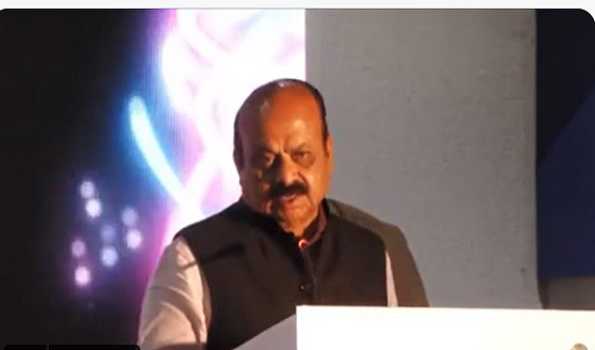

Bengaluru: Chief Minister Basavaraj Bommai has said that the capital expenditure in Karnataka in the year 2023-24 is 30.4 percent higher than 2022-23 and the state is projected to witness rapid and all-inclusive growth over the medium term (2023-2027) due to path-breaking policies.
He stated this while presenting the 2023-24 state budget in the assembly yesterday. Bommai also said the capital expenditure in 2023-24 in Karnataka is 30.4 percent higher than the year 2022-23.
“Steep increase in capital expenditure in BE 2023-24 without any curtailment in ongoing welfare programmes is expected to further boost the economic progress of the state by attracting greater investment and generating higher employment, which in turn would result in equitable and balanced economic development,” he said.
Bommai said that the state stands fourth place among all states, contributing to nearly 5.8 percent of the total capital outlay by all the states put together.
It is an established fact that capital expenditure has a high multiplier effect, which increases the productive capacity of the economy, and ensures fuller absorption of unutilized labour. It also has an effect on other natural resources and is key contributor to rapid economic growth.

Bommai also said that the state has rapidly recovered from the adverse impact of CoVID-19 pandemic and shown robust improvement in fiscal position.
Further from FY 2023-24, the state is poised to become Revenue Surplus state along with complying with all the parameters of the Karnataka Fiscal Responsibility Act, 2002, he said.
“Notwithstanding the global uncertainties and other macroeconomic factors, due to execution of several path-breaking policies along with reinforced emphasis on capital investment, Karnataka is projected to witness rapid and all-inclusive growth over the medium term (2023-2027),” Bommai said.
The path-breaking policies include new employment policy, revamped industrial and textile policies, startup policy, aerospace and defence policy, special investment regions, and improvement in ease-of-doing business.