
Key Takeaways
- Pakistan has struck terrorist hideouts in Iran’s Siestan-o-Balochistan province, escalating tensions between the two nations.
- The strikes have downgraded diplomatic relations between Pakistan and Iran, with Pakistan recalling its ambassador from Iran and expelling the Iranian envoy in Islamabad.
- Iran’s Revolutionary Guard (IRGC) is suspected of being responsible for the breach of Pakistan’s airspace.
Islamabad: Pakistan on Thursday struck terrorist hideouts in Iran’s Siestan-o-Balochistan province, less than 48 hours after Iran violated its airspace.
According to a statement by the Ministry of Foreign Affairs, Pakistan undertook a series of highly coordinated and specifically targeted precision military strikes and killed a number of terrorists during the Intelligence-based operation codenamed ‘Marg Bar Sarmachar’.
“Over the last several years, in our engagements with Iran, Pakistan has consistently shared its serious concerns about the safe havens and sanctuaries enjoyed by Pakistani origin terrorists calling themselves Sarmachars on the ungoverned spaces inside Iran.
Pakistan also shared multiple dossiers with concrete evidence of the presence and activities of these terrorists,” the statement on Thursday said.
A day earlier, Pakistan had downgraded its diplomatic relations with Iran, recalling its ambassador from Tehran and expelling the Iranian envoy in Islamabad, in the wake of Iranian missile and drone strikes in Panjgur, Balochistan, according to Dawn news reports.
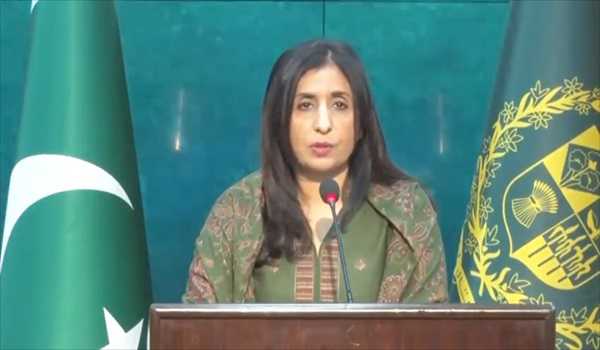
Foreign Office spokesperson Mumtaz Zahra Baloch had said Pakistan reserved the right to retaliate against the attack, which she described as an “illegal act” and without any justification.

In both statements issued after the attack, Baloch warned Iran of the consequences of its action.
“Pakistan has decided to recall its ambassador from Iran and that the Iranian ambassador to Pakistan who is currently visiting Iran may not return for the time being,” she had said.
Besides the diplomatic response, a senior official, in a telephone conversation with Dawn, did not rule out a military response, saying that “our response was still evolving”.
Similarly, high-level bilateral visits, both ongoing as well as planned ones, were cancelled. Iranian charge d’affaires in Islamabad was also summoned to FO to convey Pakistan’s condemnation of the incident.
The Iranian strikes were perceived by Pakistan as not only a breach of sovereignty, but also a potential catalyst for broader regional conflict, which is particularly alarming in the current tense regional climate.
Diplomatic sources had also suggested that Iran’s Revolutionary Guard (IRGC) was responsible for the breach, and that despite the existence of multiple channels of communication between the two countries, the operation was carried out contrary to international law, which clearly violated Pakistan’s airspace.