
Key Takeaways
- The Supreme Court denied bail to Manish Sisodia, intensifying legal pressure on the AAP leader.
- Evidence suggests a transfer of around Rs 338 crore linked to the Delhi liquor policy scam.
- The trial is slated to conclude in six to eight months, after which Sisodia may seek bail again.
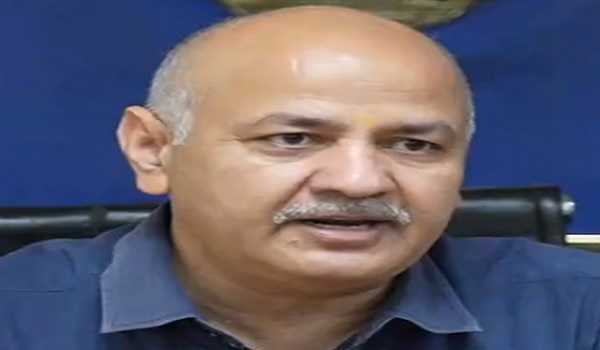
New Delhi: Supreme Court on Monday refused to grant bail to former Delhi Deputy Chief Minister of Delhi, Manish Sisodia, who is charged with money laundering in the liquor policy scam case.
The apex court verdict is a setback for the Aam Aadmi Party leader, who was arrested on February 26.
He faced several rounds of grilling for alleged corruption in the formulation and implementation of the now‑scrapped Delhi Excise Policy 2021‑22.
The decision underscores the seriousness of the accusations against the former deputy chief minister.
The top judiciary, however, directed that the trial be completed in six to eight months. If the trial proceeds slowly, Sisodia will be entitled to apply for bail again within three months.
A two-judge bench of the Supreme Court, headed by Justice Sanjiv Khanna and also comprising Justice S.V.N. Bhatti, had earlier reseeved its verdict on October 17.

“Legal questions have been answered in a limited way. In the analysis, there are certain aspects, which we said are doubtful. But one aspect, with regard to transfer of money, Rs 338 crores, is tentatively established. We have therefore dismissed the application for bail,” Justice Khanna said while reading out the judgement.
In March, the trial court had dismissed Sisodia’s bail plea saying he was prima facie the “architect” of the alleged scam and had played the “most important and vital role” in the criminal conspiracy related to alleged payment of advance kickbacks of nearly Rs 100 crore meant for him and his colleagues in the Delhi government.
In one of the hearings, Justice Khanna had asked the Enforcement Directorate (ED), which is probing the money laundering angle in the case, how an offence under the Prevention of Money Laundering Act (PMLA) would be made out in the absence of a bribery charge against the accused Sisodia.
The apex court had said that no offence under the PMLA could be made out unless proof was there to show that the former Delhi Deputy Chief Minister was actively connected with proceeds of crime.
“You have to establish a chain. The money has to flow from the liquor lobby to the person. We know it is difficult to establish the chain, but that is where your competence lies,” Justice Khanna had told the ED lawyer.