


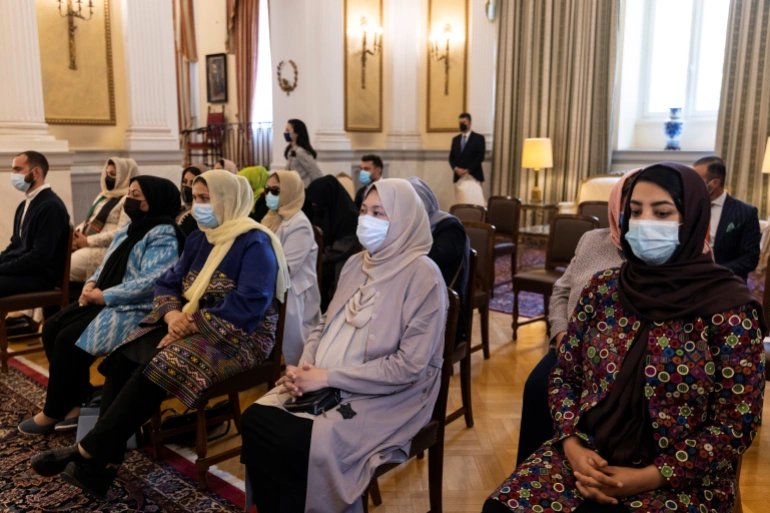

Taliban rule in Afghanistan is brutally crushing women’s rights in the country. In August last year, right after capturing Afghanistan, the Talban had imposed restrictions on women’s education, employment, and travel, and had started changing the laws to imprison women inside their homes. To show the world, they took the support of clerics to implement their laws, and then imposed a ban on the women’s government and private sector jobs. To stop the women, the Taliban security forces intimidated women, arrested them, and even kidnapped them.
Khadija Ahmadi, Afghanistan’s women rights worker, said that the Taliban has stopped women from practicing as judges and lawyers in the courts. Prior to the Taliban’s capture of the country, there were around 300 women judges in Afghanistan, and due to the Taliban government, these women had to flee the country.

As per Khadija, the Taliban’s ways are serious as far as women’s social condition and psychological wellbeing is concerned, and the regime wants to establish women as second-class citizens in the country. Particularly, it wants young men and boys to become supremacists and women as objects of use for them and their homes. Because of the restrictions, thousands of families have fled to neighbouring countries like Pakistan, Iran, and Turkey, along with their women.
Pakistan is at the top of the list of countries where a large number of Afghan refugees reached during the last months. Many Afghan students are now studying in Pakistan.