



Key Takeaways
- The US President has raised aluminum tariffs to 25% and ended exemptions on steel and aluminum.
- The tariffs are expected to lead to higher US steel and aluminum prices, harming downstream industries and manufacturing jobs.
- Some firms may benefit from the tariffs, but many more are expected to lose out.
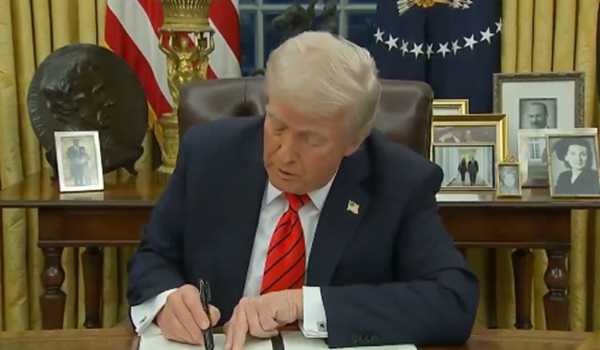
Washington: U.S. President Donald Trump on Monday signed proclamations to raise tariffs on aluminum from 10 percent to 25 percent and ended duty-free quotas, exemptions and exclusions for steel and aluminum tariffs.
“This is a big deal. This is the beginning of making America rich again,” Trump said when signing the proclamations in the Oval Office. “It’s time for our great industries to come back to America.”
The U.S. president added that there will be no exceptions for these tariffs.
While Trump claims that such measures will bring businesses and jobs back to the United States, economists said they would do the exact opposite.
“What this means is that U.S. steel and aluminum prices will be substantially higher than world prices for the foreseeable future … That spells harm for a large number of downstream industries that use steel and aluminum. Those downstream industries employ about 10 times as many workers as the steel and aluminum industries,” Gary Clyde Hufbauer, a nonresident senior fellow at the Peterson Institute for International Economics, told Xinhua.

In his first term, Trump imposed 25% tariffs on steel and 10% tariffs on aluminum imports, citing national security concerns. He later allowed certain trading partners, including Canada, Mexico, and Brazil, to receive duty-free quotas.
Under former President Joe Biden, the United States continued some tariff exemptions introduced under Trump and extended new quotas for the European Union, Britain and Japan.
A 2019 study published by the Federal Reserve Bank of New York showed that Trump’s 2018 widespread tariffs on steel and aluminum, as well as tariffs on Chinese goods, along with the countermeasures they triggered, led to a loss of manufacturing jobs in the United States.
“Obviously, some firms benefit, but a great many more lose out. I expect the same outcome, but worse, this time,” said Hufbauer.