


Key Takeaways
- The DMK’s misogyny is a wake-up call for women in Tamil Nadu to reject the party’s patriarchal mindset and demand equality and social justice.
- Women in Tamil Nadu are not helpless victims; they are among the most politically aware, vocal, and active segments of Indian society.
- The DMK’s silence on women’s issues and its protection of misogynistic leaders sends a clear message: women matter only as long as they toe the party line.
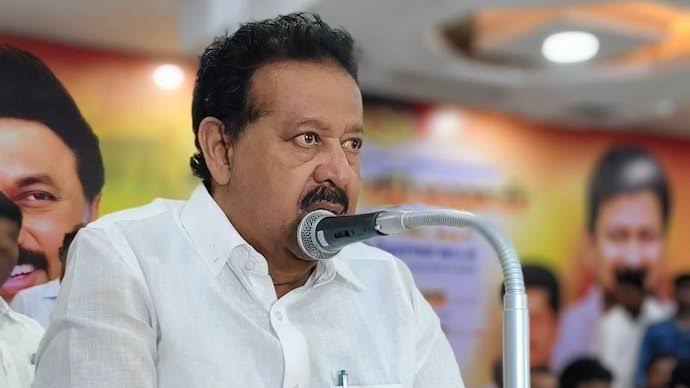
Tamil Nadu has long prided itself on a legacy of progressive movements—especially those championing social justice and equality. But recent incidents involving members of the ruling Dravida Munnetra Kazhagam (DMK) reveal a troubling disconnect between that legacy and the lived reality of women in the state today. At the heart of this storm is the shocking, demeaning comment reportedly made by Tamil Nadu Minister K. Ponmudi, who appeared to equate women to prostitutes—a statement that, if left unchecked, strikes at the dignity of every woman in Tamil Nadu.
This is not an isolated gaffe by a single politician. Rather, it represents a recurring pattern of misogyny, apathy, and political arrogance that women across the state can no longer afford to ignore.
K. Ponmudi, a senior DMK leader and Minister for Higher Education, stirred controversy when he reportedly used language that equated women’s morality to that of sex workers while making a political argument. Even if his intent was metaphorical or rhetorical, the very choice of comparison was degrading, classist, and shockingly misogynistic. That such language could come from a person holding public office in 2025—a time when conversations around women’s dignity, safety, and equal representation should dominate political discourse—is not just offensive, it is dangerous.
The DMK’s misogyny reinforces a deeply patriarchal mindset that views women as objects of control, judgment, and moral policing. Women are used as instruments in political discourse, only to be discarded when they’re no longer useful.
Ponmudi’s statement may be the spark, but it ignites a pile of similar incidents that have been accumulating over time. This isn’t the first time a DMK leader has made disparaging remarks about women.
In 2022, Saidai Sadiq, a DMK functionary, made a vile and misogynistic comment referring to BJP’s women leaders as “items.” His remarks, which reduced women to objects of titillation, provoked widespread outrage. Though DMK MP Kanimozhi issued an apology, the party’s decision not to immediately and publicly suspend Sadiq sent a clear signal: women’s dignity was negotiable for political loyalty.
Go back a few more years, and the picture only gets murkier. In 2013, DMK MLA A.M.H. Nazeem questioned the morality of a gang rape survivor, suggesting that it could be a case of prostitution. Such statements not only shame survivors but also create an environment where reporting crimes becomes harder for women.
Even within the party, reports have surfaced of women functionaries being harassed by male colleagues. In 2018, a woman DMK youth wing member publicly protested against the sexual harassment she faced during a demonstration. The party’s silence on the matter was deafening.
While misogyny among politicians is deeply problematic, what’s even more disturbing is the increasing trend of violence against women in Tamil Nadu under the DMK regime. These include incidents of molestation, rape, and domestic violence—many of which have been brushed aside without swift justice or political acknowledgement.
According to the National Crime Records Bureau (NCRB) data for 2022, crimes against women in Tamil Nadu increased by 8.3%, with rape cases rising by 31%. Additionally, child marriages surged by 55%, and crimes against children increased by 8.5%, reflecting a broader deterioration in the safety and welfare of women and children in the state
The DMK, instead of confronting this rise in gender-based violence, appears more preoccupied with defending its ministers and suppressing dissent. Women activists, journalists, and even opposition leaders who bring up these concerns are labeled politically motivated or accused of character assassination.

A party that once stood for social upliftment now stands accused of betraying the women it claims to empower.
The DMK has long positioned itself as a progressive party—champions of rationalism, social justice, and inclusivity. But these lofty ideals ring hollow when women within the party are objectified, dismissed, or harassed. It’s one thing to talk about social justice in speeches; it’s another to demonstrate it in the everyday functioning of your party and government.
What message does it send when powerful leaders use women as rhetorical pawns in speeches? Or when the party machinery protects those who make misogynistic comments, rather than standing up for women’s dignity?
It sends this message: that women matter only as long as they toe the party line. That their role is to clap from the sidelines—not to question, demand, or protest.
Tamil Nadu’s women are not helpless victims. They are among the most politically aware, vocal, and active segments of Indian society. They’ve led movements, run successful self-help groups, transformed local governance, and shattered glass ceilings in education, business, and the arts. But the battle is far from over.
Now, more than ever, Tamil Nadu’s women must recognize the power of their vote—not as a token of gratitude for welfare schemes, but as a tool for justice and self-respect.
Rejecting the DMK in future elections isn’t about aligning with another party. It’s about sending a message that no matter how powerful a party is, it cannot survive if it fails half its population.
Tamil Nadu’s political future cannot be built on the back of patriarchy. If the DMK truly wants to be seen as a party of progress, it must look inward and purge itself of those who treat women as lesser beings. It must walk the talk on social justice—not just when it’s convenient or politically profitable.
Until then, women in Tamil Nadu must rise—not just in outrage, but in action.
In their homes, in their communities, and most importantly, in the ballot booth.
Because if a political party cannot respect your voice, your body, or your dignity—it does not deserve your vote.