


Key Takeaways
- Urbanisation is crucial for India’s economic growth, with cities generating over 60% of the GDP.
- India’s cities can contribute significantly to the $30 trillion economy by 2047 through planned urbanisation, skilling, and embracing digital urbanisation.
- The challenges facing India’s urbanisation include infrastructure overhaul, skills gap, and disorderly growth, but the opportunity for growth is historic.
Urbanisation in India is a loud declaration of intent, with millions of people moving in search of identity, opportunity, and upward mobility. This shift is not just about work, but about creating a better life. And as India marches toward its centenary of independence in 2047, the most important question facing policymakers, economists, and citizens is simple: can India become a $30 trillion economy without its cities leading the charge? The answer is even simpler – no.
Cities are the engines of India’s future growth, innovation, and job creation, generating over 60% of the GDP despite occupying barely 3% of the land. This imbalance is not a weakness; it is a strategic asset. Within this concentrated geography of ambition lie fifteen cities that already contribute nearly 30% of India’s GDP – Mumbai, Delhi, Bengaluru, Chennai, Hyderabad, Kolkata, Ahmedabad, Pune, Surat, Coimbatore, Noida/Greater Noida, Kochi, Gurugram, Visakhapatnam, and Nagpur. These cities are not just population centres; they are economic accelerators that can add an additional 1.5% growth to India’s annual GDP trajectory. If India aims for the $30 trillion mark, these cities are the launchpads.
Urbanisation is historically proven to be the backbone of economic transformation. Every major economic powerhouse – the United States, Europe, Japan, South Korea, China – urbanised before they industrialised and prospered. India’s story is following the same arc but with unique challenges and unique opportunities. Today, our urban centres are already shaping the economic narrative. By 2047, they will dictate it. Projections show that nearly 80% of India’s GDP will come from cities by the time India becomes a developed nation.
But what makes these 15 cities so crucial? Mumbai, with its financial might, moves markets and mindset. Delhi-NCR, spread across Delhi, Noida, and Gurugram, is the brain of India’s services economy – consulting, IT, policy, media, and startups. Bengaluru is the innovation capital, where ideas code themselves into global solutions. Chennai, Pune, Ahmedabad, and Hyderabad represent the perfect marriage of manufacturing and technology. Tier-2 champions like Surat, Coimbatore, Kochi, Nagpur, and Visakhapatnam show that India’s growth does not need to be confined to the metros; it can emerge from textile looms, ports, logistics clusters, aerospace hubs, and specialised industries.
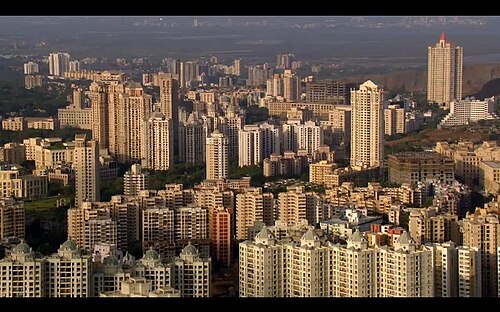
Urbanisation is not simply about rising skylines; it is about rising productivity. Cities generate economic velocity because they create dense markets, efficient supply chains, structured talent pools, and collaborative ecosystems. You can have ten bright minds in ten villages, but when they come together in one city, they do not produce ten times the value – they produce a hundred times more. That multiplier effect is the secret ingredient behind the world’s greatest urban success stories.
However, India’s journey towards a $30 trillion future is not guaranteed. It will demand confrontation with some uncomfortable realities. Our urban infrastructure is groaning under the weight of population and aspiration. Roads, public transport, sewage networks, water systems, energy grids – they need radical overhaul, not incremental upgrades. A megacity cannot operate with small-town governance structures. A global financial hub cannot depend on 20th-century urban planning. If India wants its cities to drive the future, the state of our cities must first catch up with the dreams of our citizens.
The second challenge is the skills gap. Cities create high-value jobs, but India must ensure its workforce is ready to take them. Urbanisation without skilling will only widen the inequality gap. Urbanisation with skilling will create the world’s most powerful economic force – a young, trained, ambitious base of workers who can drive innovation, manufacturing, services, and entrepreneurship.

The third challenge is disorderly growth. Indian cities often expand first and think later. This leads to chaos, congestion, unaffordable housing, and strained municipal systems. India must embrace planned urbanisation, not just population-driven urbanisation. The goal is not just more cities – it is better cities.
Yet despite these hurdles, the opportunity for India is historic. Global supply-chain realignment is shifting manufacturing power away from China, and India’s industrial-urban clusters are perfectly positioned to absorb this investment. Digital India is transforming governance, banking, mobility, and services – creating what I call digital urbanisation, where technology becomes the invisible infrastructure of development. And India’s young workforce – the world’s largest – is creating a market of consumers and creators unmatched by any nation.
If these forces converge correctly, urban India alone could contribute more than $25 trillion to the national output by 2047. The remaining economy will come from agriculture modernisation, rural industries, tourism, energy, and exports – but the foundation will be built in cities. That is why the coming two decades will be India’s “Urban Decade,” a period where cities will shape everything from economic policy to labour markets to global competitiveness.
So what must India do now? First, invest heavily in infrastructure – metros, airports, ports, expressways, renewable power, digital grids, and logistics corridors. These are not expenditures; these are national assets. Second, empower city governments with financial autonomy and professional governance. The world’s great cities do not wait for approvals; they enable action. Third, equip India’s youth with the skills needed for an advanced economy. Without talent, there is no innovation. Without innovation, there is no $30 trillion dream.
In the end, urbanisation is not a policy choice – it is an economic destiny. If rural India is our heart, then urban India is our engine. And a nation does not move forward on heartbeats alone. It needs horsepower.
The question is not whether urbanisation will help India reach a $30 trillion economy. The real question is whether India has the courage, urgency, and vision to build cities capable of carrying that ambition. My belief is unwavering: if India wants to rise, its cities must rise first. If India wants to lead, its cities must innovate. And if India wants to become a $30 trillion economy by 2047, urbanisation is not one of the pathways – it is the highway.