

Key Takeaways
- India has reduced its operational role at Chabahar Port due to sanctions exposure.
- India’s role at Chabahar Port is limited to operational management of specific terminals.
- Chabahar is an important strategic location for India’s trade and connectivity with Central Asia and Afghanistan.
- India has chosen strategic hedging over strategic retreat at Chabahar Port.
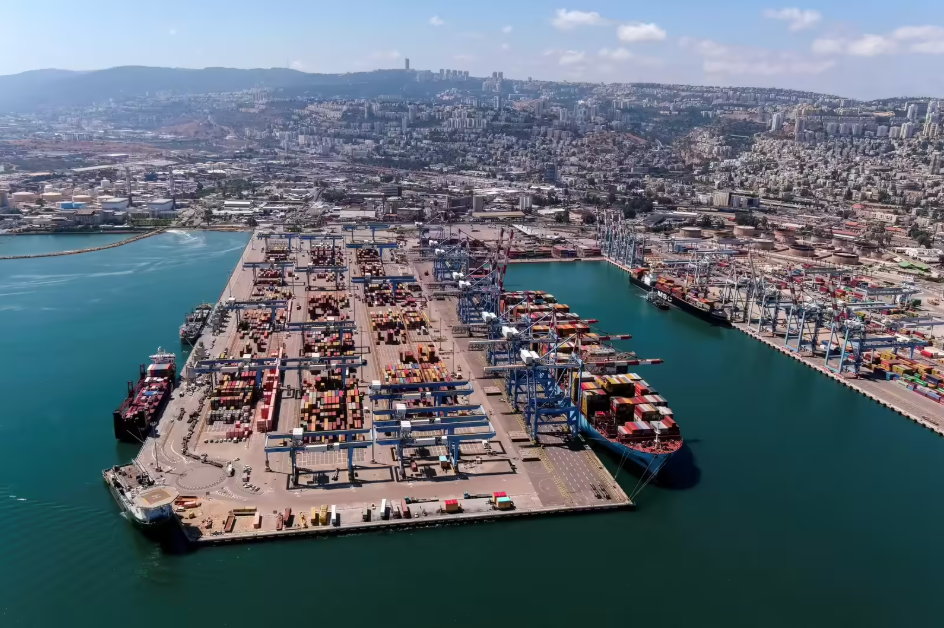
- Chabahar Port remains an important hub for regional trade, despite India’s reduced role.
Chabahar: Why India Has Not Exited – But Has Quietly Stepped Back
– Col Mayank Chaubey (Retd)
For weeks now, a deceptively simple question has dominated strategic chatter in Delhi and beyond: Has India exited Chabahar?
The question gained momentum after ET Infra reported that the board of India Ports Global Limited (IPGL), the Indian entity operating the Shahid Beheshti terminal at Iran’s Chabahar Port, had resigned, and that the company’s website had gone offline. Predictably, headlines followed, speculation grew, and the narrative hardened: India has walked away from Chabahar.
That conclusion, however, is both premature and misleading.
India has not formally exited Chabahar. There has been no termination notice, no diplomatic rupture, and no abandonment of the 10-year operational agreement signed with Iran in 2024. Yet, it would be equally incorrect to claim that India’s position at Chabahar remains robust or unchanged. What New Delhi has undertaken instead is a quiet, tactical de-risking, a calibrated step-back designed to protect Indian institutions from sanctions exposure while keeping strategic doors ajar.
Chabahar, once projected as India’s bold continental gateway to Afghanistan and Central Asia, has now entered a far more subdued phase of its existence: legally alive, operationally muted, strategically downgraded.
What India Actually Controls at Chabahar
To understand the present moment, it is essential to clarify what India’s role at Chabahar Port has always been, and what it has never been.
India does not own Chabahar. The port is Iranian sovereign territory, operated under Iranian law. India’s involvement has been limited to operational management of specific terminals, notably the Shahid Beheshti terminal, through India Ports Global Limited, a special purpose vehicle created for overseas port operations.
This distinction matters. Chabahar was never Gwadar-in-reverse, nor was it intended to be an Indian enclave. It was a functional partnership, not a sovereign foothold.
At its peak, Indian operators managed cargo handling, logistics coordination, and terminal administration, enabling shipments to Afghanistan and supporting India’s connectivity vision via the International North–South Transport Corridor (INSTC) linking India, Iran, and Russia.
That role still exists on paper. What has changed is the risk environment surrounding it.
ET Infra’s Report and the Trigger for Confusion
The ET Infra report was factually accurate in its narrow scope. It highlighted that:
– Government-nominated directors of IPGL resigned
– IPGL’s digital presence was withdrawn
– Indian administrative footprints were reduced
What the report did not say, and what subsequent commentary often blurred, is that these steps do not amount to a legal exit.
They amount instead to sanctions insulation.
With US sanctions tightening around Iran-linked commercial activity, continuing with visible, board-level Indian government participation exposed Indian officials and public sector institutions to secondary sanctions risk, a risk India has no appetite to absorb lightly.
The response, therefore, was not abandonment but administrative distancing.
The Sanctions Sword Hanging Over Chabahar
Chabahar survives under a narrow and conditional US sanctions waiver, a political concession rather than a legal guarantee.
This waiver was originally justified on humanitarian grounds, enabling Afghanistan-bound trade and stabilising regional supply chains. Over time, however, the logic supporting this exemption has weakened.
Three factors have converged:
– Escalating US–Iran hostility, reducing tolerance for Iran-linked projects
– Iran’s deepening alignment with China, particularly under the Belt and Road framework
– The downsizing of India’s operational role in Afghanistan after the Taliban takeover
Without Afghanistan as the centrepiece, Chabahar’s original humanitarian narrative has eroded. What remains is a port with limited throughput, growing geopolitical sensitivity, and declining strategic urgency from Washington’s perspective.
India, acutely aware of this, has chosen prudence over bravado.
Why This Is Not an Exit – But Also Not Business as Usual
It is critical to distinguish between legal status and strategic vitality.
Legally:
– The India – Iran agreement stands
– No termination has been invoked
– India remains a recognised operator
Strategically:
– Indian leverage has diminished

– Operational tempo has slowed
– Chabahar is no longer a flagship project
In effect, India has kept the key but stepped away from the door.
This approach allows New Delhi to:
– Protect Indian banks, insurers, and PSU officials
– Avoid provoking Washington or Tehran
– Retain optionality for future reactivation
It is a classic case of strategic hedging, not strategic retreat.
Chabahar in a Changed Regional Geometry
When Chabahar was conceived, it was framed as India’s answer to Gwadar Port, offering a non-Pakistani route to Afghanistan and Central Asia. That strategic contest has since evolved.
China’s presence in the region has expanded beyond Gwadar, embedding itself deeply within Iran’s infrastructure planning. Russia, too, has shown interest in alternative corridors less vulnerable to Western sanctions. Iran, for its part, has consistently refused to align itself exclusively with any single external power.
In such an environment, Chabahar has ceased to be a chess piece in a binary India – China contest. It has become a multi-player logistics node, where India is one of several stakeholders, not the central one.
The Afghanistan Factor: The Silent Casualty
Perhaps the most under-acknowledged driver of Chabahar’s decline is Afghanistan.
Chabahar was designed with Kabul in mind. It was meant to:
– Bypass Pakistan
– Enable Indian trade and aid
– Cement India’s continental influence
The Taliban’s return effectively removed the demand signal that justified the port’s strategic prioritisation. Without large-scale India – Afghanistan trade or reconstruction flows, Chabahar’s raison d’être weakened.
Ports do not survive on symbolism. They survive on cargo.
Three Scenarios Ahead
India’s future posture at Chabahar will likely follow one of three trajectories:
1. Quiet Continuation – A renewed or tacitly extended waiver allows India to resume limited operations, keeping Chabahar alive as a niche node within the INSTC.
2. Prolonged Grey Zone (most likely) – India remains legally invested but operationally restrained, maintaining a skeletal presence while avoiding exposure.
3. De-Facto Exit Without Declaration – If sanctions harden further, India may freeze activity indefinitely, without ever announcing an exit, allowing Iran to onboard alternative operators.
Notably, India will avoid a formal withdrawal in all three scenarios. Symbolic exits close doors. Silent pauses keep options alive.
The Larger Lesson for India
Chabahar offers a sobering lesson in the limits of infrastructure-led geopolitics.
Ports cannot substitute for:
– Stable political environments
– Sanctions predictability
– Sustained trade volumes
India’s recalibration is not a failure of ambition; it is an acknowledgment of reality. In a fragmented world order, flexibility matters more than fixation.
India’s connectivity strategy is already adapting, through partnerships in the Gulf, deeper engagement with Africa, and maritime dominance in the Indo-Pacific. Chabahar is now one node among many, not the centrepiece it once aspired to be.
Conclusion: Presence Without Illusion
India has not exited Chabahar.
But India has exited the illusion that Chabahar alone could reshape its continental destiny.
What remains is a pragmatic posture, low-key, legally intact, strategically cautious. In an era of sanctions, shifting alliances, and great-power competition, that may well be the wisest course.
Sometimes, staying silent is not weakness. It is strategic patience.