
Key Takeaways
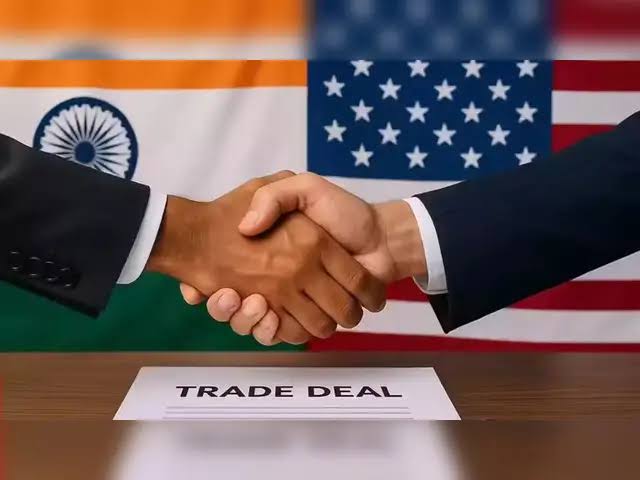
- The New Delhi-Washington Trade Reset is a strategic trade deal between India and the US, marking a significant shift in their trade relationship.
- The trade deal includes the elimination of tariffs on US industrial goods and agricultural products, reciprocal tariff rates, and the removal of national security-based tariffs on Indian aircraft and parts.
- The trade deal has significant implications for India, including the potential to become a global manufacturing hub, integration into value chains, and the removal of non-tariff barriers.
When Narendra Modi and Donald Trump decided to fast-track a trade framework, it was never going to be about polite diplomacy and staged smiles. It was about leverage, realism, and a blunt recognition that the global economic order is being rewritten in real time. The Interim Agreement between India and the United States of America is not a routine tariff adjustment exercise – it is a strategic alignment disguised as trade paperwork.
For years, both countries circled each other cautiously on trade. India complained about protectionism and visa restrictions. America complained about tariffs, market barriers, and regulatory hurdles. Meanwhile, China quietly tightened its grip over supply chains, critical minerals, electronics manufacturing, and global trade arteries. This Interim Agreement signals that Washington and New Delhi have decided the time for incrementalism is over.
Let’s be clear: this is not a charity arrangement in either direction. It is a hard-nosed deal where both sides give ground to gain ground.
India Opens the Gates – Selectively
India’s decision to eliminate or reduce tariffs on U.S. industrial goods and a wide spectrum of agricultural products is significant. Dried distillers’ grains, animal feed inputs, nuts, fruits, soybean oil, wine, and spirits entering at lower duties will raise eyebrows among domestic lobbies. Farmers’ groups and small manufacturers will worry about price competition. That concern is understandable.
But here’s the uncomfortable truth: India cannot aspire to be a global manufacturing hub while clinging to high tariff walls across the board. If ‘Make in India’ is to evolve into ‘Sell from India to the World’, then reciprocal openness becomes part of the bargain. Lower input costs for Indian industry – especially in energy, machinery, and high-quality raw materials – could strengthen Indian exports in the long run.
This is not about surrendering markets. It is about integrating into value chains where India becomes indispensable, not isolated.
The 18 Percent Message from Washington
The U.S. applying a reciprocal tariff rate of 18 percent on a range of Indian goods sounds harsh at first glance. Textiles, apparel, leather, footwear, chemicals, home décor – these are sectors where Indian exporters are deeply invested.
But Washington is sending a message that the era of one-sided concessions is over. The Trump administration’s trade philosophy is simple: market access must be earned with market access. The 18 percent rate is both a negotiating lever and a pressure mechanism to ensure India follows through on non-tariff reforms.
What softens the blow is what comes next. The promise to remove tariffs on generic pharmaceuticals, gems and diamonds, and aircraft parts is a major strategic win for India. Generic medicines are one of India’s strongest global advantages. If this sector gets smoother entry into the American market, it cements India’s role as the pharmacy of the world – this time with Washington’s blessing rather than grudging tolerance.
Security Tariffs and Strategic Trust
The rollback of certain national security-based tariffs on Indian aircraft and parts is more than a trade adjustment. It is a trust signal. When the U.S. relaxes measures originally justified on national security grounds, it is effectively saying: India is not a risk; India is a partner.
Likewise, India receiving preferential treatment in automotive parts quotas indicates Washington sees India as part of its trusted industrial ecosystem. This matters because global trade is no longer just about price. It is about political reliability, supply chain resilience, and alignment in a fragmented world.
Non-Tariff Barriers: The Real Battlefield
Tariffs make headlines, but non-tariff barriers shape reality. India’s commitment to address long-standing issues in medical devices, ICT imports, licensing delays, and standards recognition could be transformative if implemented sincerely.
For years, foreign companies complained that India’s regulatory maze acted as a silent tariff. If India streamlines standards acceptance and testing requirements – especially for high-tech and medical sectors – it could accelerate technology inflows and manufacturing partnerships. That directly feeds into India’s ambition to be a global electronics and semiconductor player.

Of course, implementation will be the real test. India’s bureaucracy is famous for policy announcements and infamous for execution delays. If this time New Delhi actually follows through, the investment climate could change dramatically.
Rules of Origin: Keeping China Out the Back Door
One of the most important – and least flashy – parts of this framework is the commitment to strong rules of origin. This is code for preventing third countries from routing goods through India or the U.S. just to dodge tariffs.
In plain terms: this deal is partly designed to ensure that benefits go to genuine Indian and American producers, not to factories in other countries using India as a transit point. That has clear geopolitical undertones. Supply chains are being realigned away from over-dependence on China, and this agreement is another brick in that wall.
The $500 Billion Commitment: Trade as Strategy
India’s intention to purchase $500 billion worth of U.S. energy, aircraft, technology, and raw materials over five years is staggering in scale. This is not just about commerce; it is about strategic interdependence.
Greater energy imports from the U.S. help India diversify away from volatile regions. Aircraft and aviation parts deepen civil and defense aerospace cooperation. Technology products – especially GPUs and data center hardware – plug directly into India’s digital and AI ambitions.
The message is unmistakable: India is positioning itself not merely as a market, but as a central node in the next wave of high-tech growth, aligned closely with American innovation ecosystems.
Digital Trade and the Future Economy
The commitment to build robust digital trade rules under the broader Bilateral Trade Agreement is crucial. Data flows, platform regulations, and digital services will define the next era of commerce. If India and the U.S. can align on digital frameworks, it will shape global standards far beyond their borders.
For India, this is a balancing act. It wants data sovereignty and domestic digital champions. The U.S. wants open digital markets and fewer regulatory barriers. The eventual compromise will influence everything from e-commerce to AI collaboration.
The Bigger Picture
This Interim Agreement is not perfect. Some Indian sectors will feel pressure. Some American industries will grumble. But grand strategy is rarely comfortable.
What we are witnessing is the formal economic tightening of a partnership that has already been deepening in defense, technology, and geopolitics. Trade is now catching up with reality. Both sides recognise that in a world of fractured alliances and weaponised supply chains, trusted partnerships are worth more than theoretical free trade purity.
The framework sets the tone: reciprocal, interest-based, and security-aware. It signals that Washington and New Delhi are done being cautious acquaintances. They are choosing to become serious economic partners – not because it sounds nice, but because the world has made it necessary.
And in geopolitics, necessity is the most powerful negotiator of all.