











In Goan households, rice is not merely food; it is ritual. Before the pot meets the flame, our mothers and grandmothers spread rice on a steel plate, fingers moving with quiet precision, removing tiny black stones that have no business being there. Ignore them, and you risk a cracked tooth. Ignore too many, and you risk something worse – stones slipping into the system, quietly wreaking havoc long after the meal is over.
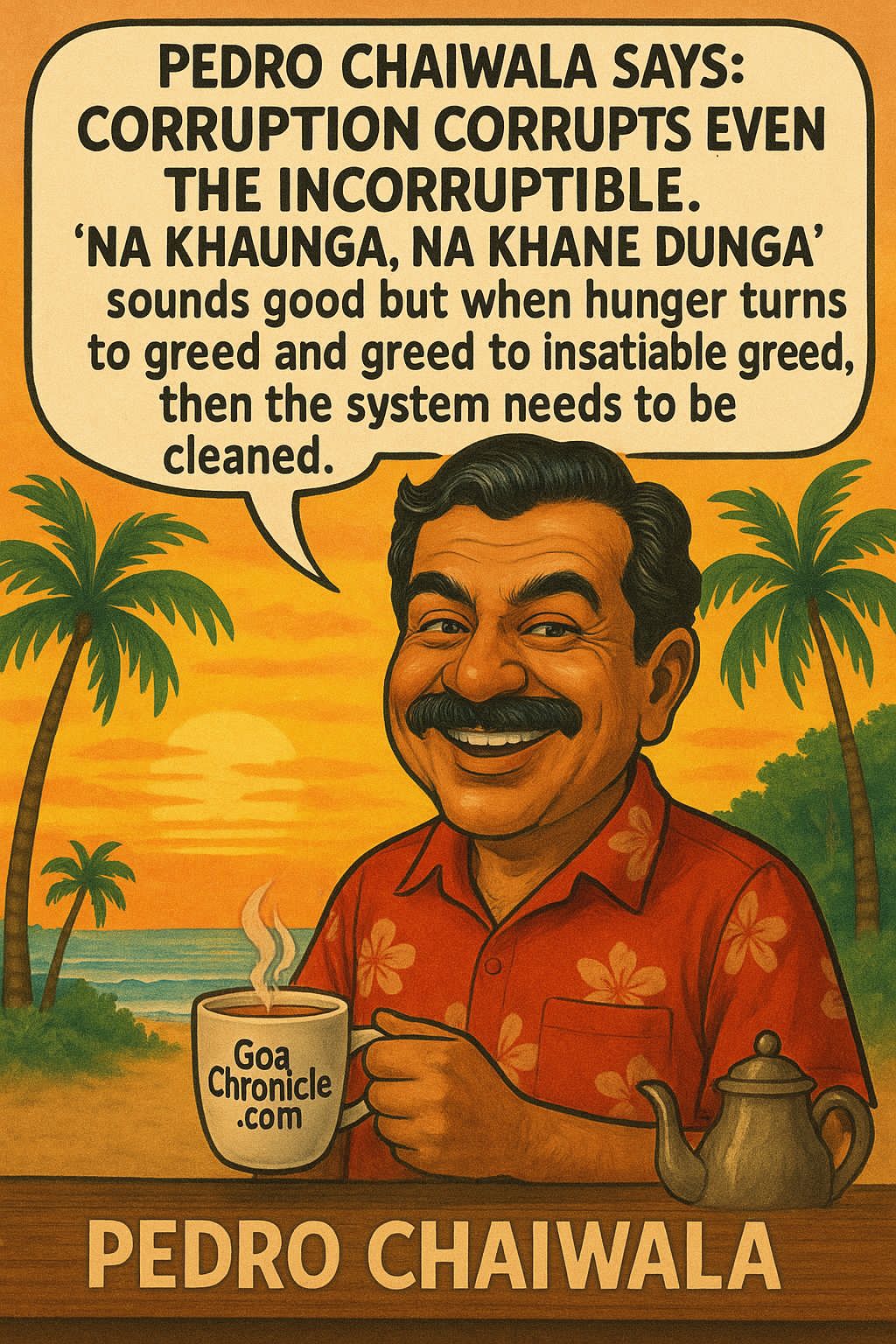
Corruption works the same way.
It rarely announces itself as a boulder. It comes as a small, inconvenient stone – an “adjustment,” a “temporary permission,” a “small favour.” Harmless, we are told. Ignore it, we are advised. After all, what difference does one stone make in a sack of rice?
The tragedy is that corruption is cumulative. One ignored stone becomes two. Two become a handful. Soon, the bag itself is compromised.
In public life, corruption begins at the most mundane level. A file that moves faster because someone was “looked after.” A safety clearance granted because “everyone does it.” A violation overlooked because the offender is “connected.” Each act is small enough to be dismissed, rationalised, or justified as pragmatism. But these stones do not dissolve. They travel.
They travel through institutions, damaging teeth along the way – honest officers sidelined, whistleblowers punished, rules rewritten to suit the powerful. And eventually, they enter the digestive system of society itself, where the real damage begins.
When corruption enters the system, it does not stay localised. It affects governance, distorts markets, and erodes trust. Citizens begin to assume that nothing works without paying. Businesses learn that compliance is optional if you know the right person. Politicians internalise the idea that accountability is negotiable. The rule of law is no longer a principle; it becomes a suggestion.
This is how societies normalise rot.
The most dangerous aspect of corruption is not greed – it is indifference. The collective shrug. The tired refrain: “This is India. This is Goa. This is how things are.” That sentence is the moment we stop picking stones from the rice.
Once that happens, consequences become inevitable.

A bridge collapses not because steel suddenly forgot how to hold weight, but because substandard material was approved. A building catches fire not because fate was cruel, but because safety norms were diluted. A coastline disappears not because the sea was angry, but because laws were bent, surveys manipulated, and violations regularised after the fact. Every disaster carries an audit trail of ignored stones.
And when lives are lost, we suddenly act surprised – asking how this could have happened, demanding inquiries, appointing committees. But the truth is uncomfortable: the warning signs were always there. The stones were visible. We chose not to remove them.
Corruption also corrodes morality in subtle ways. Children grow up watching adults navigate systems not by merit but by manipulation. They learn that honesty is admirable but ineffective, that integrity is noble but impractical. Over time, cynicism replaces idealism. The social contract fractures.
A society that tolerates small corruption prepares the ground for big injustice.
This is why anti-corruption is not about moral grandstanding or selective outrage. It is about hygiene. Just as you would never cook rice without cleaning it, governance cannot function without constant scrutiny. Transparency is not a luxury; it is basic sanitation.
Those who benefit from corruption often argue that enforcement slows development. This is a lie sold by people who profit from shortcuts. Real development is not speed without safety; it is progress without casualties. A system that collapses under scrutiny was never strong to begin with.
Removing stones takes time. It is tedious. It requires patience, vigilance, and sometimes confrontation. You might even be told you are being difficult, obsessive, or anti-development. But the alternative is far worse: a society that chips its teeth and poisons its own body, meal after meal.
The choice before us is simple but not easy. We can continue swallowing stones, hoping they won’t hurt us this time. Or we can relearn the discipline our elders practised instinctively – cleaning what we consume, questioning what we are served, and refusing to accept contamination as normal.
Corruption, like those black stones, thrives on neglect. The moment we start picking them out – relentlessly, consistently – the system begins to heal.
And perhaps then, the meal that is public life will nourish rather than injure, sustain rather than destroy.