
Key Takeaways
- Indian democracy will survive if the custodian of the constitution—the Supreme Court—functions as it is laid down in the constitution, parliament functions democratically, executives function in a welfare mood, and the media functions independently.
- The country needs assurance that citizens can express their thoughts fearlessly, and their representatives in Parliament talk about the issues of people’s sufferings, and the elected government should take care of them.
- Protecting federalism and secularism is crucial for the survival of Indian democracy.
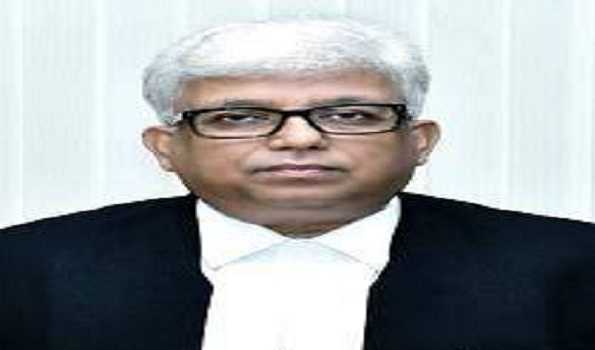
Agartala: Former Chief Justice of Odisha High Court Subhashis Talapatra expressed concern over the functioning of democratic institutions in India during a seminar organised here by the All India Lawyers Union, Tripura Unit, on the topic of failing democratic institutions.
He observed that Indian democracy has reached a critical stage and constitutionalism has almost been eroded; structurally, it exists but has lost its courage.
“I have no hesitation to say India would not survive unless it protected the character of federalism and secularism and helped lakhs of unemployed get jobs,” he stated, adding that whoever may be feeling super powerful politically cannot shield India without protecting its democratic institutions and spirits.
“The people framed the constitution through their representatives after independence with a lot of hopes and aspirations; time has come to get reunited again to ensure exercising those rights enshrined by the constitution,” Justice Talapatra attributed.

He felt ashamed when an elected Prime Minister attended the swearing-in ceremony by a private aircraft of a multi-millionaire, which is a stark example of the influence of capitalists on democracy in India. Visibly, what we are seeing is a crafted democracy by the capitalists. A business organisation started its journey in 2003, and by the end of 2022, it had become the richest group in the country at the behest of the governments it influenced.
The government shamefully allowed them to loot the country and has now emerged as the richest family in Asia.” When demand was raised in Parliament seeking an investigation against the particular business house, the entire Treasury bench stood for him, which is astonishing, Justice Talapatra pointed out.
The country needs assurance that the citizens can express whatever they think fearlessly, and their representatives in Parliament talk about the issues of people’s sufferings, and the elected government should take care of them, he stated.
“Indian democracy will survive if the custodian of the constitution—the Supreme Court—functions as it is laid down in the constitution, parliament functions democratically, executives function in a welfare mood, and the media functions independently,” he added.