
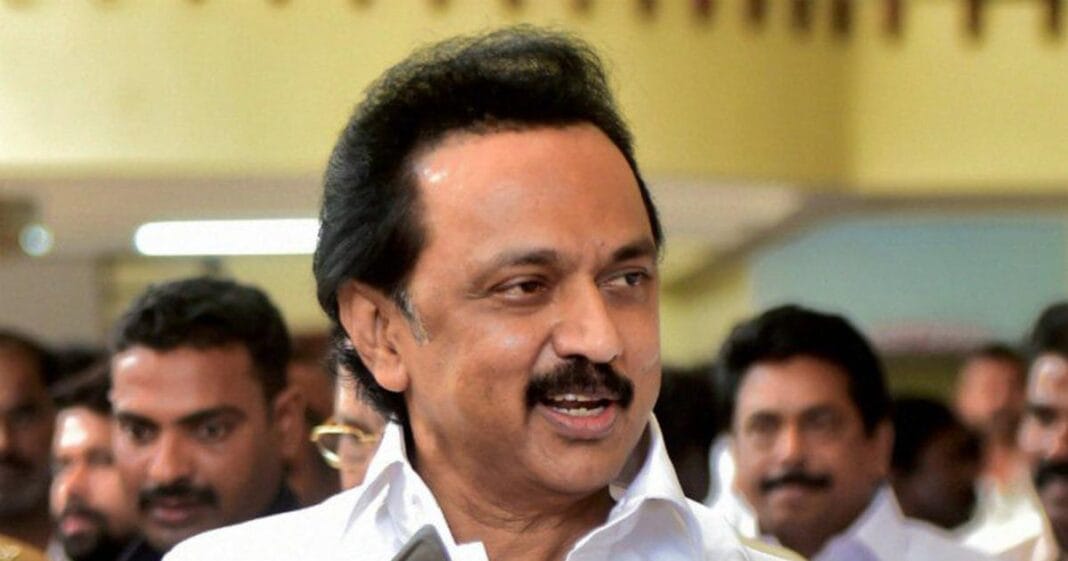

Once again, Tamil Nadu’s opposition towards Hindi language has come to the fore. Through reports, the Chief Minister of the state, MK Stalin, has stated that by ‘imposing’ Hindi, the Centre should not begin another language war. He has also appealed to PM Modi to let go of the government’s attempts at making Hindi mandatory and to maintain the unity of the nation.
Stalin has made these remarks in response to the report submitted to President Draupadi Murmu by the Chairman of the Parliamentary committee on national language and the Union Home Minister, Amit Shah. He added that if Hindi is made mandatory, then the large population of non-Hindi speakers will get into a secondary position in their own country. Stalin further remarked that ‘imposing’ Hindi is against the unity of India, and that it should be attempted to make all the languages the official languages for the Centre.

Stalin then questioned as to why was it proposed to give priority to Hindi by removing English as far as central government examinations were concerned, and commented that this was against the basic principle of the Indian Constitution, and by doing this, it is being attempted to discriminate against other languages.
The Parliamentary committee, in its report, has requested for Hindi to be made the language medium rather than English in central universities and schools, and in the examinations of IIT, IIM, and AIIMS.