
Key Takeaways
- The Supreme Court has held that States have the power to levy royalty on mineral rights.
- Mineral-rich states like Jharkhand, Odisha, West Bengal, Chhattisgarh, and Madhya Pradesh may benefit from the Supreme Court’s decision.
- The Union law Mines and Minerals (Development and Regulation) Act 1957 does not limit states’ power to levy royalty on mineral rights.
New Delhi: A nine-judge constitutional bench of the Supreme Court on Thursday held by an 8:1 majority that States have the power to levy royalty on mineral rights and that the Union law – Mines and Minerals (Development and Regulation) Act 1957 – does not limit their power to do so.
The decision may benefit mineral-rich states like Jharkhand, Odisha, West Bengal, Chhattisgarh and Madhya Pradesh.
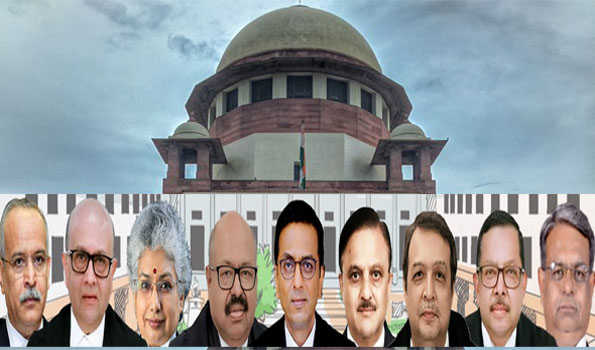
The 9-judge constitutional bench of the Supreme Court, comprising Chief Justice DY Chandrachud and other justices, held a majority judgment on the main issue: whether royalties on mining leases are considered tax and whether states have the power to levy royalty/tax on mineral rights after the enactment of the Mines and Minerals (Development and Regulation) Act 1957.
Chief Justice of India DY Chandrachud wrote the judgment on behalf of himself and seven other judges.

Justice BV Nagarathna delivered a dissenting judgment.
The conclusion of the Majority judgement pronounced by the CJI is that the royalty is not within the nature of tax as it is a contractual consideration paid by the lessee under the mining lease.
Both royalty and deed rent do not fulfil the characteristics of tax, said the court overruling the judgment in India Cements case that held royalty to be a tax.