

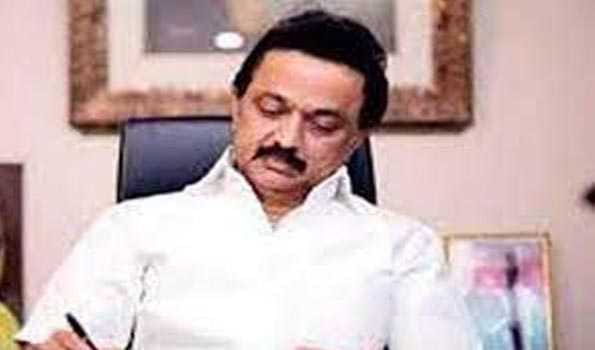

Chennai: Terming the Centre ‘s move to introduce National Exit Test (NExT) for medical admissions as an another attempt to dilute the role of State Governments and varsities in
the health sector and to centralise the powers with the Union Government, Tamil Nadu Chief Minister M.K.Stalin on Tuesday urged Prime Minister Narendra Modi not to introduce NExT and the existing system be continued.
In a Demi-Official letter to Mr Modi, copies of which were released to the media here, Mr Stalin reiterated his strong opposition to it and expressed his strong reservations on
this proposed step.
“I write this letter to reiterate our strong opposition to the introduction of National Exit Test (NExT), as a combined national level exit examination for UG medical students and entrance examination for PG admissions”, he said.
“In many earlier communications and memoranda addressed to you and the Union Health Minister, we had expressed our strong reservations on this proposed step”, he recalled.
Stating that the Tamil Nadu Government has been consistent in its opposition to the introduction of NEET and NExT in any form for both undergraduate and postgraduate medical admissions, the Chief Minister said the NEET based medical admission system under the National Medical Commission (NMC) Act has already adversely impacted the equitable, school education based selection process and its contribution to the strengthening of the public health system.
“At this juncture, the proposed introduction of NExT will surely exacerbate this trend and cause an irreparable damage to the interest of rural and socially disadvantaged students
and the public institutions under State Governments”, he said.
“In all the states of our country, the curriculum for medical education is already being devised under the norms fixed by the NMC. The curricula, training and examination system
are monitored vigilantly by the respective State Medical Universities”, Mr Stalin said.

The students are awarded MBBS degree in recognized colleges, only after such rigorous training and examinations. In this situation, the introduction of such a common exit test will definitely be an additional burden on the students.
Given the high academic burden and stress faced by our medical students this needs to be strictly avoided, he said.
In addition, the introduction of such a course as a mandatory exit test will also hamper the clinical learning, which is vital for MBBS graduates, he noted.
“Today, young graduates focus both on the theoretical and clinical aspects of medical science and only after graduation, the students who opt for PG admissions focus on theoretical PG exams. But the introduction of mandatory exit exam will force them to focus more on the theoretical part of medicine during their course and internships”, Mr Stalin said.
This is bound to hamper development of adequate clinical skills, he said.
“In light of the above, I again wish to re-emphasize that the introduction of NExT is neither in the interest of the students nor in the interest of state governments who fund most of the medical institutions. This step seems to be just another attempt to dilute the role of State Governments and Universities in the health sector and to centralise the powers with the Union Government”, he said.
“Therefore, I once again request that NExT should not be introduced and the existing system be continued”, he added.