



















Can tragedy bridge the gulf between despair and acceptance?
When a train derails in flood-ravaged Assam, it disrupts the lives of Mridula, Maya, and Kranti. Amid the search for their loved ones in the wreckage, repressed shadows come to the fore.
Grey cityscapes blur into lush greens, and urban solitude turns into silent screams as their lives rotate between their physical homes and those of their dreams.
Straining to break free from the burden of childhood and shifting homelands, can they withstand the awareness that change often brings? Or will they seek refuge in their old selves―Mridula, in accustomed abuse; Maya, in denial; Kranti, in Maya?
Can the displaced find permanence in transiting homes?
What does it mean to belong?
Richa Sharma has a Master’s degree in Mass Communication from the University of Hyderabad. Having lived in different parts of the country, especially in Arunachal Pradesh and Assam, she has drawn upon her experience of displacement. Her innumerable train journeys and first-hand experience of monsoon-led floods instigated her to write this novel. She is currently working on her next work of fiction; her short story and poem have been published in literary magazines, e-fiction India, and The Hans India.
To know more about Richa’s latest release, Sonakshi Datta of GoaChronicle posed a few questions to her.
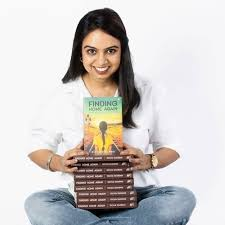
‘Finding Home Again’ Author Richa Sharma
What is the core concept that your new book focuses on? What are some pertinent questions that it poses for readers to think through and introspect?
‘Finding Home Again’ is set in the aftermath of a train derailment following yearly monsoon floods in Assam. It primarily explores the impact of displacement at an emotional level. Through the lives of Kranti, Maya, and Mridula, the story dwells on the influence that displacement can have on one’s understanding of identity and home.
It throws light on our innate need to belong and asks readers to evaluate the connection that we create and live by, either to a place, person or a memory.
What inspired you to write ‘Finding Home Again’?

The first outline of the story appeared when I had revisited Arunachal Pradesh for my father’s retirement. My return to the state where I was born and brought up, overwhelmed me. I relived memories during my stay. From that nostalgia, came many questions, and I started writing to answer them.
In India, we often move from one city or town to another. It can be for education, jobs, or marriages, but we ignore the emotional upheaval that accompanies shifting homes. We do not have to cross international borders, changing places to stay within our own country also shakes the idea of identity and belonging. These scattered thoughts slowly turned into stories, which formed this novel.
I have also witnessed how monsoon-led floods affect the region and the lives of those living there. Even today, many in our country are unaware of their severity. This instigated me to dive deeper into the impact of monsoon through this novel.
Through your novel’s story, one is forced to reckon as to ‘what it means to belong’. What, according to you, does it mean to belong somewhere or with someone?
Belonging, although it is often considered a universal concept, for me it is deeply personal. The feeling of belonging arises when we connect, be it to a person, a moment, a memory, food or even a conversation. In our lives, we all go through several internal and external metamorphosis. Depending on the phase where we are in, our idea of belonging shifts too.
‘Finding Home Again’, the title and your novel’s storyline focus on the concept of ‘home’. How do you define ‘home’?
For a long time, I have also pondered over the concept of home, and what it truly means to me. Is home a town, a city, or a village, where we are born? Is it a specific house where we have been raised? Is it the place we build for ourselves through education, career, or marriage? Do the number of years we stay define the authenticity of home? Can we belong to more than one destination or one culture?
Over time, I have come to realise that we can indeed be home at more than one place.
What makes ‘Finding Home Again’ a must-read for people from all walks of life?
Finding Home Again is a story that everyone will connect to.
We all have moved from one place to another. Although the duration and reasons differ, we all experience a loss of familiarity, which is often followed by the excitement of new. Sometimes, when we aren’t at home with ourselves and our personalities, we feel displaced. That is why, it is also a story about those who have stayed in their birth city/town yet are searching for a home. And readers can associate with this idea of home through the character’s family dynamics, marriages, relationships, jobs and travel.