
Key Takeaways
- The US envoy has threatened to withdraw from Israel-Lebanon talks if a ceasefire agreement is not reached within the specified deadline.
- Hezbollah has agreed to continue indirect ceasefire talks with Israel based on the US proposal and mediated by Lebanese Parliament Speaker Nabih Berri.
- The US envoy has made progress in talks with Lebanese Parliament Speaker Nabih Berri, but there is still work to be done to reach a ceasefire agreement.
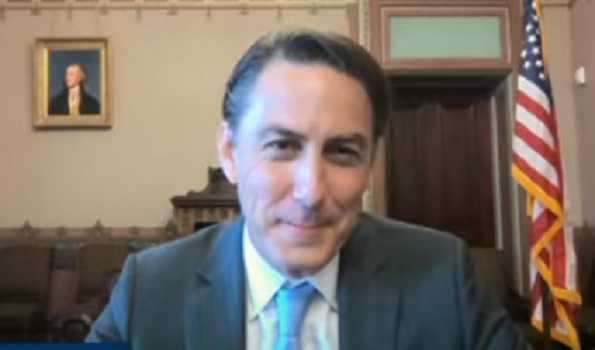
Washington: US Special Presidential Envoy to the Middle East Amos Hochstein told Israeli Ambassador to Washington Yechiel Leiter on Saturday that if the Israeli authorities did not support a ceasefire agreement with Lebanon in the coming days, he would stop mediating in the talks, Axios reporter Barak Ravid said on X citing a source.
The journalist added, citing an unnamed senior Israeli official, that Israel was “moving closer” to accepting a ceasefire agreement with Lebanon. Unnamed US officials confirmed that the parties were close to accepting the agreement, but there was still “some work to do.”

On Tuesday, US Special Presidential Envoy Amos Hochstein arrived in Beirut to discuss the ceasefire agreement with Lebanon and Hezbollah. He made progress in talks with Lebanese Parliament Speaker Nabih Berri. Hochstein then held talks in Tel Aviv.
Hezbollah Secretary General Naim Qassem said on November 20 that the movement had agreed to continue indirect ceasefire talks with Israel based on the US proposal and mediated by Lebanese Parliament Speaker Nabih Berri, on the condition that there was a complete cessation of hostilities by the Israeli army and the preservation of Lebanon’s sovereignty without the Israeli side being able to invade the country’s airspace or cross land or sea borders. Qassem also noted the resistance’s decision to continue hostilities against the Israeli army in parallel with the ongoing ceasefire talks.