


Key Takeaways
- Bharatiya heritage is not in conflict with Christian faith.
- Understanding and appreciating one’s cultural roots can strengthen one’s faith.
- Embracing one’s ancestral history can provide a deeper connection to one’s heritage and values.
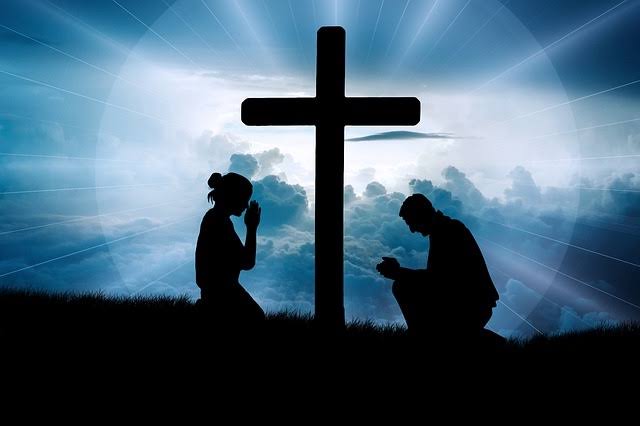
I am a Christian.
I say that with pride, conviction, and gratitude. My faith in Jesus Christ is central to my spiritual journey. It shapes my values, guides my conscience, and strengthens my relationship with God. Yet, equally, I say with pride that I am a Christian with Hindu ancestral roots.
For some, that statement may appear contradictory. For me, it is not.
It is a statement of truth.
Over the years, I have often encountered people who believe that embracing Christianity requires abandoning one’s civilisational identity. Others believe that being proud of one’s Hindu ancestry somehow dilutes Christian faith. I reject both notions.
Faith and ancestry are not enemies.
Faith is what I believe.
Ancestry is who I am.
The two coexist harmoniously within me.
Recently, I undertook a journey to trace my family’s lineage. I wanted to understand where I came from. I wanted to know the names, traditions, and spiritual practices of my forefathers. I wanted to discover my Kuldevi, my Kuldevta, and my Kulpurush. This was not an exercise in changing my faith. It was an exercise in understanding my roots.
And what a remarkable journey it was.
As I delved deeper into my family’s history, I discovered something profound: long before colonial powers arrived on Indian shores, long before missionary activities transformed parts of the subcontinent, my ancestors lived as Hindus. They worshipped according to the traditions of Sanatana Dharma. They celebrated the rhythms of the land. They lived within the civilisational framework that had evolved over thousands of years in Bharat.
That realisation filled me with pride.
Not because I desired to return to the past, but because I finally understood the continuity of my existence.
A tree cannot survive without roots.
A nation cannot survive without memory.
An individual cannot thrive without identity.
For too long, many Indians were conditioned to believe that embracing a different faith meant severing ties with their ancestral past. Colonial narratives encouraged this disconnection, teaching that civilisation began with the adoption of a new religion, making everything before that seem inferior, primitive, or irrelevant.
Nothing could be further from the truth.
India’s civilisation is among the oldest living civilisations in the world. It has survived invasions, occupations, colonialism, and countless attempts to erase its memory. The reason it survived is because it is not merely a religion. It is a civilisational consciousness.
Whether one is Hindu, Christian, Sikh, Buddhist, Jain, or Muslim, anyone born in India inherits a civilisational legacy shaped by Bharat.
That legacy belongs to all of us.
When I acknowledge my Hindu ancestral roots, I am acknowledging the journey of my forefathers. I am acknowledging the culture that nurtured them, the values they passed down, and the civilisation that shaped their worldview.
It does not make me less Christian.It makes me more honest.
One of the greatest mistakes modern India has made is allowing identity to become a battlefield. We have created artificial divisions between faith and heritage, religion and culture, spirituality and civilisation.
The result has been confusion.

Many Indian Christians grow up knowing the history of distant lands but know little about their own ancestral history. They know the stories of Europe but not the stories of their own clans. They know the names of foreign saints but not the names of the ancestors who lived on this sacred land for generations.
There is nothing wrong with learning about global traditions. But there is something deeply unfortunate about forgetting one’s own roots.
My journey into my ancestry has reinforced a simple truth: my Christian faith may define my spiritual path, but my Bharatiya heritage defines my civilisational identity.
The two are not in conflict.
In fact, they enrich each other.
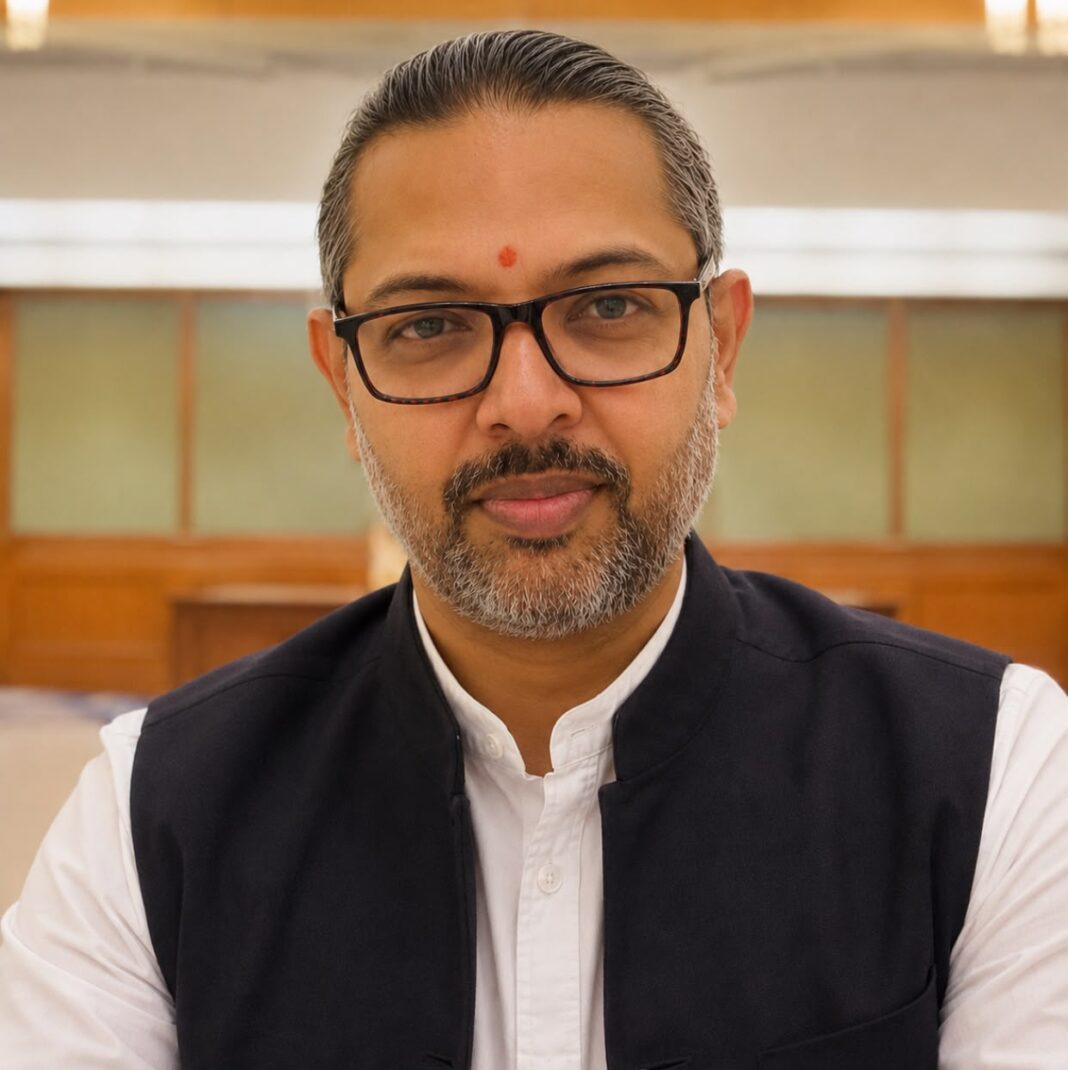
I love wearing a Tilak.
Some people find that surprising.
Why would a Christian wear a Tilak?
My answer is simple.
The Tilak is not merely a religious symbol. It is also a civilisational marker. It is a reminder that I belong to an ancient culture that valued wisdom, knowledge, self-discipline, and spiritual pursuit. When I wear a Tilak, I do not cease being Christian. I simply acknowledge that I am also a son of Bharat.
I believe many Indian Christians need not fear embracing their cultural roots. Appreciating Bharatiya traditions does not weaken one’s faith. Understanding one’s ancestry does not diminish one’s relationship with Christ.
On the contrary, truth strengthens faith.
And the truth is that our ancestors existed before us.
Their stories matter.
Their sacrifices matter.
Their identities matter.
As India rises in the twenty-first century, there is a growing civilisational awakening across the nation. More Indians are seeking to understand who they are beyond the narratives imposed upon them by colonialism. They are rediscovering local histories, family lineages, ancient traditions, and cultural practices.
I welcome this awakening.
It is not about exclusion. It is about belonging.
It is not about rejecting others. It is about understanding ourselves.
For me, this journey has deepened my appreciation for Bharat. It has strengthened my conviction that India is not merely a political entity created in 1947. Bharat is a living civilisation that has endured for millennia.
I am proud to be Christian. I am proud to be Bharatiya. I am proud of my Hindu ancestral roots.
These identities do not compete with one another. They coexist within me as chapters of a larger story.
The story of a family. The story of a civilization. The story of Bharat.
And as I continue my journey through life, I carry all three with gratitude: my faith in Christ, my love for Bharat, and my reverence for the ancestors whose lives made my existence possible.
For I know one thing with certainty: A person who knows his roots stands taller in the world. And I stand proudly rooted in the sacred soil of Bharat.