


Key Takeaways
- Dharmendra Pradhan’s resignation may be a strategic sacrifice to protect the government’s credibility and public perception.
- Bishop sacrifice is a chess analogy used to describe the strategic nature of political decision-making.
- The government’s accountability is a key factor in maintaining public credibility and trust.
Politics is not just about winning individual battles, but about preserving the king and queen, and maintaining control of the game. Experienced chess players know that sacrificing a bishop can be a strategic move, not a sign of weakness, but a way to protect the larger game. You lose a valuable piece today so that you do not lose the entire game tomorrow.
Viewed through that lens, the political handling of the controversy surrounding the CJP-linked protests offers an interesting strategic analogy. Whether one agrees with the government’s decisions or not, one interpretation is that a tactical sacrifice became necessary to preserve the government’s broader political position and public credibility.
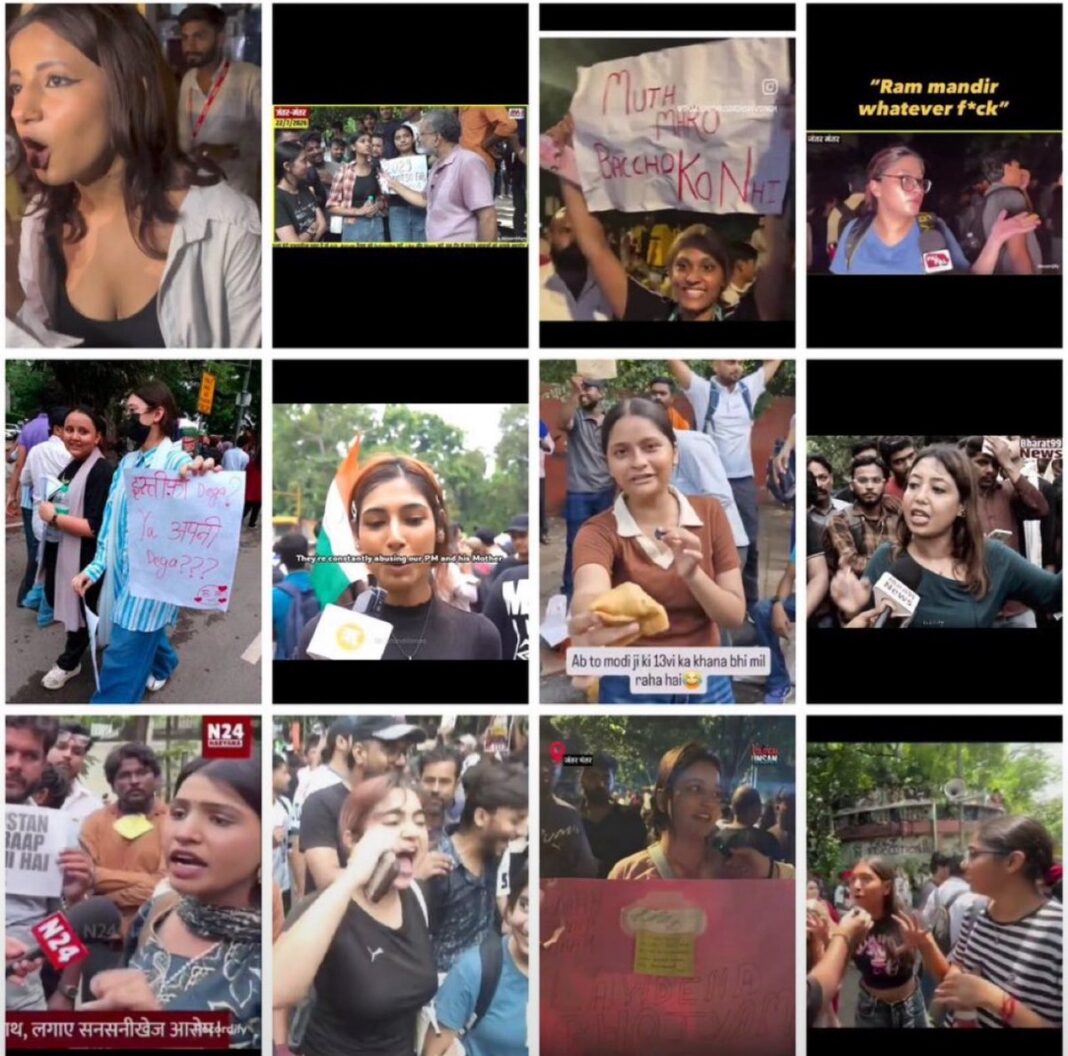
The protests were presented by many participants and supporters as a spontaneous student movement. Critics, however, argued that they were neither entirely organic nor purely student-driven. They contended that multiple ideological groups, political activists and civil society organisations had converged around a common cause, transforming what appeared to be a campus issue into a much larger political confrontation.
Every government eventually reaches a moment where symbolism matters as much as substance. Public perception begins to influence governance itself. When institutions are questioned, when narratives become polarised and when allegations dominate headlines, governments are often compelled to demonstrate that accountability exists within their own ranks.
This is where the chessboard becomes relevant.
A bishop is rarely sacrificed because it lacks value. It is sacrificed because saving the queen and avoiding a checkmate matters more.
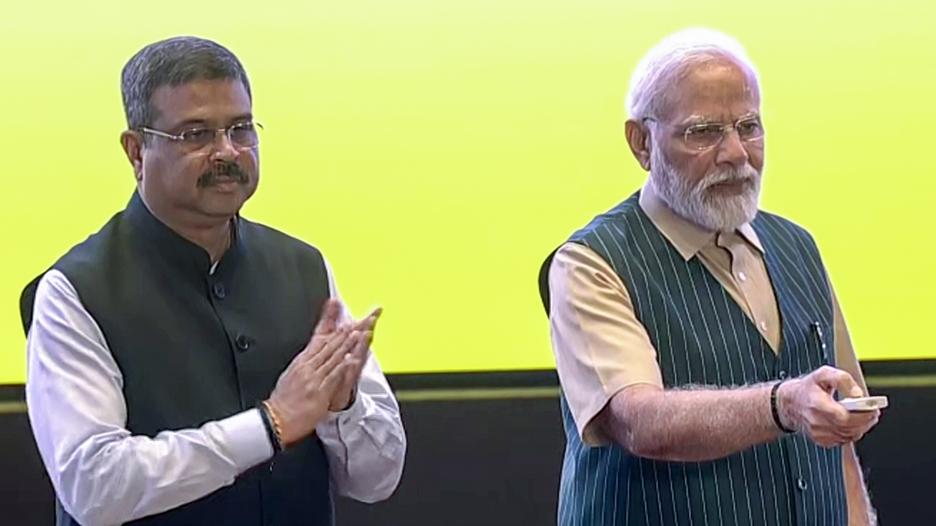
From this perspective, one could argue that Dharmendra Pradhan became the political equivalent of the bishop in a high-stakes chess match. Whether justified or not, his position came to embody the government’s response to a controversy that had grown far beyond one minister or one department. If Prime Minister Narendra Modi concluded that preserving the credibility of his government required a visible demonstration of accountability, then Pradhan may have been viewed as the piece that could be relinquished to protect the larger political board. In chess, such a move is known as a decoy sacrifice – not because the sacrificed piece lacks value, but because the player believes that conceding one important piece is preferable to exposing the queen or risking checkmate.
In political terms, governments sometimes distance themselves from individuals, not necessarily because those individuals alone define the controversy, but because retaining them risks allowing the opposition to construct a larger narrative. Whether fair or unfair, perception can become political reality.
Prime Minister Narendra Modi has consistently built his political identity around personal integrity, decisive leadership and institutional accountability. That political capital has taken years to build. It has survived elections, economic crises, national security challenges and relentless political attacks. From a purely strategic standpoint, protecting that larger political capital would naturally outweigh protecting any individual minister or political associate.
That does not automatically mean every resignation or political setback is an admission of wrongdoing. Politics frequently operates on the principle of damage containment rather than legal determination. Leaders often calculate that removing one point of controversy allows the larger government agenda to continue without becoming hostage to a single issue.

Chess players recognise this instinct immediately. The amateur tries to save every piece. The grandmaster saves the position.
This distinction is often lost in modern political commentary. Public debate increasingly seeks immediate heroes and villains, while political strategy usually unfolds over months and years. What appears to be retreat today may simply be repositioning for tomorrow.
The controversy surrounding the protests became larger than the events themselves. Competing narratives dominated television debates and social media. Supporters described the demonstrations as an expression of democratic dissent. Critics argued that the movement had evolved beyond student activism into a broader ideological campaign. These competing interpretations shaped public opinion long before any definitive conclusions could be drawn.
For any government, prolonged political uncertainty carries its own costs. Administrative focus shifts. Parliamentary debates become consumed by controversy. Opponents gain a rallying point. International commentary begins to shape domestic discourse.
Strategically, reducing the temperature becomes an objective in itself. That is where the bishop sacrifice metaphor becomes particularly compelling. A government may conclude that allowing one political casualty is preferable to permitting an entire administration’s narrative to be overshadowed indefinitely. In chess, sacrificing the bishop is painful precisely because the piece is valuable. If it had no value, the sacrifice would carry no strategic significance.
Political leadership often demands similar choices.
History is filled with examples where leaders have accepted short-term political losses to preserve long-term authority. Sometimes those decisions are vindicated. Sometimes they are criticised. But they are almost always driven by strategic calculation rather than emotional reaction. The larger lesson extends beyond one controversy or one government.
Politics rewards those who understand priorities. It punishes those who mistake individual battles for the larger war. The strongest leaders are often those willing to absorb temporary political damage in order to preserve institutional stability and long-term credibility.
Whether one accepts this interpretation or rejects it entirely, the chess analogy offers an intriguing framework for understanding high-level political decision-making. Every move on the board has consequences beyond the immediate exchange of pieces. Every sacrifice creates opportunities as well as vulnerabilities.
In the end, grandmasters do not ask whether losing the bishop looks good. They ask whether the queen survives and king is protected. Because once the queen remains protected, the game can still be won.