


As the country moves ahead towards making India “Viksit Bharat”, it is apt to remember Dr APJ Abdul Kalam, on his birth anniversary, 15 October for his contributions for self-reliant India in defence.
Life is but a collection of moments—moments that define us, make us, and allow us to leave footprints on the sands of time. Among the most defining of mine were those spent in the company of Dr A.P.J. Abdul Kalam. From the day I reported as a newly recruited scientist at the Defence Research and Development Laboratory in Hyderabad in 1986, he became my mentor, guide, and the towering lighthouse that steered me throughout my professional journey. Working under him for many years on the Integrated Guided Missile Development Programme and its successors shaped not only my career in navigation and missiles but the very way I understand leadership, self-reliance, and purpose.
As I joined DRDL-DRDO, I had to go and report to the then Director Dr APJ Abdul Kalam. Our interactions grew as part of the regular morning meeting at DRDL, discussing technical and managerial challenges with the team. Nervous as I was, he made me feel welcome. After ascertaining my qualifications, strengths, interests, and plans, his first act was characteristic of the man: he handed me a book on avionics and asked me to read it and return in a few days. When I came back, he patiently sought my feedback, gauged my understanding, and then explained the critical importance of indigenous navigation systems for missiles. He posted me to the navigation group—a decision that set the trajectory of my entire professional life. In that single interaction, I witnessed his unassuming nature, his ability to listen intently, and his gift for spotting potential and pointing young scientists toward the road they must travel.
In the navigation group, Kalam’s style was “technology sans barriers.” He would visit, meet the youngsters first, elicit their views on the work in progress, and only later discuss with the heads. Every opinion was deliberated, irrespective of rank. For him, every individual contributed to the grand goal of self-reliance. In the early days of developing indigenous navigation systems, we faced vibration-related problems and spent long nights at the environmental test facility. He would appear late at night in informal wear, stay with us for hours, and remain simplicity and leadership personified. When serious technical problems arose during Agni development in late 1988—problems so severe that changing the entire navigation system was being discussed—he spent considerable time with us, discussed the issues directly, and helped the team resolve them without a wholesale redesign. The appreciation that followed from him and other seniors was a powerful morale booster for a young scientist like me.
His leadership shone brightest under pressure. During the 1988 Prithvi campaign at Sriharikota, my first major one, technical issues had the team under severe stress. One night around 11 p.m., he called Project Director V.J. Sundaram, Deputy Project Director V.K. Saraswat, and others to his room in the guest house. Instead of diving into the problem, he spoke of general and philosophical matters, of Rameswaram, and of a photograph of a solitary man in the long corridors of the temple. He reflected on that man’s place and role in the vast universe. Our minds were gently steered away from stress. In that reset state, the problem resolved itself almost immediately. This was his method: carry people through difficult situations by restoring perspective, never fearing failure, and encouraging others to fail if it meant they would learn.
The first Agni Experimental (AE-01) launch campaign offered even deeper lessons. I interacted with him daily for months amid other DRDO stalwarts. On one occasion the teams worked non-stop for 72 hours at the launch pad; he stayed throughout, and I watched him brush his teeth and return immediately to the workplace. His dedication was total. The only time I saw him visibly stressed was when the missile failed to take off after two attempts. The third attempt succeeded, and relief washed over him. Nation and media expectations were immense. He had taken the bold decision to launch from the still-nascent Interim Test Range at Chandipur, working with ISRO experts and DRDO teams to make it happen. He involved everyone—assigning Project Directors from other IGMDP projects to critical launch aspects so that camaraderie and collective ownership would prevail. He introduced open review mechanisms in which young and experienced alike could voice opinions freely, information was transparent, and responsibility was shared. These practices became cultural foundations for successful missions.

Even after he became Scientific Adviser to the Raksha Mantri, he travelled from Delhi to Hyderabad every Friday and conducted reviews after 9:30 p.m. He dreamed big and worked to convert those dreams into reality. Research Centre Imarat, the brainchild he established and which was inaugurated by the then President of India, became the home where indigenous avionics and navigation work continued uninterrupted. Years later, when I was appointed its Director, I was sharing the dais with him at an event in Hyderabad. On hearing the news, he said, “Get a notebook and a pen. Think and list down ‘What will I be remembered for?’” I did so; he consented and advised, “Do good work. People should remember you for what you have done.” Those words remain my guiding principle.
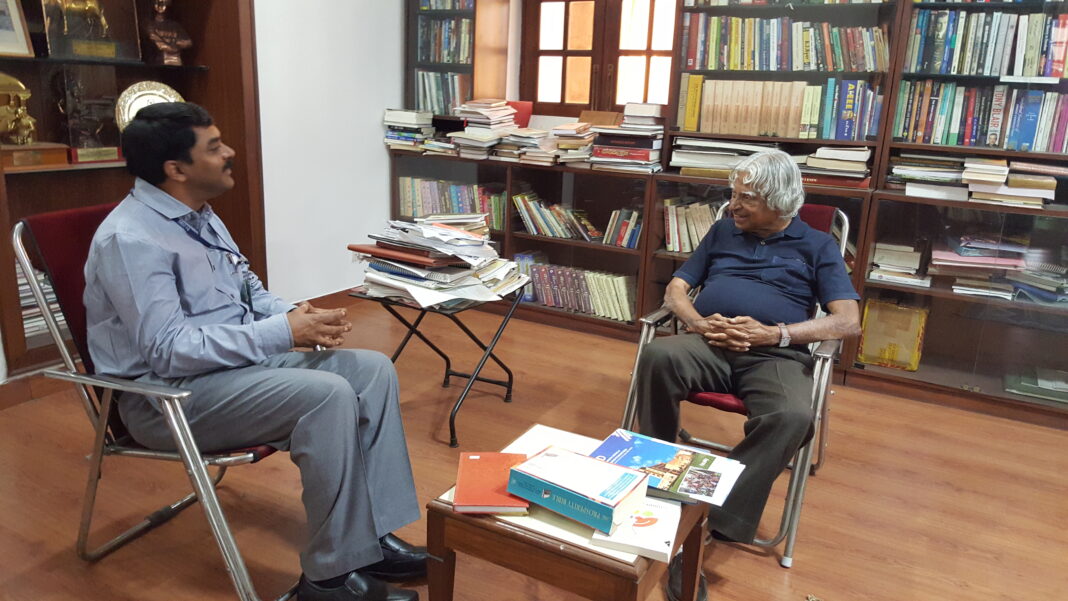
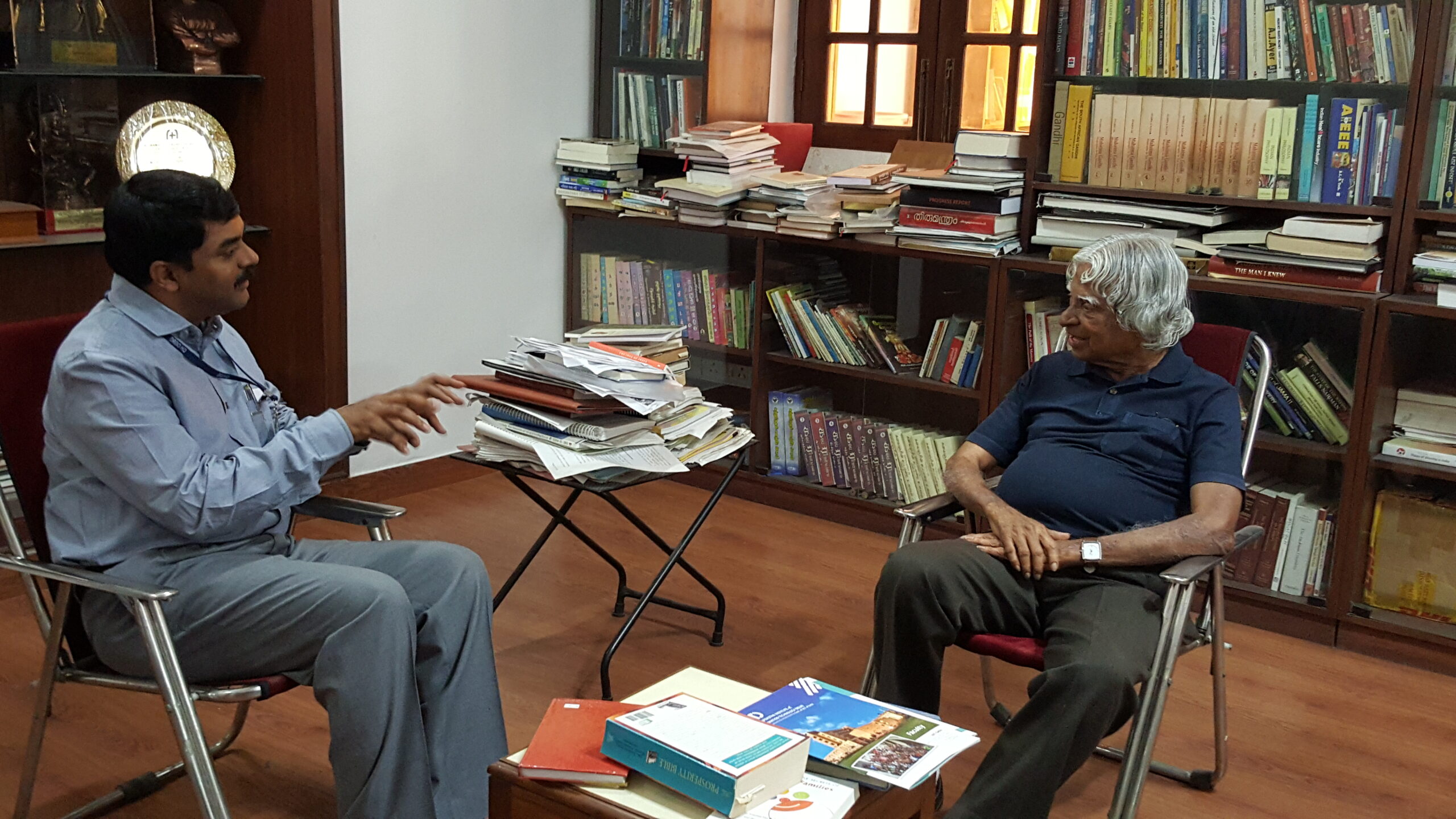
My final meeting with him was around 6th July 2015, after I took over as Scientific Adviser. I visited him at 10 Rajaji Marg to seek blessings and guidance. In his library he spoke for nearly two hours, sharing experiences and lessons on leadership, roles, and responsibilities. He advised me to work hard so that DRDO’s work would be understood, appreciated, encouraged, and facilitated by the authorities, and to ensure the DRDO perspective reached all. Central to his thoughts that day were the development of a reusable missile—one that could deliver a payload, return, take another, and launch again—and the unyielding pursuit of self-reliance. Even at that age he was active, passionate, and charting the flight path with perfection. He knew the changing times and the challenges ahead. This was destined to be our last conversation; he passed away weeks later while addressing students.
He never feared failure and taught us to traverse difficult situations. He transformed duds into smart missiles by integrating groups that had worked independently, by challenging us to become the first rather than merely the sixth or seventh nation in a technology, and by turning the entire country into a laboratory of ideas drawn from young minds. Teamwork, he showed us, could deliver wonders if the team was inspired and selfless. He constantly adapted, shifting roles with ease and giving direction to both organisations and the nation. The indigenous capabilities we built under his vision—Prithvi, Agni, Akash, and the systems that followed—proved themselves in later operations and continue to strengthen India’s strategic posture.
Today, as we pursue hypersonics, advanced materials, and greater self-reliance, his flight path remains the one we follow. The memorial at Rameswaram that I had the privilege of designing, and which DRDO realised, houses memorabilia from his ISRO days onward and keeps his legacy alive for visitors. Yet the truest memorial is in the work itself and in the hearts of those he mentored. He was simplicity personified, a leader who made leaders of others, and a visionary who insisted that dreams, pursued with integrity and hard work, could be turned into national strength.
I miss him every day. The moments I spent with him continue to define the scientist, the leader, and the citizen I strive to be. His life reminds us that the greatest tribute is not merely remembrance, but the determined pursuit of the self-reliant, technologically superior India he envisioned—and that we, the generations he inspired, must now make real.
Dr G Satheesh Reddy
Author: Former Chairman, DRDO and Secretary, DDR&D