
Baby, baby, don’t cry.
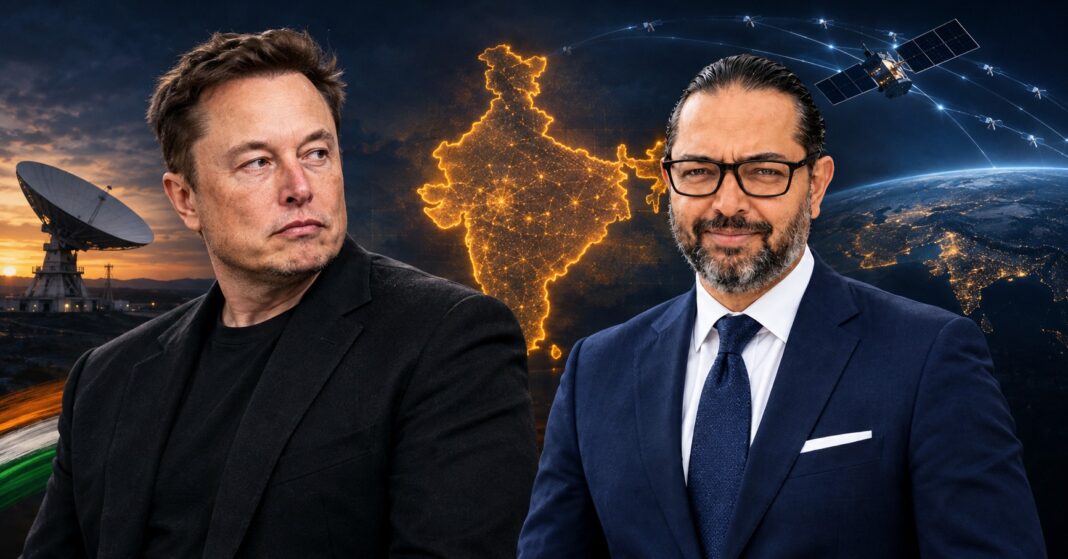
You have built rockets that reach space, electric cars that have challenged the global automobile industry, and satellite networks that promise to connect the remotest corners of the planet. You are undoubtedly one of the most remarkable entrepreneurs of our time. But somewhere between conquering the skies and dreaming of colonising Mars, you appear to have forgotten a rather elementary principle of doing business on Earth: When you enter another country, you respect its laws.
India is not your backyard, Elon. It is not a playground where billionaires can arrive with their toys, dictate the rules of engagement, and throw tantrums when the government refuses to roll out the red carpet on their terms.
India is a sovereign nation of over 1.4 billion people. We have our Constitution, our institutions, our regulatory architecture, and, most importantly, our national security interests. None of these is negotiable simply because the world’s richest entrepreneurs believe their technology deserves special treatment.
India is not governed by billionaire tantrums.
Let me make something abundantly clear. India welcomes innovation. We welcome foreign investment, technological partnerships, and enterprises capable of contributing to our economic and digital transformation. We do not, however, welcome the assumption that innovation somehow confers immunity from regulation.
Starlink is not merely another internet service provider selling broadband subscriptions. It operates a satellite-based communications network with implications for national security, spectrum management, lawful interception, data protection, and the integrity of India’s telecommunications infrastructure.
These are not trivial bureaucratic obstacles designed to inconvenience Elon Musk. They are legitimate sovereign concerns.
India faces complex security challenges across its borders, in its maritime domain, and within the digital ecosystem. Satellite communication technologies, while enormously beneficial for civilian connectivity, can also present risks when exploited by terrorists, organised criminal networks, hostile intelligence agencies, or other adversarial actors.
Consequently, India has every right, and indeed an obligation, to scrutinise the architecture, ownership, operational controls, and security compliance of any satellite communications provider seeking access to its market.
Your reputation as an innovator does not exempt Starlink from that scrutiny. And frankly, Elon, someone who routinely speaks about the existential risks of artificial intelligence should understand why governments must examine the security implications of powerful technologies.
There is something particularly irritating about the expectation that India should accommodate foreign commercial interests simply because those interests originate from powerful global corporations.
For centuries, India endured the consequences of outsiders arriving under the banner of commerce before seeking disproportionate influence over its economic and political destiny.
Those days are over.
Today’s India is neither economically desperate nor strategically submissive. We are one of the world’s largest economies, a formidable digital marketplace, an emerging technological powerhouse, and an increasingly consequential geopolitical actor.
Access to India’s consumers is an opportunity, not an entitlement.
Whether you are Elon Musk, Jeff Bezos, Mark Zuckerberg, or the chief executive of any multinational corporation, the principle remains unchanged: You are welcome to do business in India, but you will do business according to India’s rules.
Our regulatory institutions are not subordinate departments of Silicon Valley. Our ministers are not account managers for American billionaires. And our national security agencies are certainly not expected to compromise their responsibilities because a businessman with millions of followers decides to complain on social media.
India will engage with you as a commercial partner, not as a supplicant.
One of the more troubling habits of powerful technology entrepreneurs is their tendency to portray regulatory scrutiny as hostility toward innovation.
When governments agree with their commercial ambitions, they celebrate free markets. When governments insist upon compliance, suddenly the system is allegedly captured, obstructive, or unfair.
That is a convenient argument, but not a convincing one.
Regulation is not inherently anti-business. Properly designed, transparent and consistently applied regulation protects consumers, promotes competition, and safeguards national interests.
India’s telecommunications sector has developed through enormous public and private investment. Domestic operators have spent substantial resources building infrastructure, acquiring spectrum, and complying with regulatory requirements.
You cannot reasonably expect India to disregard these realities simply because satellite broadband represents a different technological model.
Nor should established Indian companies receive preferential protection from legitimate competition. If any operator is abusing market power or influencing regulatory decisions improperly, that deserves investigation.
But the remedy is evidence, transparency, and fair competition, not a billionaire’s public relations offensive.
The rules must be fair to everyone, including Starlink. And Starlink must follow them like everyone else.
Elon, you are familiar with the strategic significance of space-based technologies. SpaceX works in an environment where technological innovation intersects directly with national security.
You would hardly expect the United States government to permit a foreign-controlled satellite communications network to operate without appropriate security assessments.

Why, then, should India behave differently?
Our borders with Pakistan and China present persistent strategic challenges. Our maritime interests stretch across the Indian Ocean. Our internal security environment requires constant vigilance against terrorism, cyberattacks, and hostile intelligence operations.
Satellite communications can provide extraordinary benefits during disasters, in remote villages, across difficult terrain, and for critical infrastructure. I recognise that potential.
But the same capabilities demand robust safeguards concerning network access, terminal authorisation, lawful interception, and the prevention of unauthorised use.
India cannot outsource its sovereign security judgment to the commercial assurances of any corporation, however technologically advanced.
There is another aspect to this debate that you would do well to appreciate.
India is not merely a vast population waiting to purchase American technology. It is a civilisation with a deep sense of dignity, a growing confidence in its capabilities, and a determination to shape its own technological future.
We have demonstrated our abilities in space exploration, digital public infrastructure, pharmaceuticals, engineering, software, and advanced scientific research.
Our scientists have reached the Moon. Our engineers are building technologies for the future. Our entrepreneurs are competing internationally.
We admire technological excellence, Elon. But admiration should never be mistaken for submission.
You are welcome to compete in India. In fact, competition that improves connectivity, reduces costs, and expands digital access would be beneficial to millions of Indians.
But competition must occur within a framework that protects India’s interests.
Do not mistake the government’s insistence on compliance for weakness. Do not mistake patience for indecision. And certainly do not mistake India’s openness to investment for an invitation to exert pressure through public accusations.
Elon, I genuinely admire what you have accomplished. It takes extraordinary imagination, courage, and persistence to build enterprises that challenge established industries and push the boundaries of human achievement. But technological genius does not automatically translate into geopolitical wisdom.
India is not Mars, where you might someday hope to establish a settlement according to your vision. India already has a civilisation, a Constitution, a democratically elected government, and institutions entrusted with protecting its national interests. We do not need a billionaire to teach us how sovereignty works.
Before you dismiss India’s regulatory scrutiny as obstruction, perhaps you should examine the security controversies surrounding Starlink across the world. In Manipur, Indian security forces recovered Starlink-branded equipment during counterinsurgency operations in December 2024, while subsequent reports alleged that satellite connectivity had enabled armed groups to circumvent internet shutdowns. Although you denied that Starlink beams were operational over India, the discoveries warranted investigation.
In neighbouring Myanmar, Starlink terminals have been discovered in cybercrime compounds linked to transnational fraud and human trafficking, demonstrating how satellite connectivity can sustain criminal operations beyond conventional telecommunications controls. In Ukraine, Starlink has been indispensable to Ukrainian military communications, yet Russian forces also reportedly obtained and used unauthorised terminals for battlefield coordination and drone operations, prompting SpaceX to cooperate with Ukrainian authorities to deactivate them. In Iran, Starlink connections reportedly continued operating despite government restrictions and nationwide internet blackouts, demonstrating the technology’s capacity to bypass state-controlled communications networks. That connectivity also enabled civilians to communicate during a crackdown, illustrating why its security implications cannot be reduced to a simple question of good or bad technology.
These cases expose a fundamental strategic concern for India: Who ultimately controls the connectivity, who can authorise or deactivate terminals, who can access sensitive communications, and how effectively can Indian authorities prevent misuse by terrorists, insurgents, smugglers and hostile intelligence networks? A privately controlled satellite constellation with enormous geopolitical influence cannot operate on commercial assurances alone. India must insist upon enforceable security safeguards, traceability, lawful interception capabilities and effective mechanisms to disable unauthorised terminals. Elon, your technology may connect the world, but India’s sovereignty, territorial integrity and national security cannot depend on the discretion of one billionaire sitting thousands of kilometres away.
If you want Starlink to succeed in India, engage constructively with our regulators. Meet the legitimate requirements. Demonstrate transparency. Address security concerns. Compete fairly. Earn the confidence of Indian consumers. And if you believe the regulatory process is unfair, challenge it through the appropriate institutional mechanisms with evidence rather than insinuations
India should equally ensure that its processes are transparent, predictable, and free from favouritism. No domestic conglomerate should be allowed to manipulate the rules against a foreign competitor, just as no foreign competitor should expect exemptions unavailable to Indian businesses.
That is what genuine economic sovereignty and fair competition look like.
India is open for business, Elon. But India is not for sale.
We respect your achievements. We welcome your technology. We recognise the potential of satellite connectivity.
What we will not accept is the suggestion that India’s laws become optional whenever they inconvenience your commercial ambitions.
You have conquered extraordinary engineering challenges. Surely following the laws of a sovereign democracy cannot be beyond your capabilities.
Personally, I would not want Starlink operating in India. I increasingly see American technology corporations as modern reflections of the East India Company, entering nations through commerce while gradually acquiring economic, technological and strategic influence. India must never allow commercial dependence to become an instrument of foreign control. That is my personal view, but I am not fundamentally opposed to foreign companies operating in India, provided they respect our sovereignty, comply with our laws, contribute meaningfully to our economy, and never mistake commercial access for the right to exercise strategic influence over our nation.
Elon, I have known people who behave like spoilt children, convinced that they are entitled to everything they desire, and when they do not get their way, they resort to whining. Unfortunately, that is precisely the impression your recent conduct on social media has left on me. And until then, one final piece of advice.
Baby, baby, don’t cry.
India is not your backyard. Follow our rules. Stop whining.