


Key Takeaways
- The US and Iran are at a critical juncture, with Washington seeking a new arrangement and Tehran cautious about easing pressure.
- Iran’s strategy of endurance prioritizes the preservation of regime stability, maintenance of deterrence, and survival under pressure.
- A US Iran accommodation could have significant implications for the region, including increased stability and economic growth, but also risks strengthening Iran’s long-term position and undermining deterrence.
Reports of a possible $3 billion transfer from the UAE to Iran have generated intense debate. The claim remains disputed and should therefore be treated with caution. Yet the larger strategic significance lies not in this alleged transfer, but in the contours of a broader political bargain emerging between Washington, Tehran and key Gulf capitals.
As of mid-June 2026, the US, Iran and Israel find themselves at a critical juncture. President Trump has publicly projected confidence that a new arrangement is close, linking it to the reopening of the Strait of Hormuz and renewed constraints on Iran’s nuclear programme. Tehran has signalled interest but remains cautious. Simultaneously, Israeli military operations and Hezbollah-linked attacks continue, highlighting the fragility of any emerging understanding. The situation is fluid, but it’s clear that all sides are looking for a way out of the US-Israel initiated confrontation, which has become increasingly costly.
Iran’s Strategy of Endurance
Battlefield triumph over the United States has never been Iran’s central objective. Since the Iran-Iraq War (1980-88), Tehran has repeatedly demonstrated a preference for strategic endurance over decisive confrontation. The preservation of regime stability, maintenance of deterrence and survival under pressure have consistently taken precedence over conventional military success.
If Iran secures reduced military pressure, partial sanctions relief, access to frozen overseas assets and renewed economic breathing space, it will have achieved a significant political outcome irrespective of the huge costs it is incurring. The ability to convert resilience into negotiating leverage has long been one of Tehran’s most effective strategic instruments. This reality is shaping current negotiations. It is already clear that the clock is running faster for the West.
Iran’s negotiators face a paradox. They may be prepared to bargain with Washington, but they have far less reason to trust it. The US withdrawal from the JCPOA (2018 withdrawal from the 2015 nuclear deal) sadly demonstrated that even a formally negotiated agreement is only as durable as the administration that signs it.
Washington’s Calculus
The emerging American approach reflects hard geopolitical realities. First, prolonged instability in the Gulf directly threatens global energy markets. Even temporary disruptions in the Strait of Hormuz passage are economically significant. Instability there is not merely an energy story; it is an “everything” story.
Second, Washington’s strategic priorities should clearly remain in the Indo-Pacific, where competition with China should dominate long-term planning. West Asia and Ukraine consume much attention, resources and political capital that American policymakers would rather direct to the Indo-Pacific.
Third, the November 2026 US mid-term elections are approaching. After the costly experiences of Iraq (2003-11) and Afghanistan (2001-21), there is limited domestic appetite for another open-ended conflict. Since even intense Western military action has not broken Iran’s resilience, the West now has powerful reasons to convert military pressure into a negotiated outcome. To switch to conflict management, and hopefully conflict resolution, from conflict escalation.
Fourth, Americans remember that they had secured a “deal’ — the earlier mentioned JCPOA, and that President Trump walked out of it unilaterally, in 2018. They would rightfully expect the new deal in the offing to be a JCPOA “plus”, not a diminished version of it. A tall order on ground.
Diverging Regional Perspectives
The prospect of a US-Iran accommodation is being viewed very differently across West Asia. Israel remains deeply sceptical of any arrangement that eases pressure on Tehran without fundamentally weakening Iranian military and nuclear capabilities. Israeli leaders fear that premature concessions could strengthen Iran’s long-term position while undermining deterrence. Continued Israeli military activity in Lebanon and persistent tensions involving Hezbollah reflect these concerns. Facing protracted criminal proceedings for corruption, Prime Minister Netanyahu has been accused by critics of perpetuating hostilities to maintain his grip on power and delay legal accountability.
The Gulf monarchies, by contrast, increasingly prioritise stability, economic growth and investor confidence. The lessons of the Yemen War (2014-present), the Abqaiq-Khurais attacks (2019 strikes on Saudi oil facilities) and repeated disruptions to regional shipping have compounded the economic costs of prolonged confrontation. For states seeking to position themselves as global financial, tech, logistics, and tourism hubs, stability has become a critical strategic asset in its own right.

Implications for Markets and India
For global markets, the key issue remains the security of energy flows rather than the details of any particular financial arrangement.
For India, greater stability in West Asia would strengthen energy security, moderate inflation and support its economic growth. It would also improve prospects for key connectivity initiatives such as Chabahar Port, the India-Middle East-Europe Economic Corridor (IMEC, announced in 2023) and the International North-South Transport Corridor.
India’s diplomatic position is equally important. Maintaining productive relations simultaneously with the US, Iran, Israel and the Gulf states has become one of New Delhi’s most valuable strategic advantages.
The Larger Lesson
More consequential than the alleged $3 billion transfer is the possible emergence of a new equilibrium in which military confrontation gradually gives way to political bargaining.
The deeper lesson is that contemporary conflicts increasingly reward endurance, economic resilience and diplomatic leverage as much as battlefield performance. Across multiple theatres—from Vietnam and Afghanistan to Ukraine and the Gulf—the decisive question is often not who wins the fighting, but who shapes the terms of the settlement that follows.
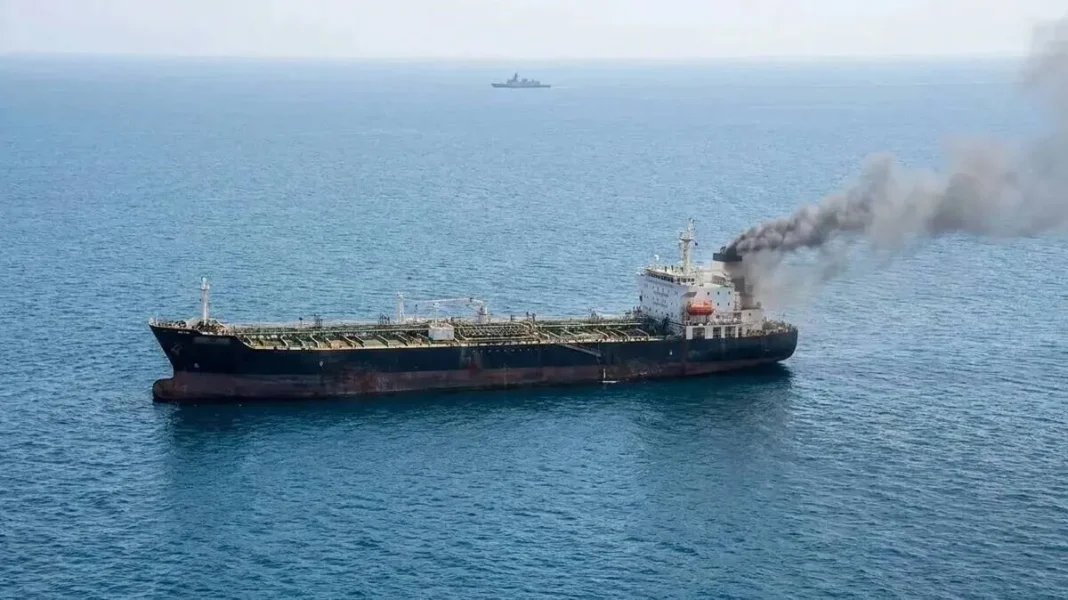
There is a broader strategic irony here. Until the US-Israel attacks on Iran on 28 February 2026, the Strait of Hormuz was open and passage was toll free. For over 100 days now, Iran has suffered very severe losses — military, political leadership and infrastructure. Yet Tehran now possesses greater explicit leverage over Hormuz than before the conflict began.
Iran’s Parliament has progressively moved to formalise that leverage through resolutions adopted on 30 March 2026, expanded on 10 May and finalised on 13 June, authorising the imposition of transit fees and tolls on commercial vessels passing through the Strait. The practical implementation and international acceptance of such measures remain uncertain. Nevertheless, the broader strategic point of Iran’s enhanced explicit leverage over Hormuz is stark.
Whatever the final contours of any US-Iran agreement, this reality is likely to endure. The balance of power in the Persian Gulf has evolved, and every major stakeholder is adjusting to it.
If an accommodation between Washington and Tehran ultimately emerges—as it should—it will reinforce a defining feature of twenty-first century geopolitics: political outcomes are increasingly determined not by military power alone, but by the ability to convert survival into strategic advantage.
**********************************
#USIranWar #Geopolitics #Iran #MiddleEast #EnergySecurity #USIran #StrategicAffairs #OilMarkets