
Key Takeaways
- The discovery of massive natural gas reserves in the Eastern Mediterranean has transformed Israel’s energy landscape, making it a potential regional gas exporter.
- The IMEC corridor aims to connect Asia, the Middle East, and Europe through an integrated network of ports, railways, energy pipelines, and digital cables.
- The Eastern Mediterranean’s energy resources have the potential to reshape the balance of power across West Asia, Europe, and the Indo-Pacific.
Why the Eastern Mediterranean May Become Bharat’s Next Strategic Energy Frontier
History often hides its most profound transformations beneath the surface. Sometimes literally.
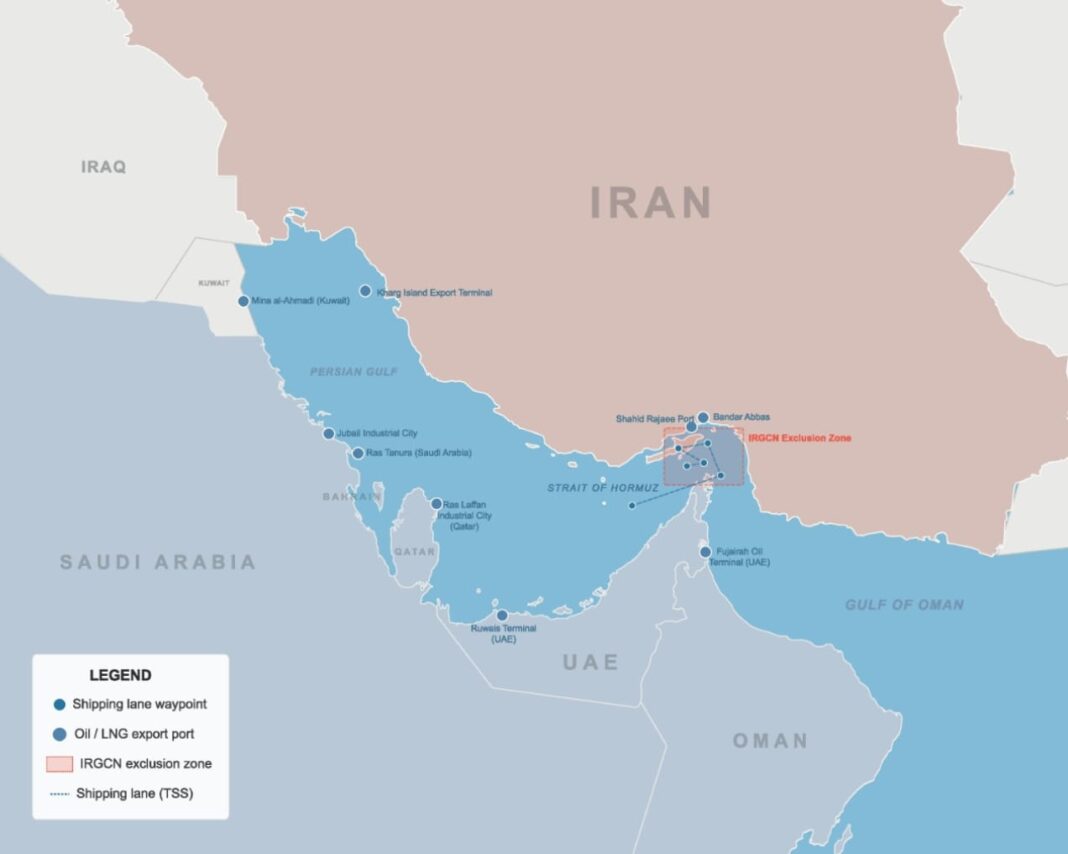
For decades, the geopolitics of energy was defined by the deserts of West Asia. From the oilfields of Saudi Arabia to the vast reserves of Kuwait, Iraq and the United Arab Emirates, the Persian Gulf shaped the global economy. Tankers leaving the Gulf carried crude oil through the narrow waters of the Strait of Hormuz, supplying factories in Europe, powering industries in Asia, and sustaining the world’s modern economic system.
Entire wars were fought over these flows of oil. Alliances were forged around them. Naval fleets patrolled the waters to secure them.
But geopolitics is rarely static. Beneath the waters of the Eastern Mediterranean, another energy story has quietly been unfolding, one that could redraw the strategic map of West Asia.
Over the past fifteen years, massive natural gas discoveries off Israel’s coast have transformed the region’s energy equation. Fields such as the Leviathan gas field and Tamar have turned Israel from a country dependent on imported energy into a potential regional gas exporter.
At almost the same time, another geopolitical idea began taking shape, a connectivity corridor linking Asia, the Middle East and Europe.
This initiative, known as the India–Middle East–Europe Economic Corridor, or IMEC, was unveiled during the summit of the G20 in New Delhi in 2023.
The idea behind IMEC is both simple and ambitious: connect Bharat, the Gulf, Israel and Europe through an integrated network of ports, railways, energy pipelines and digital cables.
When one connects these two developments, Eastern Mediterranean gas and the IMEC corridor, an entirely new geopolitical map begins to appear.
It is a map where energy flows, supply chains and strategic alignments could reshape the balance of power across West Asia, Europe and the Indo-Pacific.
The Discovery That Changed Israel’s Energy Destiny
For most of its modern history, Israel lived with a strategic vulnerability.
Unlike many of its neighbours in West Asia, Israel possessed neither large oil reserves nor major natural gas fields. Energy imports were therefore essential to power its industries, cities and military infrastructure.
This changed dramatically in 2009.
That year, geologists discovered the Tamar gas field approximately ninety kilometres west of Haifa in the Mediterranean Sea.
The discovery itself was significant. But what came next was extraordinary.
In 2010, energy companies exploring deeper waters discovered the Leviathan gas field, the largest offshore natural gas field in the Mediterranean.
The numbers were staggering.
Leviathan alone holds roughly 22 trillion cubic feet of natural gas. Tamar contains around 10 trillion cubic feet. Smaller fields such as Karish and Tanin added additional reserves.
Together, these discoveries meant that Israel suddenly possessed more than 30 trillion cubic feet of offshore natural gas.
The impact was immediate and transformative.
First, Israel achieved energy independence in electricity generation. Natural gas replaced coal as the primary fuel for Israeli power plants.
Second, Israel became a potential energy exporter.
Third, and perhaps most importantly, energy became a powerful diplomatic tool.
Gas pipelines were constructed linking Israel to neighbouring countries such as Egypt and Jordan.
Egypt, which already possessed liquefied natural gas (LNG) terminals, began processing Israeli gas and exporting it to international markets, including Europe.
A country that once relied heavily on imported energy had suddenly become an emerging energy hub.
The Eastern Mediterranean Awakens
Israel’s discoveries triggered a wave of exploration across the Eastern Mediterranean.
Energy companies began surveying waters near Cyprus, Greece and Egypt.
The results were remarkable.
In 2015, Egypt discovered the Zohr gas field, one of the largest offshore gas finds in the world.
Cyprus also identified significant gas reserves.
Together, these discoveries created a new energy geography known as the Levant Basin.
Recognising the strategic importance of these resources, several countries established the Eastern Mediterranean Gas Forum in Cairo.
The forum brought together Israel, Egypt, Cyprus, Greece and several European partners to coordinate development of the region’s gas resources.
At first, these discoveries were seen largely as regional developments.
But events elsewhere soon gave them global importance.
Europe’s Sudden Energy Shock
For decades, Europe depended heavily on natural gas imported from Russia.
Large pipelines carried Russian gas across Eastern Europe to major European economies such as Germany, Italy and France.
This arrangement worked smoothly, until geopolitics intervened.
When the Russia–Ukraine War erupted, Europe suddenly found its energy security under threat.
Sanctions, political tensions and pipeline disruptions forced European countries to urgently diversify their energy supplies.
Liquefied natural gas imports from the United States increased dramatically.
But Europe also began looking closer to home.
Eastern Mediterranean gas suddenly appeared as a potential alternative energy source.
Although the volumes cannot fully replace Russian gas, Israeli and Egyptian reserves could still contribute significantly to Europe’s energy diversification.
The Mediterranean was no longer merely a tourist destination.
It was becoming an energy theatre.
IMEC: The Corridor That Could Redraw Trade Routes
While the energy drama was unfolding in the Mediterranean, another strategic idea was emerging across Asia and West Asia.
During the 2023 G20 summit in New Delhi, a coalition of countries announced the India–Middle East–Europe Economic Corridor (IMEC).
The corridor seeks to connect:
• India

• United Arab Emirates
• Saudi Arabia
• Israel
• Greece
• Italy
• Germany
through a network of ports, railways, electricity grids, digital cables and hydrogen pipelines.
The corridor has two main segments. The eastern corridor links Bharat with the Gulf. The northern corridor connects the Gulf to Europe through Israel and the Mediterranean.
The idea is to create a faster and more resilient trade route between Asia and Europe.
Today, most trade between the two regions travels through the Suez Canal.
But events such as the blockage of the canal in 2021 and recent security situation in the Red Sea have exposed the vulnerabilities of global supply chains.
IMEC offers an alternative.
Where Israeli Gas Fits into the IMEC Vision
Energy is one of the most intriguing components of the IMEC concept.
Beyond transporting goods, the corridor could also move electricity and hydrogen.
Israeli natural gas could play a role in this emerging energy architecture.
Natural gas can be used to produce blue hydrogen, which captures carbon emissions during production.
Hydrogen pipelines planned under the IMEC framework could eventually transport this energy from the Middle East toward Europe.
Alternatively, Israeli gas could continue to be exported through Egyptian LNG terminals to global markets.
In either scenario, Israel’s offshore gas fields could become part of a broader energy network linking the Mediterranean, the Gulf and the Indo-Pacific.
Bharat’s Strategic Energy Calculus
For Bharat, the emergence of Eastern Mediterranean gas carries important strategic implications.
Bharat is now the third-largest energy consumer in the world, and its energy demand continues to grow as the economy expands.
Traditionally, Bharat has relied heavily on crude oil imports from the Gulf.
While these relationships remain essential, New Delhi has consistently pursued a strategy of energy diversification.
The Eastern Mediterranean offers a new potential energy frontier.
Participation in gas exploration projects or energy infrastructure development could provide Bharat with a stake in this emerging region.
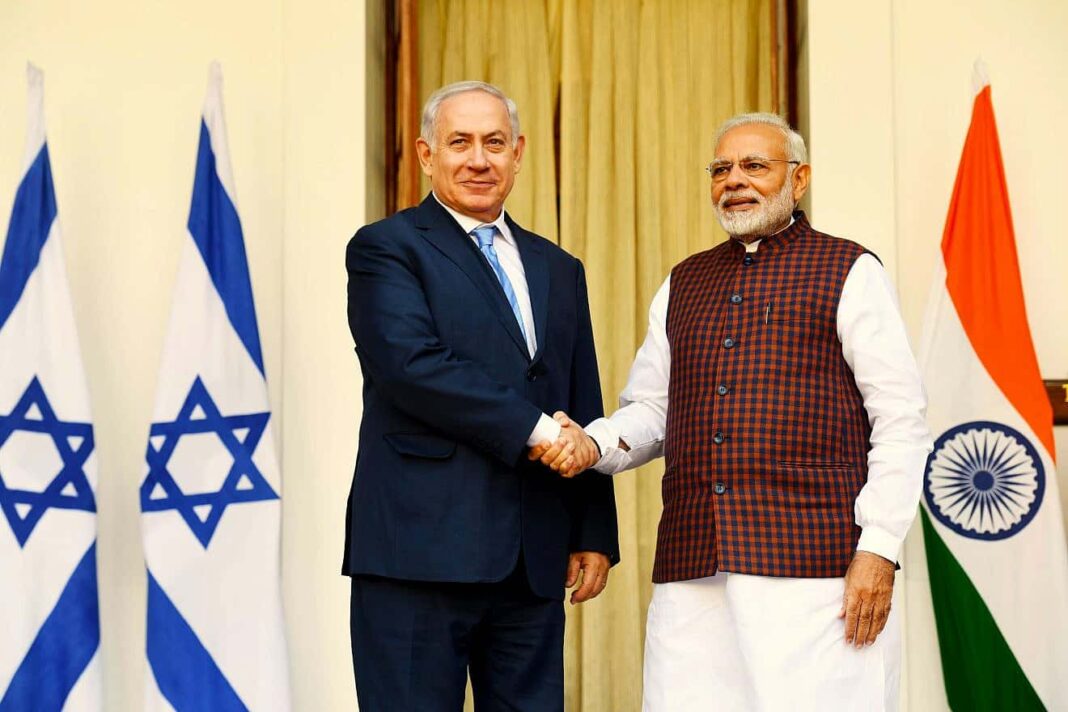
The strategic dimension of this possibility was reflected in the growing engagement between Narendra Modi and Benjamin Netanyahu.
During their recent interactions, the two leaders discussed cooperation in energy exploration, geophysical research and technological innovation.
While no immediate gas supply agreements were announced, the broader strategic context is unmistakable.
Energy cooperation between Bharat and Israel is likely to deepen as the Eastern Mediterranean energy ecosystem evolves.
Security Risks Beneath the Waves
Energy wealth rarely emerges without geopolitical tension.
Offshore gas platforms are extremely valuable infrastructure, but they are also vulnerable.
Israel’s platforms lie within reach of hostile actors such as Hezbollah.
During periods of tension, Israel deploys naval patrols and air defence systems to protect these installations.
Maritime boundary disputes have also complicated development.
For years, Israel and Lebanon disagreed over their maritime border in the Mediterranean.
This dispute threatened to delay exploration near contested waters.
In 2022, after negotiations mediated by the United States, the two countries reached an agreement defining their maritime boundary.
This allowed exploration to proceed while reducing the risk of conflict.
Yet the security dimension remains ever present.
In West Asia, energy infrastructure often becomes a strategic target during times of war, as it is being now.
The Emerging Energy Crossroads
The convergence of Eastern Mediterranean gas discoveries and the IMEC corridor represents one of the most important shifts in global energy geopolitics.
Energy flows that once moved primarily from the Persian Gulf may increasingly diversify through new corridors.
Israel’s offshore gas fields could become part of a broader network linking the Mediterranean, the Gulf and the Indo-Pacific.
For Bharat, this transformation offers significant opportunities.
Participation in emerging energy corridors could strengthen energy security while expanding geopolitical influence across West Asia.
But challenges remain.
Regional tensions, maritime disputes and infrastructure costs will influence the pace of development.
Energy projects unfold over decades.
Yet the strategic trajectory is becoming increasingly clear.
The Eastern Mediterranean is no longer merely a geopolitical frontier.
It is emerging as one of the new energy crossroads of the twenty-first century.
And in this evolving chessboard, the intersection of Israeli gas reserves, the IMEC corridor and the expanding strategic engagement between Bharat and Israel may shape the future architecture of global energy and geopolitics.