
It is often said that in war, truth is the first casualty. But in the unfolding America-Israel-Iran conflict, something far more profound is being exposed – not just the truth, but the character of nations. Wars are not merely fought with missiles and men; they are fought with intent, with clarity of purpose, and above all, with civilisational instinct.
And if one strips away the noise, the rhetoric, and the carefully curated narratives, a hard and uncomfortable reality emerges – Israel is not pretending to be anything other than what the situation demands. It is not cloaking itself in moral ambiguity. It is not seeking global applause. It is acting with cold precision, driven by a singular objective: survival.
In that sense, Israel has chosen to wear the mask of what many may call the ‘devil’, but in reality, it is the mask of necessity.
When a civilisation faces what it perceives as an existential threat, the luxury of appearing virtuous disappears. History has never been kind to those who chose moral posturing over strategic survival. From ancient empires to modern states, those who survived were not always the most righteous – they were the most decisive.
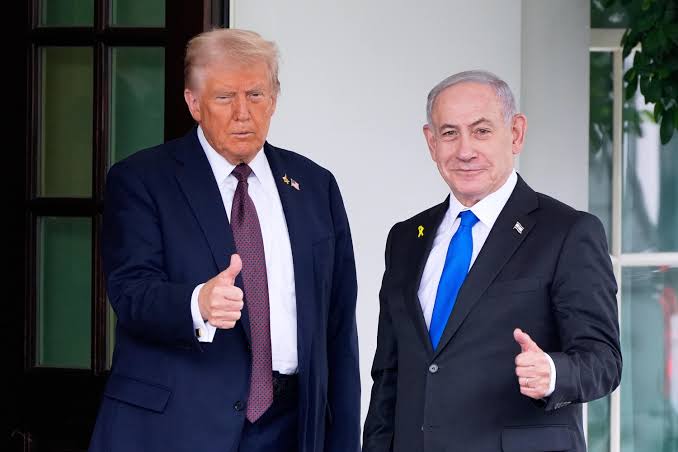
In a striking and deeply controversial articulation of power over morality, Benjamin Netanyahu, in his address, appeared to echo a harsh civilisational realism when he said, “Jesus Christ has no advantage over Genghis Khan. If you are strong enough, ruthless enough, and powerful enough, evil will overcome good.” The remark, seemingly rooted in a 2019 reflection on historian Will Durant’s “The Lessons of History,” underscores a worldview where strength, not virtue, determines survival. It is a sentiment that aligns uncomfortably with the unfolding dynamics of the current conflict – where ideals are eclipsed by raw power, and where nations, when pushed to the brink, abandon the language of saints and instead speak the dialect of Lucifer.
Israel understands this.
While the United States continues to oscillate between strategic restraint and political compulsions, Israel has demonstrated a clarity that borders on ruthless honesty. The divergence between American and Israeli objectives is no longer hidden. Reports indicate that while Washington seeks a limited engagement, Israel is pursuing a far more expansive goal – the systemic weakening, if not outright collapse, of the Iranian regime.
This is not coincidence. It is design.
Israel is not fighting this war for optics. It is not concerned about global oil prices, diplomatic backlash, or even temporary isolation. It is fighting to ensure that the threat it perceives – nuclear, ideological, and military – is neutralised for generations.
And in doing so, it has chosen to act without apology.
Contrast this with the United States.
America entered this conflict with the weight of global leadership on its shoulders, but also with the burden of domestic politics, economic fragility, and international expectations. The result is a nation stretched thin – militarily engaged, economically strained, and strategically uncertain. The numbers tell their own story.
The war has already triggered what the International Energy Agency calls the largest disruption in global energy supply in history, with nearly 20% of the world’s oil and gas flows affected. Oil prices have surged beyond $100 per barrel and is expected to touch $ 150 per barrel, stock markets have plunged, and economies across the world – including India – are feeling the tremors.
The Strait of Hormuz, a vital artery of global energy, has effectively become a choke point, with shipping collapsing and tanker traffic plummeting dramatically.
This is not just a regional war. It is a global economic earthquake.
And yet, who stands to lose the most?
Not Israel.
Israel, despite being at the epicentre of the conflict, has calibrated its engagement with remarkable precision. Its strikes – including those on critical Iranian energy infrastructure such as the South Pars gas field – are not random acts of aggression, but calculated moves to cripple Iran’s economic backbone.
Even as Iran retaliates and the region burns, Israel’s objective remains singular and undistracted.
America, on the other hand, is paying the price of being both a participant and a guarantor of global stability. It is deploying more troops, committing billions more in resources, and absorbing the economic shockwaves that ripple across its own markets.
This is the paradox of power.
The superpower bleeds not because it is weak, but because it is entangled.
Iran, meanwhile, is enduring devastation – its infrastructure damaged, its economy strained, its people suffering. Yet, even here, the outcome is not as straightforward as many in Washington may have hoped. Intelligence assessments suggest that rather than collapsing, Iran’s regime is consolidating power, becoming more hardline and entrenched.
This is the unintended consequence of external aggression – it often strengthens the very forces it seeks to dismantle.

The Middle East as a whole is being scarred.
Cities are being reduced, economies destabilised, and the environment itself is paying a heavy price, with reports of toxic pollution, industrial destruction, and long-term ecological damage emerging from the conflict zones.
But amid this chaos, one nation appears to be operating on a different plane.
Israel.
It is not seeking sympathy. It is not asking for validation. It is not even attempting to justify its actions in the language of global morality. Instead, it is sending a message – stark, unapologetic, and unmistakable.
When survival is at stake, perception is irrelevant.
This is where the uncomfortable metaphor of ‘Lucifer’ finds its place.
Lucifer, in theological discourse, is often portrayed not merely as evil, but as a figure of defiance – one who refuses submission, who challenges the established order, and who operates outside the moral frameworks that bind others.
In this war, Israel has embraced that role – not out of desire, but out of necessity.
It has chosen to be feared rather than misunderstood. And in doing so, it may well achieve what others cannot – strategic clarity.
For America, the lessons are far more complex.This war is exposing the limits of American power in a multipolar world. It is revealing the cost of alliances where objectives are not perfectly aligned. It is demonstrating that military superiority does not always translate into strategic control.
Most importantly, it is highlighting a fundamental truth – that in conflicts driven by existential fears, rational calculations often give way to uncompromising actions.
Israel is not fighting a war of convenience. It is fighting a war of existence.
America is fighting a war of obligation.
Iran is fighting a war of resistance.
And the world is watching a war of consequences.
In the end, history will not judge this conflict by the narratives crafted in newsrooms or the statements issued in diplomatic corridors. It will judge it by outcomes.
Who emerged stronger? Who achieved their objectives? Who paid the highest price?
If current trajectories hold, the answer may be deeply unsettling.
America will bear the economic and strategic costs.
Iran and much of the Middle East will bear the physical and civilisational scars.
And Israel – having embraced the role it believed necessary – may well emerge not unscathed, but undeniably stronger and greater.
Because in the brutal arithmetic of geopolitics, survival is the only morality that ultimately matters.