

Key Takeaways
- Operation Sindoor marked a turning point in India’s response to cross-border terrorism, signaling a new normal in deterrence strategy.
- The goal of Operation Sindoor is to eliminate or reduce the frequency and severity of future attacks by making them strategically unprofitable.
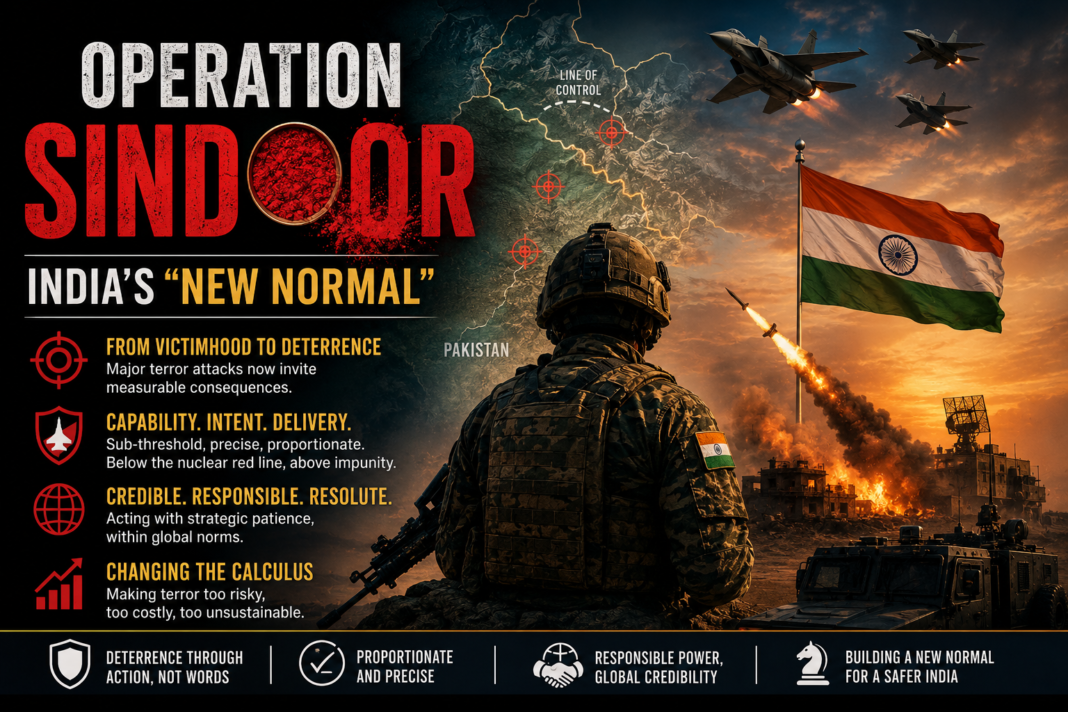
- India’s new normal in deterrence strategy is to use sub-threshold force to impose meaningful costs on those who sponsor or shelter terrorist groups.
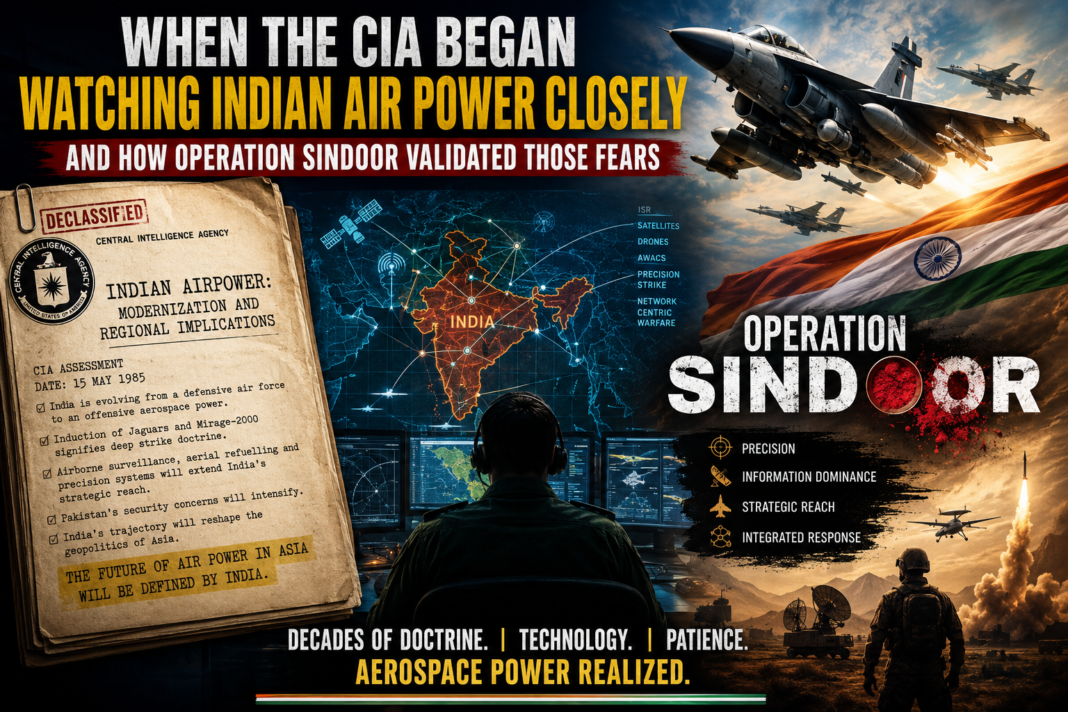
Operation Sindoor marked a turning point in how India responds to cross‑border terrorism. For decades, India absorbed attacks, issued diplomatic protests, and avoided military retaliation across the Line of Control or the international boundary. Sindoor broke that pattern. It signalled that India now treats major terror strikes not as isolated shocks but as triggers for delivering consequences.
Capability and intent. Whilst India’s capability was improving, the intent was not to escalate but to demonstrate that India possesses the operational capability, and more critically, the political intent of imposing these costs. The major global observation was the successful exhibition of this updated intent – the “new normal”.
This shift did not emerge overnight. Since the 2016 surgical strikes and the 2019 Balakot air operation, India has steadily normalised the use of sub‑threshold force—military action designed to stay below Pakistan’s nuclear red lines, while still imposing meaningful costs. Sindoor consolidated that evolution.
Deterrence is not built on statements; it is built on consistent behaviour. The logic behind Sindoor is to reshape the risk–reward calculus of those who sponsor or shelter terrorist groups.
The “new normal” is not about punishment for its own sake. It is forward‑looking and behaviour‑shaping. The goal is to eliminate / reduce the frequency and severity of future attacks by making them strategically unprofitable. In this sense, Sindoor represents a shift from reactive victimhood to structured deterrence, where India signals that crossing of certain thresholds will reliably produce consequences and inflict increasing “costs”.

International Signalling and Domestic Maturity
The message to global partners was clear: India views major cross‑border terror attacks as legitimate grounds for limited, proportionate force response, and it is prepared to act without waiting for external approval—while still adhering to norms of target discrimination and proportionality. This approach helped India maintain international credibility, avoid accusations of recklessness, and frame its actions within globally accepted counter‑terrorism principles.
Domestically, Sindoor reflected a more self‑assured political posture. The operation was not accompanied by triumphalism or inflammatory rhetoric. Instead, it projected strategic patience and controlled resolve. Compared with earlier eras—where India responded with mourning, dossiers and démarches—Sindoor fits a pattern in which the public expects visible, calibrated action, not only statements of condemnation. The new normal.
How Should we Measure Success?
Sindoor’s success lies not just in the number of targets it successfully struck, but in whether it helps change Pakistan’s behaviour over time. Success would mean that Rawalpindi begins to see major attacks on India as too risky, too costly.
For that to happen, India must maintain:
> Policy continuity across political cycles.
> Clear signalling about tolerance thresholds.
> A coordinated whole-of-country approach.
> Credible, replenishable capabilities that make operations sustainable.
If these conditions hold, Sindoor will be remembered not just as a successful operation, but as the pivot when India locked in a “new normal” in its deterrence pattern.