

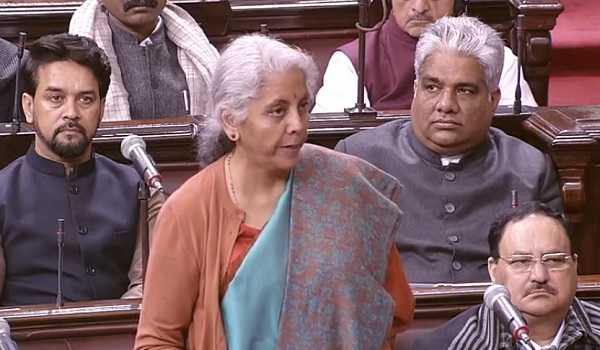

New Delhi: India’s real gross domestic product (GDP) would grow in the range of 6-6.8 pc in the financial year 2023-24 depending on the trajectory of economic and political developments globally, said the Economic Survey 2022-23 tabled in Parliament on Tuesday by Finance Minister Nirmala Sitharaman.
The Survey projected a baseline GDP growth of 6.5 pc in real terms in FY24.
“The projection is broadly comparable to the estimates provided by multilateral agencies such as the World Bank, the IMF, and the ADB and by RBI, domestically. The actual outcome for real GDP growth will probably lie in the range of 6.0 per cent to 6.8 per cent, depending on the trajectory of economic and political developments globally,” said the Survey prepared by Chief Economic Adviser V. Anantha Nageswaran.
Economic Survey is the government’s annual report card on the economy and is presented a day ahead of the Union Budget. The document details the performance of various sectors of the economy and projects the GDP growth for the coming financial year.
The Survey said that the optimistic growth GDP forecasts stem from a number of positive factors like the rebound of private consumption, higher capex, near universal vaccination given a boost to production activity, higher Capital Expenditure (Capex), near-universal vaccination coverage, strengthening of corporate balance sheets and a well-capitalised public sector banks among others.
The Economic Survey noted that India’s recovery from the pandemic was relatively quick, and growth in the upcoming year will be supported by solid domestic demand and a pickup in capital investment.

It further said that even as India’s outlook remains bright, global economic prospects for the next year have been weighed down by the combination of a unique set of challenges expected to impart a few downside risks.
“Multi-decadal high inflation numbers have compelled central banks across the globe to tighten financial conditions. The impact of monetary tightening is beginning to show in slowing economic activity, especially in Advanced Economies. Besides this, adverse spillovers from the prolonged strains in supply chains and heightened uncertainty due to geo-political conflict have further deteriorated the global outlook,” the Survey said.
On the external front, the Economic Survey said that the risks to the current account balance stem from multiple sources.
The Survey noted that while commodity prices have retreated from record highs, they are still above pre-conflict levels.
“Strong domestic demand amidst high commodity prices will raise India’s total import bill and contribute to unfavourable developments in the current account balance. These may be exacerbated by plateauing export growth on account of slackening global demand. Should the current account deficit widen further, the currency may come under depreciation pressure,” it said.
“Another risk to the outlook originates from the ongoing monetary tightening exercise. While the pace of rate hikes has slowed, major central banks have reaffirmed their hawkish stance on inflation,” the Survey added.