





History is unfolding in real time – and as always, it is not the leaders who bleed first.
The ongoing America-Israel-Iran war, which began on 28 February 2026 with coordinated U.S.-Israeli strikes on Iran, has already redrawn the geopolitical map of West Asia. Missiles rain down on cities, oil routes choke, global markets tremble-and somewhere in this chaos, the sons and daughters of ordinary citizens are dying.
But not the sons and daughters of those who started it.
That is the uncomfortable truth the world is once again being forced to confront.
Donald Trump ordered strikes that ignited this war. Benjamin Netanyahu escalated them with relentless precision. Together, they justified it as necessity – pre-emption, deterrence, survival. And yet, while American and Israeli soldiers stand on the frontlines, while Iranian civilians bury their dead, the families of these two leaders remain far removed from the battlefield.
There is a word for this: power without consequence.
Let us not pretend this war was accidental. Nearly 900 strikes were launched in the first 12 hours alone, targeting Iranian leadership, military infrastructure, and strategic assets. Iran responded with missiles, drones, and regional escalation, dragging the entire Middle East into a dangerous spiral. Today, Tehran burns, Israeli cities remain under threat, and the Strait of Hormuz – a lifeline of global energy – stands on the brink of collapse.
And yet, for all the rhetoric of existential threats, one question refuses to go away:
If this war is so necessary, so justified, so urgent – why are the children of its architects not fighting it?
Trump speaks of strength, of crushing enemies, of restoring American dominance. But strength, when detached from sacrifice, becomes theatre. His administration has escalated and paused strikes almost in the same breath – talking peace while preparing for further destruction. It is strategy, yes. It is politics, certainly. But it is not sacrifice.
Because sacrifice is what the American soldier makes – not the American President.
Similarly, Netanyahu frames this war as a battle for Israel’s very survival. And to be fair, Israel does live under constant threat. Iranian missiles have struck Israeli territory, civilians have died, and the fear is real. But when every conflict is framed as existential, war becomes permanent. And when war becomes permanent, accountability disappears.
Israeli airstrikes continue to pound Tehran, hitting military and intelligence targets, even as diplomatic pauses are discussed. Civilian casualties are rising – over 1,500 deaths reported, with children among them. This is no longer a surgical conflict. This is a full-scale war with human costs that no press conference can sanitise.
Yet, amidst all this, there is a glaring absence. Not a single child of Trump or Netanyahu is standing in uniform at the front. Not a single one is staring down a missile, or sleeping in a bunker, or writing a final message home.
Instead, it is the children of ordinary Americans and Israelis who are caught in the crossfire of decisions they never made. This is where the moral argument collapses.
Because leadership, at its core, is not just about making decisions – it is about owning their consequences. And when those consequences are outsourced entirely to the masses, leadership begins to resemble something far more cynical.
It begins to look like exploitation.
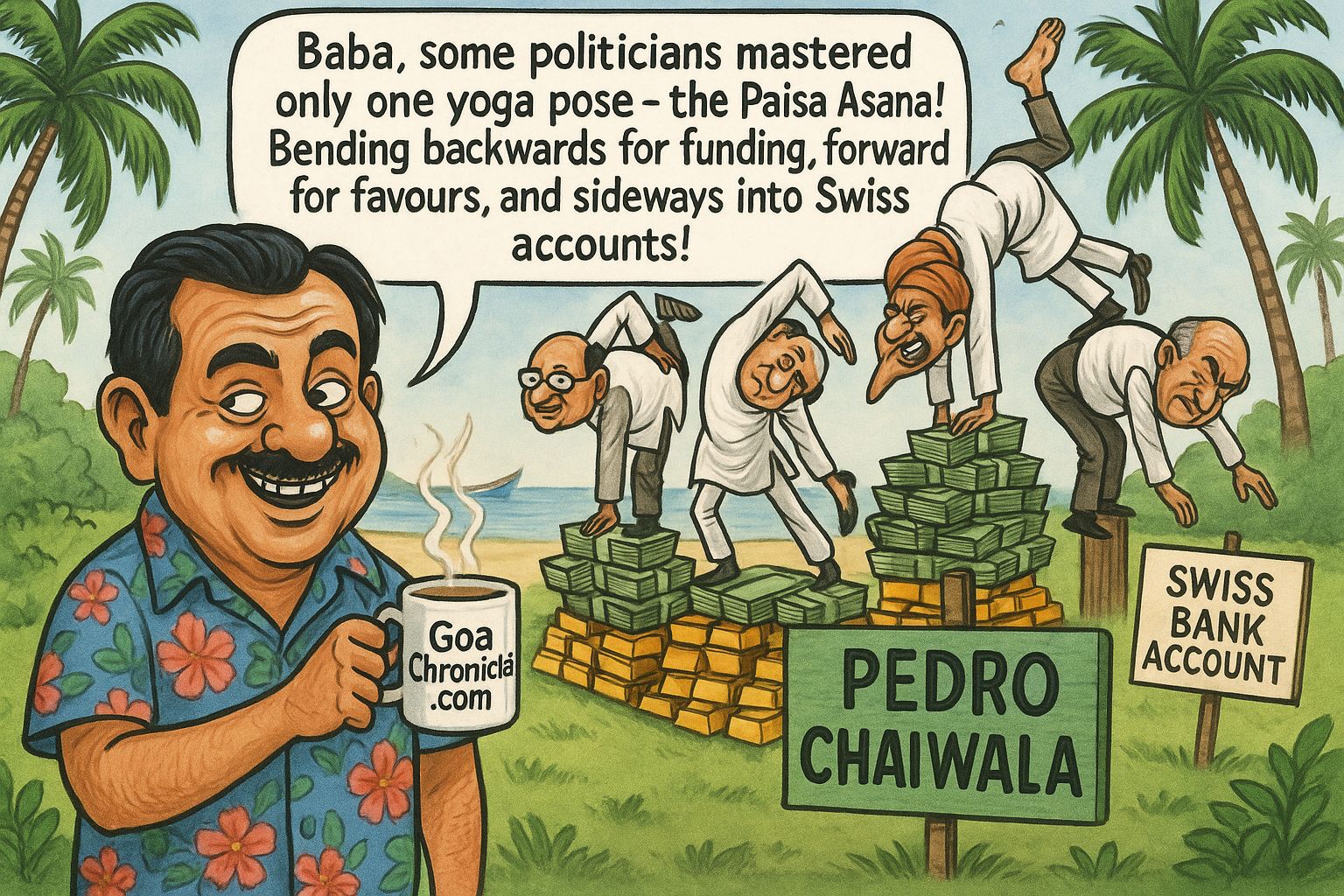
If war reveals the hypocrisy of power, this America-Israel-Iran conflict exposes something even more disturbing – how proximity to power can translate into financial advantage.
Every statement by Donald Trump now moves global markets. A threat pushes oil prices up; a pause brings them crashing down. Billions shift in hours. War has become a trigger for profit.
And this is where his family enters the picture.
Members of Trump’s family, particularly his sons, have been linked to investments in sectors that benefit directly from conflict – defence technologies, including drone-related ventures, and financial platforms tied to geopolitical event speculation. These are industries that surge precisely when war intensifies.
To be clear, there is no proven illegality. But the ethical question is unavoidable.
When a President can influence markets with a sentence, those closest to him are not ordinary participants – they sit near the source of that influence. Even without direct wrongdoing, the advantage is structural.

So while American soldiers risk their lives and families live with uncertainty, those within the orbit of power are positioned in spaces where war can translate into financial gain.
That is the real imbalance.
War, for the many, is sacrifice.
For the few connected to power, it risks becoming opportunity.
Consider the broader fallout. The war has already disrupted global oil supply, driven up prices, and sent shockwaves across economies. Even in India, rising fuel and food costs are being felt by ordinary citizens far removed from the battlefield. Prime Minister Narendra Modi has called the situation “worrisome,” emphasising the global consequences of a war that few truly control.
This is the nature of modern warfare – it is never contained. It spills over borders, economies, and lives.
But again, the burden is uneven.
The elite strategise; the middle class pays; the poor die. And this is why the question of personal stake matters.
Imagine, for a moment, if Trump had to send his own son into this war. Imagine if Netanyahu had to watch his child march into Gaza, Lebanon, or Tehran’s shadows. Would their calculations remain the same? Would escalation come as easily? Or would diplomacy suddenly become more urgent?
Because war always looks different when it is your child on the line.
This is not an argument for isolationism or weakness. Nations have the right to defend themselves. Threats must be confronted. Iran is not an innocent actor in this conflict – it has retaliated, escalated, and expanded the theatre of war across the region.
But acknowledging that does not absolve leadership of its moral responsibility.
If anything, it heightens it.
Because when the stakes are this high – when the world teeters on the edge of a wider regional or even global conflict – leaders must rise above politics and power games. They must act not just with strength, but with restraint.
And restraint is hardest when you have nothing personal to lose.
That is the paradox of modern power. The further leaders are from the battlefield, the easier it becomes to justify it.
Trump and Netanyahu are not anomalies. They are products of a system where war is often a decision made by those who will never experience it firsthand. But in a democracy, that system must be questioned.
Because patriotism is not about cheering wars – it is about questioning the necessity of them.
And today, as missiles fly between Washington’s ally and Tehran’s regime, as Israel strikes and Iran retaliates, as global markets shake and innocent lives are lost, one truth stands out starkly:
This war is being fought by the many, but decided by the few.
And until that imbalance is addressed – until leaders are held to the same standard of sacrifice they demand from their people – history will continue to repeat itself.
The powerful will declare wars. And the powerless will die in them.