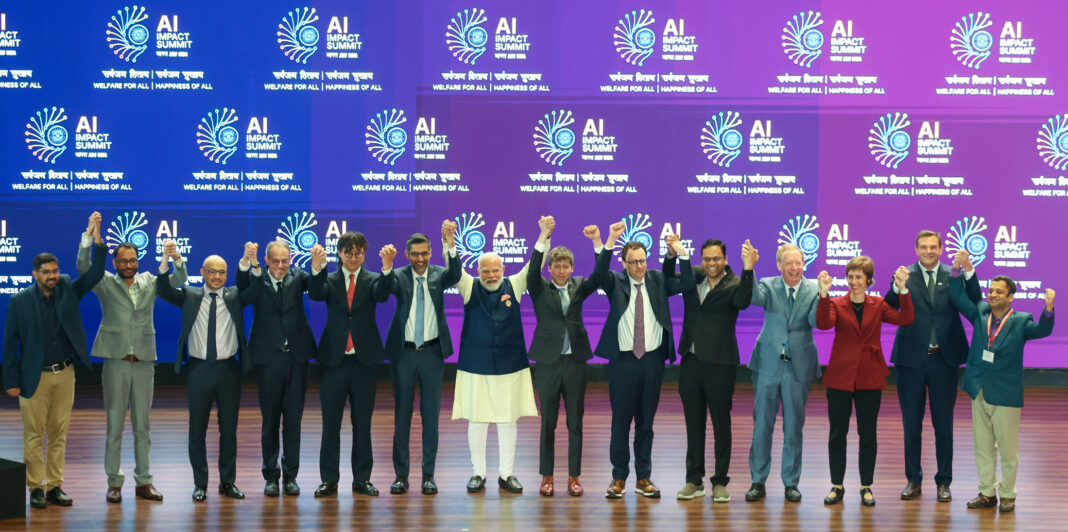

In a nation that chants “Make in India” with conviction and speaks of becoming a global AI powerhouse, what unfolded at the India AI Impact Summit in Delhi is nothing short of embarrassing.
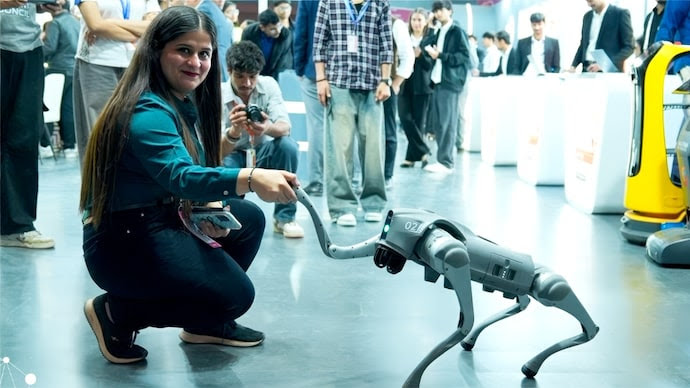
Galgotias University now finds itself at the centre of a storm after a viral video exposed what many are calling a shocking case of technological plagiarism. At the heart of the controversy is a robotic dog – sleek, agile, AI-powered – showcased under the name “Orion.” The problem? The machine is not an indigenous breakthrough. It is the Unitree Go2, a commercially available product manufactured by Chinese robotics firm Unitree and sold online for approximately ₹2–3 lakh.
The outrage did not erupt because a university purchased foreign technology. Institutions across the world procure advanced systems for research and training. The outrage erupted because of what appeared, in that viral clip, to be a brazen attempt to pass off imported technology as homegrown innovation.
In the now widely circulated video, a representative at the summit is seen explaining the robotic dog’s features, introducing it as ‘Orion’ and implying it was developed by the university’s Centre of Excellence. There was no mention of Unitree. No acknowledgment that this was a Chinese-made product available on the open market. The presentation created the unmistakable impression that this was an indigenous achievement.
For a country striving to build credibility in AI and robotics, that moment was devastating.
Only after the video went viral – only after social media users identified the device as the Unitree Go2 and called out the apparent misrepresentation – did the university issue a clarification. In a statement posted on X, Galgotias claimed it had never said it built the robodog. It insisted that the machine had been procured from Unitree and was being used as a learning tool for students.
“Let us be clear: Galgotias has not built this robodog, nor have we ever claimed to,” the statement declared.
But clarity after exposure is not the same as transparency before scrutiny.
An X Community Note fact-checked the university’s denial, stating that the claim of not presenting the robodog as its own was “incorrect and misleading.” According to the note, the robot had been explicitly named ‘Orion’ and described as developed by their team during the summit interaction.
That contradiction is what has deepened the embarrassment.
This was not a minor communication slip buried in a brochure. This was a public summit focused on artificial intelligence – a stage meant to showcase India’s technological ambition. And on that stage, a Chinese product appears to have been rebranded and projected as an institutional innovation.
If true, that is not a misunderstanding. That is misrepresentation.
In the race to be seen as cutting-edge, did the university gamble with credibility? Was branding prioritised over honesty? These are uncomfortable questions, but they must be asked.

India’s AI ecosystem is at a fragile and formative stage. Billions are being invested in data centres, semiconductor design, AI research and robotics. The narrative is clear: India must not merely consume global technology but create it. Trust, therefore, is the currency that sustains this ambition.
When an institution is seen showcasing a readily available foreign product under a new name without immediate disclosure of its origin, it damages more than its own reputation. It feeds cynicism. It fuels the perception that ‘innovation’ is sometimes reduced to clever packaging.
There is no shame in importing technology. There is no disgrace in using a Unitree Go2 to train students. In fact, exposure to global tools is essential. But there is immense shame in allowing audiences to believe that imported hardware is a domestic breakthrough.
And what makes the episode particularly troubling is timing. The denial came only after the internet did its homework. Only after users identified the robot. Only after the clip went viral.
In the digital age, truth travels fast. But so does evidence.
The university has since stated that innovation knows no borders and that it sources the best technologies from global hubs to keep students ahead of the curve. That argument would have stood strong – had it been the opening line at the summit rather than a defensive clarification days later.
Because once credibility is questioned, every explanation sounds like damage control.
India does not need inflated claims. It does not need cosmetic nationalism in robotics. It needs institutions bold enough to say: “Yes, this is imported technology. Our students are studying it, dismantling it, improving it – and one day, they will build better.”
That would have inspired confidence.
Instead, what the country witnessed was a viral video, a backlash, a denial, and a community note contradicting that denial.
At a time when India seeks global respect in AI and deep technology, this episode serves as a cautionary tale. Innovation cannot be rebranded into existence. Credibility cannot be retrofitted after exposure.
If India is to lead in artificial intelligence, it must do so with integrity – not illusion. Because in the world of technology, you can rename a robot “Orion.” But you cannot rename the truth.