
Key Takeaways
- The military-industrial complex has a significant impact on government policy, with defence industries shaping political decision-making.
- War can trigger massive shifts in global economic structures, especially in the defence sector, and accelerate technological innovation.
- The global defence market is valued at over $2 trillion annually, with several major arms manufacturers dominating the industry.
War has always been more than the clash of armies. Behind every battlefield lies a vast economic machinery, with factories humming with production and supply chains redirecting resources. From the age of iron and gunpowder to the era of drones and cyber warfare, conflict has repeatedly restructured economies and accelerated technological innovation.
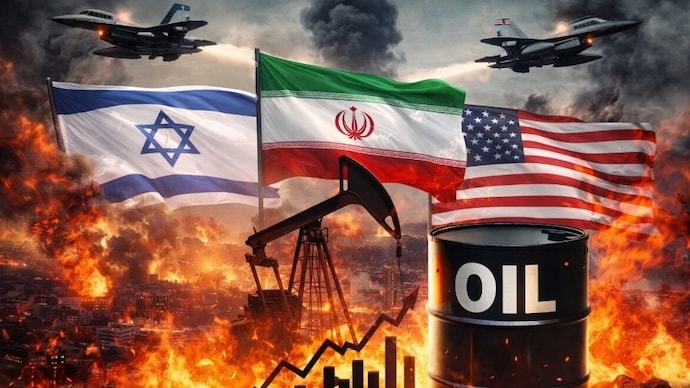
The ongoing geopolitical tensions in West Asia, particularly the escalation between the United States and Iran, once again bring into sharp focus the intricate relationship between warfare and economics. While the human cost of war is immeasurable, history shows that conflicts often trigger massive shifts in global economic structures, especially in the defence sector. Arms manufacturers, technology firms, logistics networks, and energy markets all become intertwined with the strategic calculus of war.
Understanding the economics of war is therefore not merely about examining who profits from conflict; it is about understanding how wars transform industrial production, global trade, national budgets, and technological progress.
War as an Economic Engine
The idea that war stimulates economic activity is not new. During the Second World War, the United States transformed from a nation still recovering from the Great Depression into the world’s largest industrial powerhouse. Military production drove employment, technological development, and industrial capacity.
Factories that once manufactured automobiles began producing tanks and aircraft. Shipyards expanded exponentially. Entire industries, such as radar technology and early computing, emerged from wartime research.
This phenomenon has often been described as the “military-industrial complex,” a term popularized by U.S. President Dwight Eisenhower in his farewell address in 1961. Eisenhower warned of the growing influence of defence industries on government policy, noting that the economic incentives associated with military production could shape political decision-making.
Today, the military-industrial complex operates on a global scale. Defence companies across the United States, Europe, Israel, and increasingly Asia compete for contracts worth hundreds of billions of dollars.
The Modern Global Defence Market
The global defence market today is valued at well over $2 trillion annually, making it one of the largest and most technologically advanced industries in the world. Military spending encompasses not only weapons but also logistics systems, satellite networks, cyber defence, artificial intelligence, and surveillance infrastructure.
Conflicts and geopolitical tensions often lead to immediate increases in defence budgets. Governments accelerate procurement programs, replenish ammunition stocks, and invest in new technologies designed to counter emerging threats.
The war in Ukraine, for example, triggered a dramatic rise in European defence spending. Germany alone announced a €100 billion special defence fund, reversing decades of restrained military expenditure.
Similarly, tensions in the Middle East have historically led to large-scale arms purchases by Gulf nations seeking to strengthen their defensive capabilities against regional threats.
The Arms Manufacturers Poised to Benefit
When geopolitical crises intensify, the defence sector becomes one of the most closely watched industries in financial markets. Investors anticipate increased military spending and procurement contracts, which can significantly boost the revenues of defence companies.
Several major arms manufacturers dominate the global defence industry.
Lockheed Martin
Lockheed Martin is the world’s largest defence contractor and a cornerstone of the United States’ military industrial base. Its flagship product, the F-35 Lightning II fighter jet, represents one of the most advanced aircraft programs ever developed. The company is also heavily involved in missile defence systems such as THAAD and components of the Patriot air defence system.
During periods of heightened geopolitical tension, demand for these systems increases dramatically. Nations facing missile or drone threats often prioritize investments in air defence capabilities, making Lockheed Martin a major beneficiary of escalating conflicts.
RTX (Raytheon)
Another key player is RTX Corporation, formerly Raytheon Technologies. The company produces some of the world’s most widely deployed missile defence systems, including the Patriot missile system, NASAMS air defence, and Tomahawk cruise missiles.
In conflicts where missile and drone attacks become frequent, air defence systems become indispensable. The Ukraine war demonstrated how rapidly missile defence inventories can be depleted, prompting governments to order additional interceptors and systems.
Northrop Grumman
Northrop Grumman specializes in advanced aerospace systems and strategic defence technologies. Its upcoming B-21 Raider stealth bomber is expected to play a crucial role in the future of long-range strike capability.
The company also produces high-altitude surveillance drones such as the Global Hawk, which provide intelligence, surveillance, and reconnaissance (ISR) capabilities essential for modern warfare.
In conflicts where situational awareness and real-time intelligence are critical, ISR platforms become indispensable.
General Dynamics
General Dynamics is another pillar of the American defence sector. The company manufactures M1A2 Abrams tanks, Stryker armoured vehicles, and Virginia-class nuclear submarines.
While modern warfare increasingly emphasizes drones and precision weapons, traditional platforms such as tanks and submarines remain critical components of military strategy. Prolonged conflicts often require large-scale replenishment of these systems.
The Role of Israeli Defence Companies
Israel’s defence industry has also emerged as a global leader, particularly in missile defence and drone technology.
Rafael Advanced Defence Systems
Rafael produces the Iron Dome missile defence system, designed to intercept short-range rockets and artillery shells. The system gained international recognition after successfully protecting Israeli cities from rocket attacks.
Another Rafael system, David’s Sling, is designed to intercept medium-range ballistic missiles.
As missile and drone threats proliferate globally, many countries are exploring similar defensive systems.
Israel Aerospace Industries (IAI)
IAI is a pioneer in unmanned aerial vehicles (UAVs). Systems such as the Heron drone and Harop loitering munition have been widely exported.
Loitering munitions, often described as “kamikaze drones”, have become increasingly prominent in modern warfare, combining surveillance capabilities with precision strike potential.
Europe’s Expanding Defence Industry
European defence companies are also experiencing renewed demand as NATO members increase military spending.
BAE Systems
BAE Systems, the United Kingdom’s largest defence contractor, produces a wide range of military equipment including Eurofighter Typhoon jets, armoured vehicles, and naval warships.
With Europe seeking to strengthen its defence posture in response to geopolitical tensions, companies like BAE Systems are seeing increased procurement orders.
Thales Group
France’s Thales Group specializes in radar systems, electronic warfare technologies, and defence electronics. Modern warfare increasingly relies on sensors, data networks, and electronic warfare capabilities, making companies like Thales essential players in the defence ecosystem.
The Rise of Counter-Drone Technology
One of the defining features of modern conflicts is the widespread use of drones.
From reconnaissance UAVs to loitering munitions, drones have fundamentally changed the battlefield. They are relatively inexpensive, easy to deploy, and capable of striking targets with remarkable precision.
As a result, the demand for counter-drone systems has surged.

Companies such as DroneShield, an Australian firm specializing in anti-drone technologies, are gaining attention for their electronic jamming systems and radar-based detection solutions.
These systems are designed to neutralize hostile drones before they reach their targets, making them increasingly valuable in both military and civilian security contexts.
War and the Energy Markets
The economics of war extend beyond the defence industry. Energy markets are often among the first sectors to react to geopolitical crises.
The Middle East remains one of the world’s most critical energy-producing regions, and any disruption to its stability can trigger significant fluctuations in oil prices.
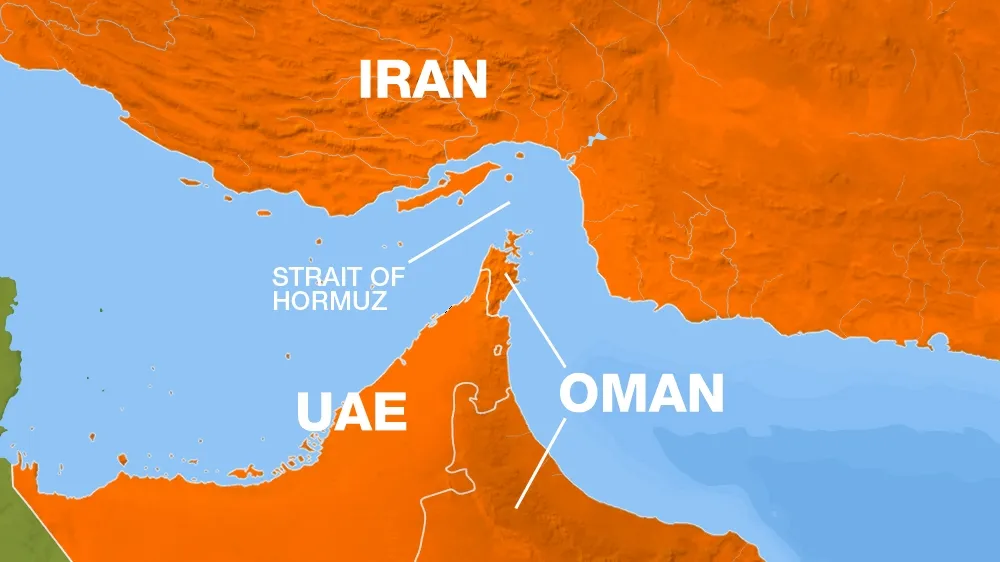
One of the most strategically significant locations in this context is the Strait of Hormuz, through which roughly one-fifth of the world’s oil supply passes each day.
If shipping through the Strait were disrupted, global oil prices could rise sharply, affecting economies worldwide.
Energy infrastructure itself has increasingly become a target in modern conflicts. The 2019 drone and missile attacks on Saudi Arabia’s Abqaiq oil processing facility demonstrated how vulnerable critical energy assets can be.
India and the Emerging Defence Opportunity
While much of the global defence industry is dominated by Western companies, India is increasingly positioning itself as a major defence manufacturing hub.
Under the Atmanirbhar Bharat initiative, India has been actively promoting domestic defence production and exports.
Several Indian companies stand to benefit from the expanding global defence market.
Hindustan Aeronautics Limited (HAL)
HAL produces the Tejas Light Combat Aircraft, a fourth-generation fighter designed for the Indian Air Force. The company also manufactures helicopters such as the Prachand Light Combat Helicopter and the Dhruv Advanced Light Helicopter.
As many developing countries seek cost-effective alternatives to Western fighter jets, platforms like Tejas are attracting growing interest.
Bharat Electronics Limited (BEL)
BEL specializes in defence electronics, including radars, communication systems, and electronic warfare equipment.
In an era where warfare increasingly depends on sensor networks and information dominance, defence electronics are becoming as important as traditional weapons.
Bharat Dynamics Limited (BDL)
BDL is India’s primary missile manufacturer. It produces systems such as the Akash surface-to-air missile and collaborates in the production of the BrahMos supersonic cruise missile.
Missile defence systems are among the most sought-after military technologies today, making companies like BDL strategically important.
Mazagon Dock Shipbuilders
Mazagon Dock builds naval warships and submarines for the Indian Navy, including Scorpene-class submarines and advanced destroyers.
As maritime security becomes increasingly important, especially in chokepoints like the Arabian Sea and the Indo-Pacific, naval shipbuilding is likely to remain a critical sector.
Solar Industries India
Solar Industries produces explosives and rocket components used in artillery systems such as the Pinaka multi-barrel rocket launcher.
Wars often lead to rapid consumption of artillery ammunition, making explosive manufacturing a key component of wartime logistics.
The Technology Spillover from War
Another important dimension of the economics of war is technological innovation.
Many technologies that are now integral to civilian life originated in military research. The internet, GPS, jet engines, and satellite communications all emerged from defence programs.
Modern conflicts are accelerating research in fields such as:
• Artificial intelligence
• Autonomous weapons systems
• Cybersecurity
• Hypersonic missiles
• Space-based surveillance
The economic impact of these technologies extends far beyond the battlefield, shaping entire industries and global supply chains.
The Moral Dilemma
While the economics of war can stimulate industrial growth and technological advancement, it also raises profound ethical questions.
The profits generated by defence companies during conflicts often contrast sharply with the human suffering caused by war.
Cities are destroyed, millions are displaced, and economies are devastated. Reconstruction efforts can take decades.
This tension between economic opportunity and humanitarian cost is one of the enduring dilemmas of international politics.
Conclusion: War as a Catalyst of Economic Transformation
War has always reshaped the global economy. It accelerates technological innovation, drives industrial production, and redirects national priorities.
In the modern era, the economics of war encompasses a complex network of defence contractors, technology firms, energy markets, and geopolitical alliances.
The current tensions in the Middle East illustrate how rapidly defence spending can increase and how industries across the world, from American aerospace giants to emerging Indian manufacturers, can become intertwined with global security dynamics.
Yet the ultimate lesson of history is that while wars may stimulate economic activity, they rarely produce lasting prosperity. The true measure of national strength lies not only in military power but also in the ability to preserve peace.
For nations navigating an increasingly volatile geopolitical landscape, the challenge is to balance security preparedness with the pursuit of stability and cooperation.
Only then can the machinery of war be restrained and the energies of humanity redirected toward constructive progress.