
December 19 is not just a date on the calendar of Goa. It is a wound that healed into pride, a silence that was broken by courage, and a reminder that freedom is never gifted – it is reclaimed. On this day in 1961, Goa was liberated from 451 years of Portuguese colonial rule. Yet liberation was not merely the lowering of a foreign flag. It was the reclaiming of a civilisational soul that colonialism had tried, unsuccessfully, to erase.
For four and a half centuries, Goa lived under an alien yoke. Portuguese rule was not benign governance; it was an assault on identity. Temples were destroyed, traditions suppressed, languages marginalised, and a people coerced into forgetting who they were. The Inquisition stands as one of the darkest chapters of European colonial brutality on Indian soil. Our ancestors endured humiliation, persecution, forced conversions, economic exploitation, and cultural erasure – yet they did not surrender their spirit. Gomantak survived in homes, in rituals, in folk songs, in whispered stories passed from one generation to the next.
Liberation came not without sacrifice. It came because Goans resisted – some openly, many silently, all steadfastly. From the freedom fighters who took up arms and underground activism, to those who kept the flame of Indic culture alive in the face of terror, Goa’s liberation was written with courage. When Indian troops marched in during Operation Vijay, it was not an invasion – it was the homecoming of a land that had always been Bharatiya at heart.
But here lies the uncomfortable truth we must confront today: political liberation is meaningless if cultural and moral colonisation continues.
What did our ancestors fight for? Did they suffer so that Goa could one day be reduced to a global watering hole? Did they defy colonial tyranny so that Gomantak could be marketed as a cheap playground of intoxication, promiscuity, and moral anarchy? Did they protect this sacred land so that it could be compared – proudly, shamelessly — to Thailand?
This is not what liberation looks like.
Gomantak is not a brand. It is a civilisational space. A Dev Bhoomi where Parshuram’s arrow is said to have reclaimed land from the sea. A land of village deities, kulpurush traditions, sacred groves, temples, churches, and a syncretic culture rooted in dignity and restraint. Goa’s strength was never excess; it was balance. Never vulgarity; always grace. Never lawlessness; always community.
Yet today, under the garb of tourism and “economic growth”, we are witnessing a second colonisation – one that is voluntary, greedy, and morally bankrupt. Illegal nightclubs flourish. Dance bars masquerade as entertainment. Drugs move more freely than law. Coastal regulations are mocked. Bureaucratic arrogance replaces accountability. And when tragedies strike – fires, deaths, destruction – the system responds not with reform but with silence and spin.
This is not development. This is degeneration.
Turning Goa into “Thailand” is not modernity; it is surrender. It is the abandonment of identity for revenue, culture for cash, and soul for spectacle. Goa does not need to compete with vice capitals of the world. Goa must stand as Gomantak – confident in its roots, respectful of its past, and responsible towards its future.

Liberation demands remembrance. Remembrance demands responsibility.
Every time an illegal structure is allowed to stand, we betray the freedom fighters. Every time law is bent for profit, we insult those who resisted colonial injustice. Every time Goa is sold as a destination of excess rather than essence, we dishonour the sacrifices that made December 19 possible.
Freedom is not merely the absence of foreign rule. Freedom is the presence of self-respect.
Goans must ask themselves difficult questions. What kind of Goa do we want to hand over to the next generation? A land of quick money and quicker morals? Or a Gomantak that stands tall – culturally rooted, environmentally protected, and socially dignified?
Tourism is welcome. Lawlessness is not. Visitors are guests. They are not masters of our land, culture, or conscience. Goa has always opened its arms to those who respect its soul. But it has every right to reject those who come to exploit, corrupt, and degrade.
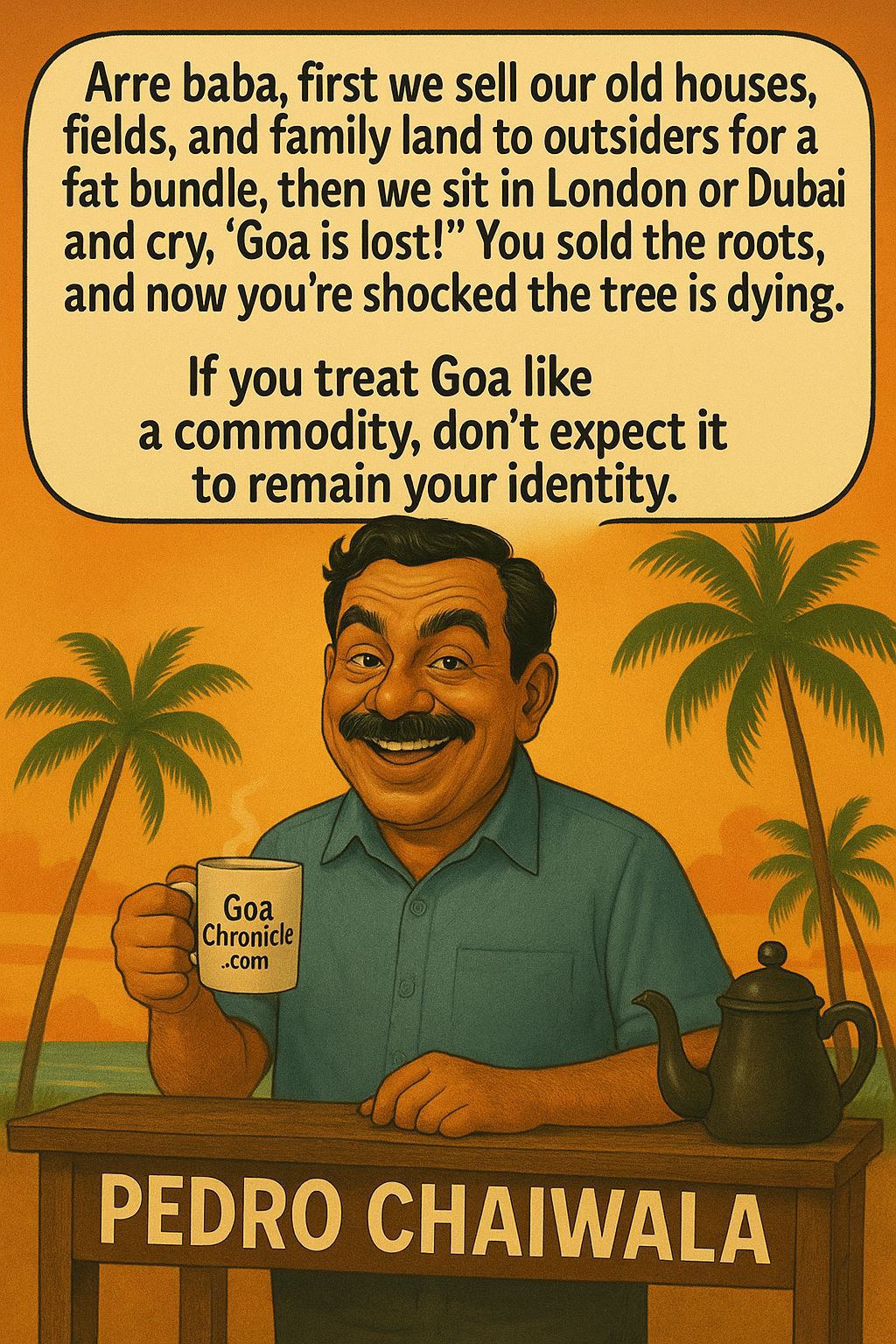
On Liberation Day, slogans are easy. Introspection is hard. True tribute lies not in ceremonies but in course correction. In reclaiming governance from corruption. In reclaiming culture from commodification. In reclaiming Gomantak from those who see it only as real estate or nightlife.
Our ancestors freed Goa from Portugal. It is now our duty to free Goa from moral colonisation.
Let December 19 remind us that freedom is fragile. That identity, once lost, is difficult to recover. And that Gomantak must never be traded for a caricature of Thailand.
We owe our ancestors more than remembrance. We owe them resolve.