

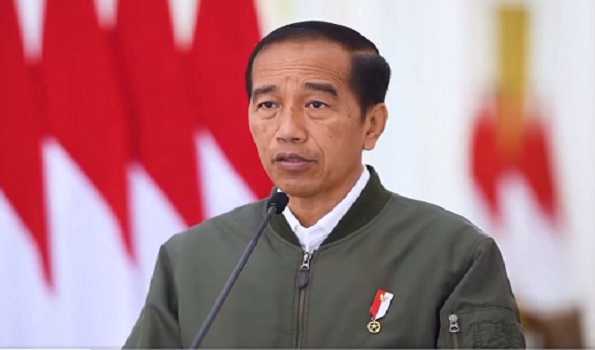

Jakarta: Indonesian President Joko Widodo on Sunday ordered police investigation into a sporting stadium stampede that killed at least 129 people and injured about 180 others after a football match.
“I also ordered the police to fully evaluate the security procedures for football matches,” the president told a press conference.
He also instructed the Football Association of Indonesia (PSSI) to temporarily halt all football matches in the Southeast Asian country until the related investigation is complete.
Two policemen were among those who were killed in the incident. The tragedy, one of the world’s deadliest sporting stadium disasters, occurred on Saturday night at the Kanjuruhan Stadium in Malang of Indonesia’s East Java province, right after Arema Malang club lost to Persebaya Surabaya in an Indonesian league football match.
Local media reported that supporters of the losing home team climbed over the fence and entered the football pitch, resulting in clashes with the police and a stampede.

Reports said the riot police fired tear gas at people, which caused panic among crowds. People rushed to leave the stadium, leading to a stampede at an exit gate.
“Around 34 people died inside the stadium and the rest died in hospital,” provincial police chief Nico Afinta told a press conference.
Meanwhile, Indonesia’s Coordinating Minister for Political, Legal and Security Affairs, Mahfud MD, said on his official social media account that there were no clashes between supporters of the rival teams in the match, because supporters of Persebaya, the winning team, had not been allowed to watch the match at the stadium.
“Victims mostly died of stampede, suffocation, squeezing and trampling,” he wrote, adding that 42,000 tickets had been issued for the stadium that has the capacity to hold only 38,000 people.