
Key Takeaways
- Narendra Modi has been in office for over 12 years, but critics’ warnings of authoritarianism remain unfulfilled.
- The hallmark of democracy is not whether leaders are popular or unpopular, but whether citizens retain the power to remove them.
- India’s opposition continues to occupy Parliament, govern multiple states, and dominate political conversations across large sections of the media ecosystem.
Over the past decade, India’s political landscape has been shaped by a persistent prediction that never materialized.
When Narendra Modi became Prime Minister in May 2014, his critics warned that India stood at the edge of authoritarianism. Editorials, television debates, academic conferences and political speeches repeatedly painted a picture of a leader who would centralise power, crush institutions, silence dissent and ultimately transform the world’s largest democracy into a dictatorship.
Twelve years later, after 4,399 days in office, the question deserves to be asked honestly: Where is the dictator that India was repeatedly warned about?
The answer is simple.
He never arrived.
This is not an argument that Narendra Modi is beyond criticism. No elected leader is. Every government makes mistakes, every administration faces legitimate scrutiny and every Prime Minister must remain accountable to the people.
But accountability requires facts. Democracy requires evidence. And history demands honesty.
The reality of Modi’s tenure stands in stark contrast to the image constructed by many of his opponents.
A dictator typically doesn’t put himself to the test of the people’s verdict, but Narendra Modi has done just that.
Narendra Modi has done precisely that.
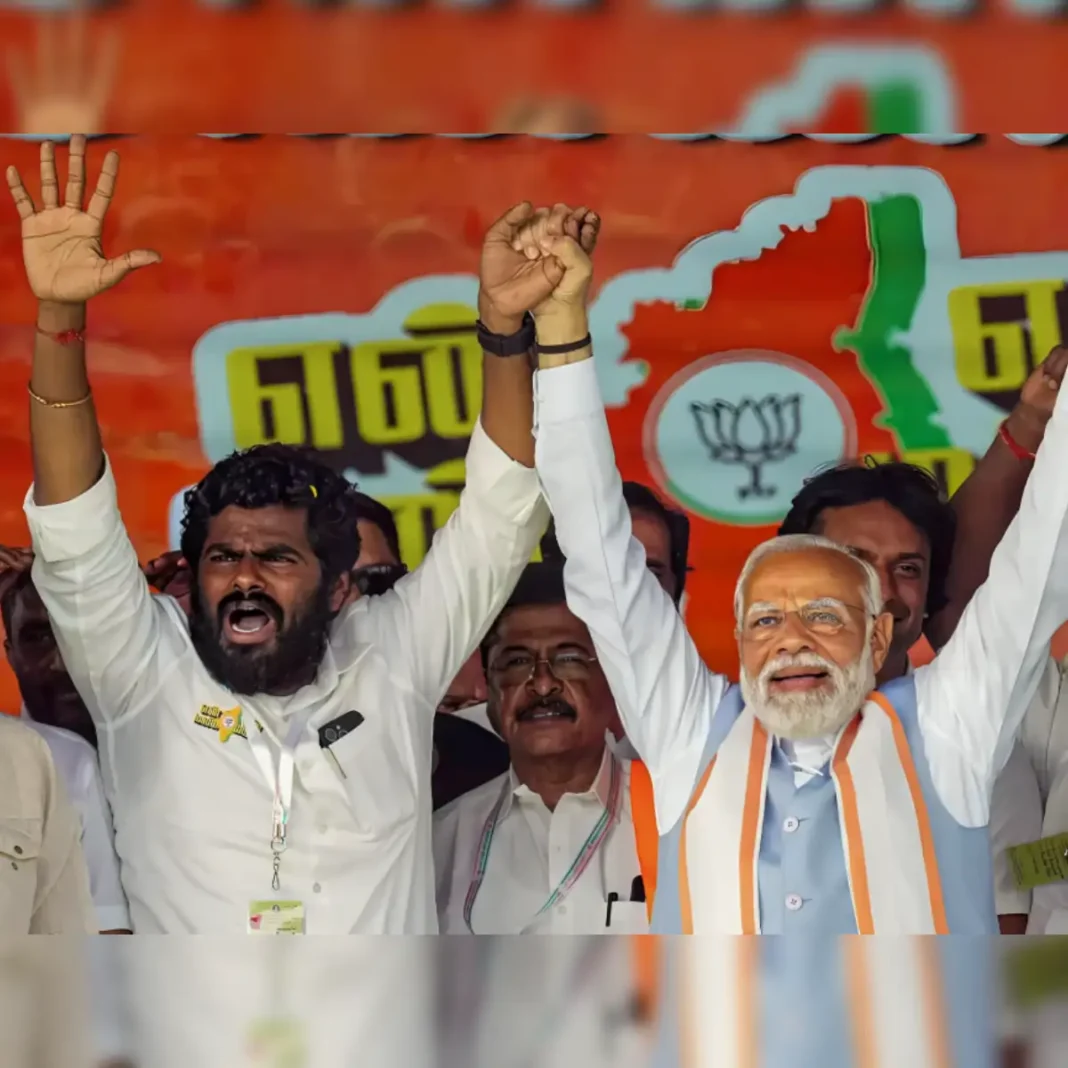
He has contested elections, faced voters and won mandates through the ballot box. In 2014, he secured a historic majority. In 2019, he returned with an even larger mandate. In 2024, despite a vigorous opposition campaign and predictions of political decline, he returned once again as Prime Minister.
The hallmark of democracy is not whether leaders are popular or unpopular. It is whether citizens retain the power to remove them.
India’s citizens continue to possess that power.
They exercise it regularly.
They have voted against the BJP in several states. They have elected opposition governments across different parts of the country. Regional parties continue to flourish. Opposition leaders continue to campaign freely.
This is not how dictatorships function.
A dictator fears elections. Modi embraces them.
A dictator suppresses opposition. India’s opposition occupies Parliament, governs multiple states and dominates political conversations across large sections of the media ecosystem.
A dictator eliminates criticism. In India, criticism of Modi has become an industry in itself.
Every day, newspapers publish critiques. Television channels host debates attacking government policies. Social media platforms overflow with commentary against the Prime Minister. Activists organise campaigns. Political opponents hold rallies. Journalists publish investigative reports.
The fact that some of Modi’s fiercest critics continue to operate freely is perhaps the strongest evidence against the claim that India has become authoritarian.
Consider another reality.
During Modi’s tenure, India has witnessed one of the most dramatic expansions of digital expression in human history.
More than 900 million Indians now have internet access. Hundreds of millions actively participate on social media platforms. Citizens routinely criticise ministers, governments and political parties online.
In truly authoritarian systems, such freedoms are tightly controlled.
In India, they flourish.
What has perhaps unsettled Modi’s critics is not authoritarianism but political dominance.
There is a difference.
A leader repeatedly winning elections is not evidence of dictatorship.
It is evidence of electoral success.
The confusion between popularity and authoritarianism has often distorted political analysis in India.
For decades, many believed that national politics would remain permanently fragmented. Coalition governments became the norm. Prime Ministers were expected to be compromise candidates balancing competing interests.
Modi changed that equation.
He built a national political movement capable of winning broad mandates across regions, castes and demographics.
His opponents interpreted this success as a threat. Many ordinary Indians interpreted it as leadership. The distinction matters.
Perhaps the greatest misunderstanding about Narendra Modi is that critics often evaluate him through the lens of ideology while supporters evaluate him through the lens of outcomes.

For millions of Indians, the Modi years are associated with visible transformation.
Over 80 crore citizens received free food support during difficult periods. More than 15 crore households gained tap water connections under the Jal Jeevan Mission. Crores of women received LPG connections through the Ujjwala Yojana. Rural electrification expanded dramatically. Digital payments revolutionised financial inclusion. Highway construction accelerated. Airports multiplied. Metro networks expanded across cities.
These achievements do not make a government perfect. But they explain why voters continue to support it.
Indian citizens are not voting for authoritarian rule; they’re voting for a leader who has delivered tangible benefits to the nation. They are voting for delivery.
And that distinction is often ignored by commentators who struggle to understand Modi’s enduring popularity.
Another accusation frequently levelled against Modi is that he has weakened institutions. Yet many of the same institutions continue to function independently and often make decisions contrary to the government’s preferences.
India’s judiciary remains active and influential. Election processes continue under constitutional frameworks. Federalism remains robust. State governments challenge the Centre. Courts hear petitions against government policies. Investigative agencies face scrutiny from media and legal forums.
The very existence of these checks demonstrates the resilience of India’s democratic architecture.
A dictatorship requires the destruction of institutional independence. India’s institutions remain very much alive.
Perhaps the most significant reason the dictatorship narrative failed is because it fundamentally misunderstood Narendra Modi himself.
Those who know his political journey understand that his defining characteristic is not authoritarianism.It is self-belief.
From a humble background to the office of Prime Minister, Modi’s rise is built upon an unwavering conviction that obstacles can be overcome.
His supporters admire him not because he demands obedience but because he projects confidence.
In a nation that spent decades being told what it could not achieve, Modi consistently speaks about what India can become.
Whether one agrees with his politics or not, this confidence has altered the national mood.
India today approaches global affairs with greater assertiveness. It pursues infrastructure projects at unprecedented scale. It speaks of becoming a developed nation by 2047. It sees itself as a leading global power rather than a developing country perpetually managing limitations.
This confidence irritates some observers. But confidence is not dictatorship.
National ambition is not authoritarianism. Leadership is not tyranny.
As Narendra Modi completes 4,399 days as Prime Minister, history offers an opportunity for reflection.
Predictions matter because they reveal assumptions.
For over a decade, many predicted the collapse of Indian democracy under Modi.
Instead, India continued conducting elections involving hundreds of millions of voters.
Many predicted institutional destruction. Instead, institutions continued functioning.
Many predicted the silencing of dissent. Instead, dissent remained loud, visible and relentless.
Many predicted dictatorship. Instead, democracy persisted.
Indeed, India’s democratic system proved stronger than both its critics and supporters often imagined.
The greatest lesson from the Modi era may therefore be larger than Narendra Modi himself.
It is that Indian democracy is remarkably resilient. It can accommodate strong leaders without abandoning constitutional principles. It can produce overwhelming mandates without sacrificing electoral legitimacy. It can withstand fierce political polarisation while preserving democratic competition.
Narendra Modi’s legacy will ultimately be judged by history.
Future generations will debate his policies, successes, failures and impact on the nation.
That debate is natural. It is healthy. It is democratic.
But one conclusion is already becoming difficult to ignore. After 4,399 days in office, the dictator that many warned India about never materialised.
What emerged instead was a democratically elected leader who repeatedly sought legitimacy from the people, repeatedly received it and repeatedly returned to office through the ballot box.
In the end, perhaps Modi’s greatest rebuttal to the dictatorship narrative is not what he said.
It is what India did. India voted. Again and again. And that is the one thing dictators fear most.