


New Delhi: The Parliamentary Standing Committee on Personnel, Public Grievances, Law, and Justice will hold a meeting on the Uniform Civil Code (UCC) here on Monday (July 3).
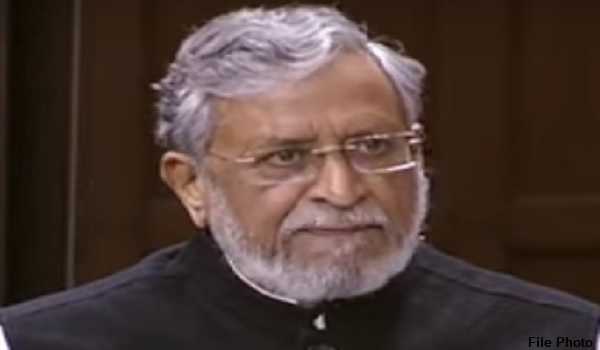
Committee head and BJP Rajya Sabha MP Sushil Modi said that the panel will seek the views of the stakeholders on the matter, and the meeting of the Committee is non-political as the panel has members from all political parties.
“Members are reminded that the next meeting of the Department-related Parliamentary Standing Committee on Personnel, Public Grievances, Law, and Justice will be held at 3 pm on Monday, July 3, 2023,” said the release on the committee’s agenda.
The UCC proposes to formulate and implement personal laws for citizens that apply to all citizens equally regardless of their religion, sex, gender, and sexual orientation.
Currently, the personal laws of various communities are governed by their religious scriptures.
On the 14th of last month, the Law Commission of India solicited the views and ideas of the public and recognised religious organisations to examine the UCC. The public can send their views on the matter till the 14th of this month.

Meanwhile, Union Minister Piyush Goyal has expressed confidence that many parties will support the BJP on the Uniform Civil Code. Talking to a news agency, he said, “The Supreme Court had talked about bringing UCC into different judgements.”
He alleged that before 2014, Congress only gave priority to appeasement politics and kept society divided.
The Uniform Civil Code comes under Article 44 of the Indian Constitution, which lays down that the state shall endeavour to secure a UCC for the citizens throughout the territory of India.
The objective of Article 44 of the Directive Principles in the Constitution is to address discrimination against vulnerable groups and harmonise diverse cultural groups across the country.
The Code calls for the formulation of one law for India, which would be applicable to all religious communities in matters such as marriage, divorce, inheritance, and adoption. Currently, the personal laws of various communities are governed by their religious scriptures.