



Key Takeaways
- India aims to become a developed nation by 2047, with a per capita income of USD 5330.
- The government is committed to reducing the fiscal deficit and maintaining economic growth.
- India’s economic growth will lead to a significant rise in living standards for the common man.
New Delhi: Vikshit Bharat (Developed India) will bring prosperity not just to Indians but also to the rest of the world by becoming central to a vibrant exchange of ideas, technology, and culture, Union Finance Minister Nirmala Sitharaman said here on Friday.
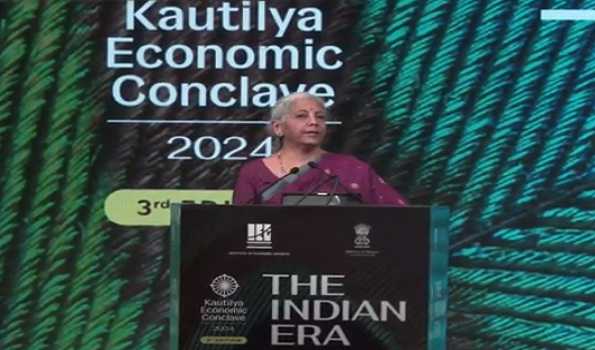
In her address at the 3rd edition of Kautilya Economic Conclave, the Minister said that by 2047, as India crosses the 100-year mark of independence, the new Indian era will have core characteristics similar to developed countries.
“For a thousand years, India has created a cultural sphere of philosophy, polity, science, and art, which spread across borders not through conquest but through its cultural magnificence. During this period, the rest of the world benefitted from India’s soft power,” Sitharaman said.
Sitharaman highlighted the milestones achieved by the Indian economy and said that India’s creditable economic performance in the recent decade was underscored by its leapfrog from the 10th to the 5th largest economy in a matter of 5 years, sustained high growth rates and maintained inflation well within the comfortable range.
“While it took us 75 years to reach a per capita income of USD 2730, as per IMF projections, it will take only five years to add another USD 2000. The upcoming decades will see the steepest rise in living standards for the common man, truly making it a period-defining era for an Indian to live in,” she said.

Talking about the advent of new technologies and its possible impact on employment, the Minister said that it may leave a more lasting impact on labour, including workers at all levels, than previous industrial revolutions did.
“The resulting economic and social impacts may be more profound than the world has experienced. While this is a global phenomenon, it is more acute for India, given its vast young population and the need to create livelihoods for millions.”
The minister reiterated the government’s commitment to reducing the fiscal deficit.
“Aided by buoyant revenue generation, restrained revenue expenditure growth and healthy economic activity, the fiscal deficit is estimated to decline further from 5.6% of GDP in FY24 (provisional actuals) to 4.9% in FY25. The commitment to fiscal discipline will not only help keep bond yields in check but will translate to lower economy-wide borrowing costs,” she said.