


Key Takeaways
- The NVS-02 spacecraft missed its intended orbit due to a technical issue.
- The primary reason for the NVS-02 spacecraft missing its orbit is the drive signal not reaching the pyro valve of the oxidizer line of the engine meant for orbit raising.
- The Apex Committee has provided a set of recommendations aimed at enhancing the redundancy and reliability of pyro system operations for future missions.
Chennai: Citing the on-orbit observations and recommendations of the Apex Committee, the Indian Space Research Organisation (ISRO) has said that drive signal not reaching the pyro valve of the oxidizer line of the enginer meant for orbit raising resulted in NVS-02 satellite missing the intended orbit.
The disengagement of atleast one contacts (in each of the main and redundant paths) of the connector led to the satellite missing the intended Orbit.
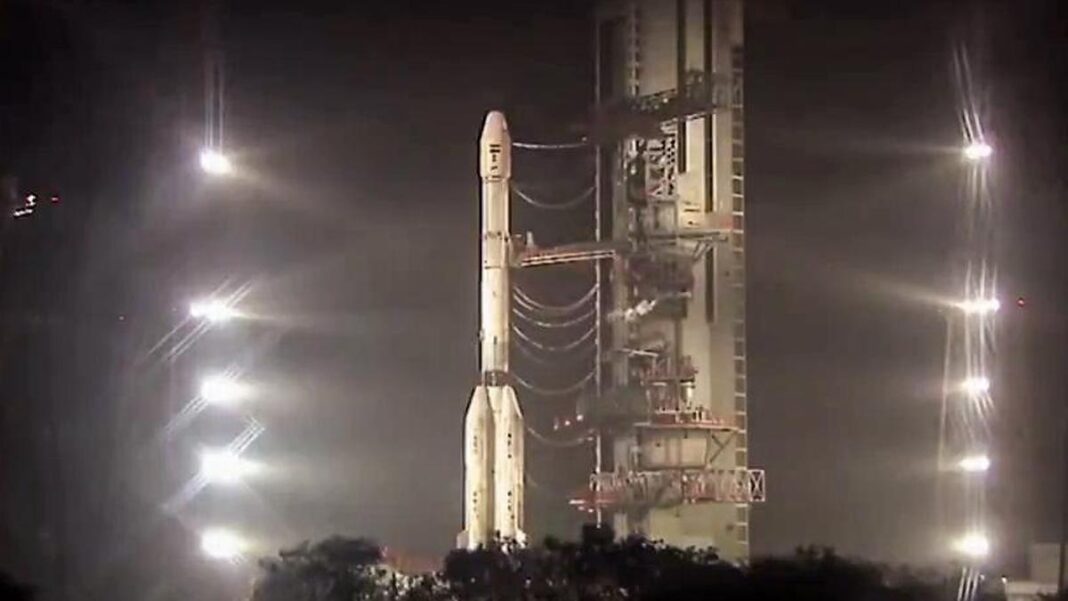
On January 29, 2025, the GSLV-F15 rocket launched the NVS-02 spacecraft from the Sriharikota spaceport. After a successful ignition and separation of three stages, the spacecraft was injected into the Elliptical Transfer Orbit, but unfortunately, it could not be placed in the intended orbit.
The Apex Committee, constituted by the ISRO, has concluded that the prime reason for the NVS-02 missing the intended orbit was that the signal meant to activate the pyro valve in the engine’s oxidizerline not reached it. This valve is very crucial for firing the engine to raise the Satellite to the intended orbit.
The Space Agency on Thursday said NVS-02, the second spacecraft in the NVS (NavIC–series Navigation with Indian Constellation), was injected successfully into the elliptical transfer orbit of 170 x 37785 km with an inclination of 20.8 deg on January 29, 2025 at 00:53 UT.
The Spacecraft was separated from the Launch vehicle (GSLVF15) at 01:12:08 UT. On separation of the satellite from the launch vehicle, a series of autonomous activities on the satellite were carried out including the solar panel deployment and stabilizing the orientation for power generation.

However, the orbit raising operations from the elliptical to circular orbit could not be carried out, folllowing which an Apex Committee was constituted to review the observations and recommend further course of actions.
Based on available Telemetry data, detailed simulation studies were further carried out and the Apex Committee, after thorough analysis of the simulation data, concluded that the prime reason for the observation was found to be the drive signal not reaching the pyro valve of the oxidizer line of the engine meant for orbit raising.
The committee concluded that the most likely cause for the observation is the disengagement of atleast one contacts (in each of the main and redundant paths) of the connector.
The committee has provided a set of recommendations aimed at enhancing the redundancy and reliability of pyro system operations for future missions.
In line with these recommendations, all the corrective actions were successfully implemented in CMS-03 spacecraft launched on November 2, 2025 by LVM-3 M5, and the pyro systems performed satisfactorily placing the satellite in the intended orbit.
Further, these set of recommendations will be followed for all future missions, as applicable, ISRO said.