


Key Takeaways
- The 45‑day construction timeline proves 3D printing can accelerate public projects dramatically.
- Larsen & Toubro used 3D concrete technology to create a 1,021‑sq‑ft post office without traditional formwork.
- The project showcases cost and material savings, supporting sustainable building practices.
Bengaluru: Larsen and Toubro Limited has built India’s first 3D-printed Post Office in 45 days as compared to about 6 to 8 months time taken by the conventional method.
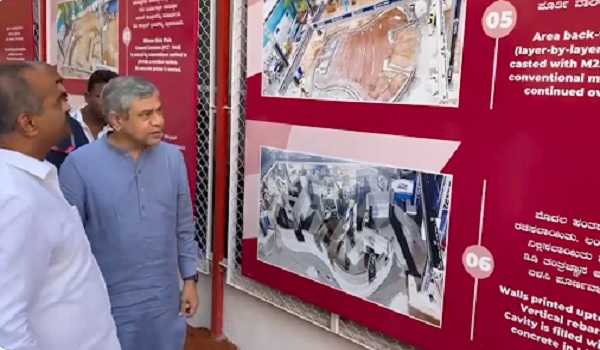
The building was inaugurated by IT and Railways Minister Ashwini Vaishnaw at Bengaluru GPO building here on Friday. IIT Madras gave technology guidance to DoPs in the project.
The built-up area of the post office is 1021 square feet.
The construction of the building was carried out through 3D concrete technology which is a fully automated building construction technology wherein a robotic printer deposits the concrete layer by layer as per the approved design and special grade concrete.
The special grade concrete hardens quickly and is used to ensure bonding between the layers for the purpose of printing the structure.

Cost and time savings make 3D concrete printing technology a viable alternative to conventional building practices.
The process requires a delicate balance of concrete properties, including flowability and quick hardening for load‑bearing capacity. It also needs green concrete status for inter‑layer bonding, and sufficient strength to ensure successful printing.
L&T Construction has executed 3D printing technology for projects such as affordable housing up to G+3 floors, villas, military barracks, and single-floor schools. It is looking to expand its portfolio of 3D printed structures in various sectors.
Advantages of 3D Concrete Printing: Automation: Fully automated construction ensures excellent build quality and safe work environment. Design Freedom: Without a formwork system, innovative and non-geometric building shapes can be constructed to enhance aesthetics & convenience and optimize overall cost. Sustainable Construction: Elimination of timber and aluminum formwork; use of supplementary materials to optimize CO2 emission; less material wastages; less electrical energy consumption.