
Key Takeaways
- India must strengthen its domestic manufacture and design of components for sensors and MEMS to tap a burgeoning global market.
- Experts stress the need for India to be self-sufficient in electronics manufacturing.
- Sensor technology has the potential to make a meaningful difference in the daily lives of the common man in India.
Kochi: India must strengthen its domestic manufacture and design of components for sensors and MEMS (micro electromechanical systems) to tap a burgeoning global market, according to experts, even as authorities assured that lack of funding will not hinder research in key areas of the domain.
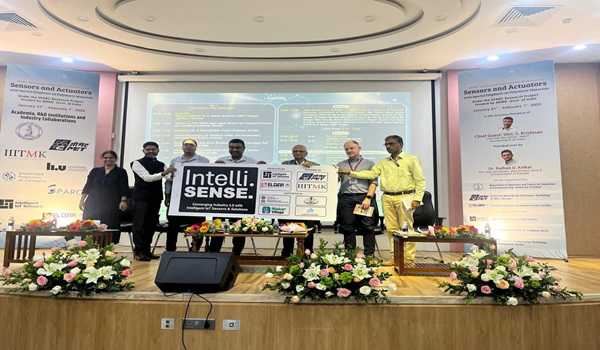
As a big market of the world, India needs to be part of the large manufacturing area of electronics, speakers said at an international workshop on ‘Sensors and Actuators’ held at the Infopark in the city.
The two-day event was jointly organised by the Department of Chemistry of the University of Calicut, Centre for Materials for Electronics Technology (C-MET, Thrissur), and Electronic Industries Association of India (Elcina) in association with Centre of Excellence (CoE) in Intelligent IoT Sensors and India Innovation Centre for Graphene.
S Krishnan, Secretary, Union Ministry of Electronics & Information Technology (MeitY), highlighted the need for a focus on value chain and manufacturing components within the country. Krishnan also unveiled an information booklet on sensors prepared by the Centre of Excellence (CoE) in Intelligent Internet of Things (IIoT) Sensors of C-MET.
Prof. Edwin Jager, Head of Sensors and Actuators Division, LIU of Linköping University, Sweden, said India had a great potential to generate a “tremendous talent pool” in the sector. He highlighted the importance of fruitful collaborations among Indian and Swedish institutions to bring out keyoutcome.

Elcina former President N. Ramchandran stressed the need for the country to be self-sufficient by bolstering the local design and manufacturing. Highlighting the importance of local design and production, he said India has a huge potential to contribute to the USD 300-billion global market of sensors.
Sunita Verma, Coordinator (R&D) of the Ministry of Electronics and IT Department, assured the central government’s financial assistance for research in the manufacture of sensors and semiconductors, which has been the focus in the manufacturing of electronic components during the last five years.
“Not only should we develop sensors, we must also develop electronic devices that use them so as to take the mission a step further. Sensors can make a meaningful difference in the daily lives of the common man, and not just in electronics,” Verma pointed out. “We can effectively utilise the potential of sensor technology in areas such as agriculture, air pollution and soil-testing.”
Experts from various scientific disciplines related to the domains of sensors and actuators made presentations. A panel discussion was also held on the ‘Future of Sensors and Actuators’.
The inaugural session was followed by a panel discussion on ‘Strategies for Manufacturing of Indigenous Sensors and Associated Components & Systems’.