



Key Takeaways
- Kashmir saffron farmers face a significant decline in production due to dry weather and inadequate irrigation facilities.
- The demand for Kashmir saffron is high, with major companies looking to purchase in bulk.
- The GI tag of Kashmir saffron has triggered a surge in demand, but the reduced yield poses a challenge for farmers.
Srinagar: In the face of high demand for saffron, this year’s production has seen a significant drop due to persistent dry weather and inadequate irrigation facilities, resulting in a 25-30 percent decline.
Director Agriculture Chowdhary Mohammad Iqbal said the possible rainfall as predicted by the weatherman during November 10 and 11, may increase the production as the plucking of saffron flowers continues till November 15.
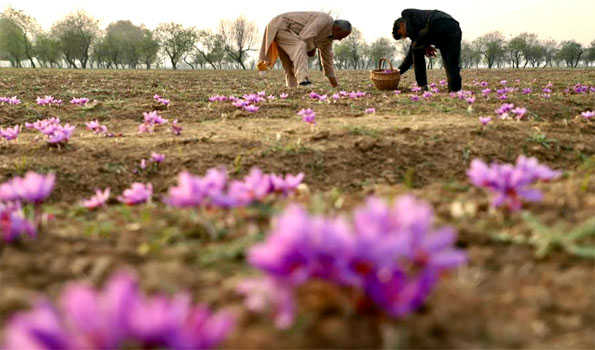
In South Kashmir’s Pulwama district, farmers and their families work tirelessly to harvest saffron in Pampore, a region known for its saffron-rich fields. Despite the challenges posed by the reduced yield, the demand for Kashmir saffron remains high, with both domestic and international buyers clamoring for the prized spice.
“There’s tremendous demand for Kashmir saffron from buyers across the country and abroad,” Chairman of the Saffron Association of Kashmir Abdul Majid Wani told UNI, highlighting interest from major companies like Karnataka-based Jayanti Herbs and Spices.
“This company, which previously sourced saffron from Iran, is now looking to purchase in bulk from us after seeing the quality and GI tag of Kashmir saffron,” he said, adding that a deal with the company is likely to be finalized soon.
The GI (Geographical Indication) tag, which authenticates the purity and origin of Kashmir saffron, has triggered the demand over the past three months. Most of the stock at the Kashmir Saffron Park in Pampore has already been booked by companies and individual buyers at competitive prices.

“So many companies have booked their slots for this year’s crop, with some seeking the entire production,” Wani noted. Approximately 30-40 major buyers, both Indian and international, are currently registered with the Kashmir Saffron Park, collectively demanding substantial quantities.
Given existing bookings, Wani estimated that around 50 to 100 kilograms of saffron could be distributed to these buyers this season. The GI tag strategy from last year, which involved selling small quantities across the country to promote Kashmir’s Saffron proved successful in heightening awareness and appreciation of the product’s quality.
Despite this season’s lower yields, Wani expects total production to approach four tonnes. For 2024, prices at Kashmir Saffron Park have been set at Rs 185 per gram for the ‘Lacha’ variety and Rs 255 per gram for the premium ‘Mogra’ variety.
Looking forward, Wani expressed hope that the new government will prioritize measures to enhance irrigation facilities for saffron fields.
“We’ve raised our concerns with the local MLA, and we hope for initiatives that will support our farmers and help stabilize production in the future,” he said