
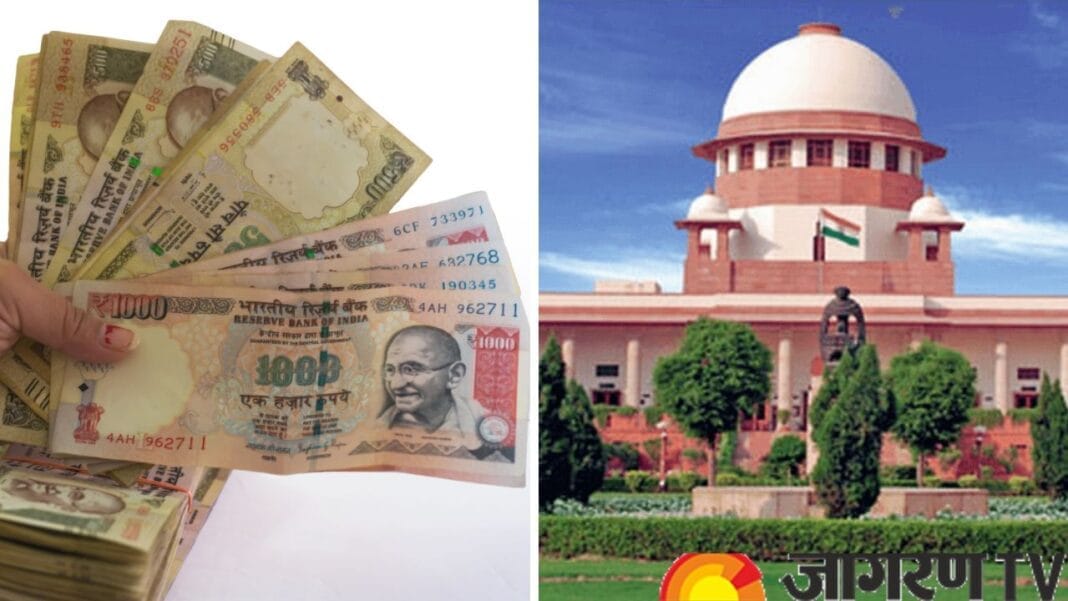
Supreme Court backs demonetization

The Supreme Court has said that the union government’s decision to impose a ban on the old 500- and 1000-rupees currency notes was legal. A 5-judge constitutional bench of the Supreme Court, in its 4:1 verdict, said that the government had followed the legal procedure and hence, the decision was legitimate. The aim of demonetization was to curb crimes like hoarding of black money and terror funding. The bench added that now, it does not matter whether the aim was achieved or not, because the court can look into the legal angle of the decision, but not into the economic effect of the same.

The verdict was decided upon on 7th December, after the hearing of 58 different petitions filed against 2016’s demonetization. The supreme court bench comprised Justice S. Abdul Nazeer, Justice BR Gawai, Justice AS Bopanna, Justice V Ramasubramaniam, and Justice BV Nagratna. Justice BV Nagratna’s verdict was the different one. He labelled demonetization to be illegal and stated that the RBI worked according to the will of the government, and neither did it suggest demonetization, nor requested it, and still, demonetization took place.

Reacting to the court’s verdict, former Finance Minister of India, P. Chidambaram of the Congress, said that it has been made clear from the verdict that demonetization affected the country’s economy adversely, on top of which the people suffered as well.


Hot this week

Could Oil Turn Somaliland into a Prosperous African Nation?

Key TakeawaysSomaliland's oil reserves hold the key to the...

35 pieces of Shraddha’s body

Love is a powerful emotion. Love inspires you to...

The ‘Thai’ Touch in India

Thai Massage Parlours in the most populous cities across...

‘Justice for Bhavyasri’ trends on social media, seeks fairness for 17-year-old

The #JusticeForBhavyasri campaign is gaining strong ground all across...

The world is raving about Saudi Arabia’s rave party

I always thought that rave parties were the prerogative...

The Venezuela Oil Reset: How Washington Is Rewriting the Energy Map in Its Own Backyard

The emerging U.S.–Venezuela oil arrangement is not simply another...

Why India Needs Indigenous Datalinks for Its Missiles and Defence Systems

Key TakeawaysThe Indian defence modernisation budget allocates massive funds...

The World Is Moving From Ownership to Access

Key TakeawaysThe shift from ownership to access is redefining...

The Hexagon of Alliances: How India and Israel Can Build a Counterweight to the Mecca Agreement

Key TakeawaysThe Hexagon of Alliances proposes a six‑nation network...

Haryana courts face 15.54 Lakh pending cases; Gurugram tops backlog with 3.07 Lakh

Key TakeawaysHaryana courts are burdened with 15.54 lakh pending...

Odisha’s proposed shipbuilding park in Kendrapara gets in-principle nod

Key TakeawaysThe in‑principle nod for the shipbuilding park was...

Venezuela 2026: From Regime Change to Resource Control

Key TakeawaysThe August Oil Agreement gives the US a...
spot_img

Related Articles

Popular Categories

spot_imgspot_img