

Key Takeaways
- The US-Iran deal is a complex issue that involves trust, power, diplomacy, and deterrence.
- Critics argue that the deal ignores the broader architecture of Iranian influence, including its ballistic missile program and support for regional proxies.
- Supporters argue that the deal imposes verifiable restrictions on uranium enrichment, reduces stockpiles of nuclear material, and creates inspection mechanisms designed to detect violations.
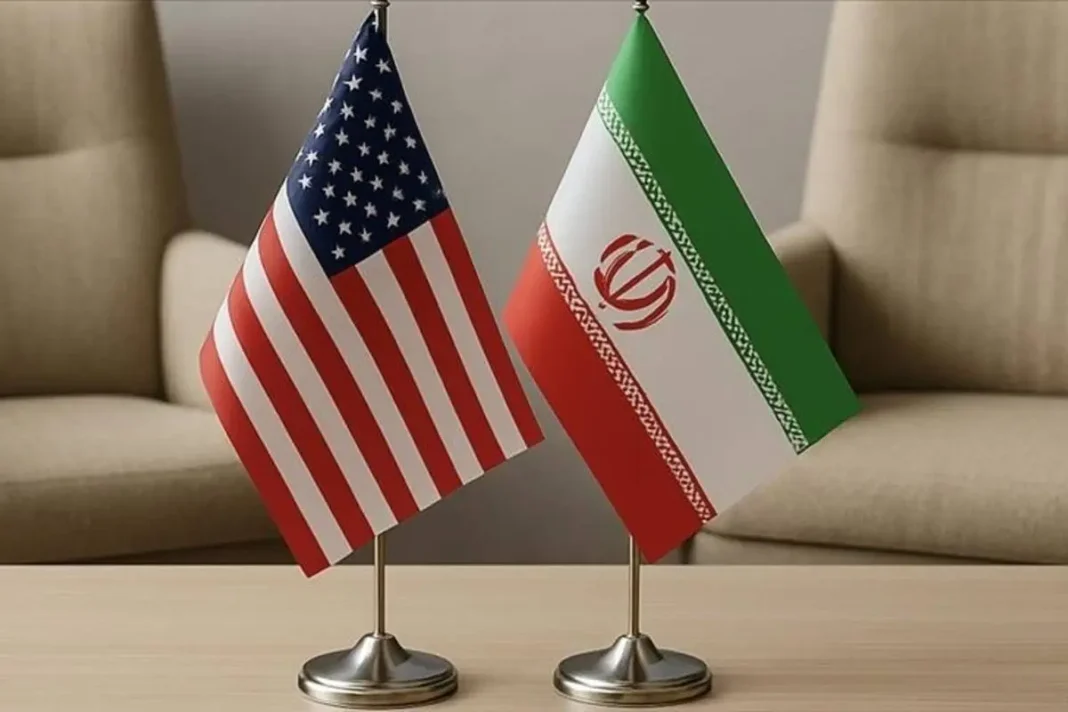
The US-Iran deal is not just about nuclear enrichment. It’s a complex debate about trust, power, diplomacy, and the future of the Middle East. To some, the agreement represents a dangerous concession to a regime that has consistently challenged Western interests and regional security. To others, it is a pragmatic attempt to prevent a catastrophic conflict in one of the world’s most volatile regions.
The truth, as is often the case in geopolitics, lies somewhere between idealism and realism.
The central question is not whether the deal is perfect. It is not. The real question is whether the alternatives are better.
Critics of the agreement argue that the deal suffers from a fundamental flaw: it addresses Iran’s nuclear ambitions while ignoring the broader architecture of Iranian influence. Tehran’s ballistic missile program remains largely outside the framework of such agreements. Its support for regional proxies, including groups that have significantly shaped conflicts across Lebanon, Syria, Iraq, and Yemen, remains a matter of deep concern for both Western powers and America’s regional allies.
For nations such as Israel and several Gulf states, this omission is not a minor technicality. It is a strategic blind spot.
Their argument is simple. A nation capable of developing advanced missile systems and maintaining a network of proxy forces across the Middle East poses challenges that extend far beyond uranium enrichment levels. Limiting one aspect of Iran’s capabilities while allowing others to expand may create an illusion of security rather than genuine security.
Another criticism concerns the temporary nature of many restrictions. Opponents argue that agreements with sunset clauses merely delay the problem rather than solve it. If restrictions eventually expire, they contend, Iran could emerge with stronger economic foundations, more advanced scientific expertise, and a clearer path toward nuclear capability.
From this perspective, the deal becomes not a solution but a postponement.
Then comes the issue of sanctions relief.
History demonstrates that economic sanctions are among the few non-military tools capable of influencing state behaviour. When sanctions are lifted, substantial financial resources flow back into the economy. Critics fear that these funds can strengthen state institutions, military infrastructure, and regional influence operations rather than improve the lives of ordinary citizens.
For many skeptics, therefore, the deal risks empowering the very behaviour it seeks to moderate.
Yet supporters of the agreement present an equally compelling case.
Diplomacy is rarely conducted with friends. It is conducted with adversaries.
Those who defend the agreement argue that international politics is not about achieving perfection but about managing risks. The deal imposes verifiable restrictions on uranium enrichment, reduces stockpiles of nuclear material, and creates inspection mechanisms designed to detect violations. In practical terms, it extends the time required for Iran to develop a nuclear weapon and provides the international community with visibility into activities that would otherwise occur behind closed doors.
That visibility matters.
Without inspections, intelligence assessments become dependent on assumptions, surveillance, and speculation. With inspections, governments gain access to verifiable information. In a region already plagued by mistrust, transparency becomes a strategic asset.
Supporters also argue that abandoning diplomacy creates only two alternatives: unchecked nuclear development or military confrontation.
Neither option is attractive.
The Middle East has already witnessed decades of war, instability, refugee crises, and economic disruption. Another major conflict involving Iran would have consequences extending far beyond the region. Global energy markets would be affected. Maritime trade routes could face disruption. International security alliances would be tested. The economic shockwaves would be felt from Asia to Europe and beyond.
A diplomatic framework, however imperfect, offers a mechanism for reducing these risks.

This is where the broader strategic lesson emerges.
Too often, policymakers frame international agreements as binary choices between victory and surrender. Real-world diplomacy rarely works that way. Successful agreements are usually imperfect compromises designed to prevent worse outcomes.
The challenge with the US-Iran deal is that both supporters and critics are partially correct.
Supporters are correct that constraints, inspections, and dialogue are preferable to an unchecked nuclear program and the possibility of war.
Critics are correct that nuclear issues cannot be separated indefinitely from missile development, proxy warfare, and regional influence.
The long-term success of any agreement depends on whether it serves as a foundation for broader engagement rather than a standalone achievement.
A nuclear agreement should not be viewed as the destination. It should be viewed as the first step in a much longer journey toward regional stability.
Unfortunately, international diplomacy often suffers from short-term thinking. Political leaders seek immediate victories, while geopolitical challenges require sustained engagement over decades. The Middle East’s security challenges cannot be solved through a single document signed in a conference room. They require continuous negotiations, confidence-building measures, economic integration, and regional security frameworks that include all major stakeholders.
The United States must recognise that military pressure alone cannot deliver lasting stability. Iran must recognise that regional influence cannot be sustained indefinitely through confrontation and proxy conflicts. Regional powers must acknowledge that collective security is more effective than perpetual rivalry.
The future of the Middle East will not be determined solely by centrifuges and uranium stockpiles. It will be determined by whether nations choose dialogue over escalation and cooperation over endless cycles of retaliation.
Therefore, asking whether the US-Iran deal is a ‘bad deal’ may be asking the wrong question.
The more important question is whether the deal creates enough space and time for diplomacy to succeed where conflict has repeatedly failed.
If it prevents nuclear escalation, reduces the likelihood of war, and opens channels for future negotiations, it possesses undeniable strategic value.
If, however, it merely delays deeper problems while allowing regional tensions to intensify unchecked, history may judge it harshly.
For now, the deal remains neither a triumph nor a disaster.
It is a calculated gamble.
And like all gambles in geopolitics, its success will ultimately depend not on the words written in the agreement, but on the political will of nations to honour its spirit and build upon its foundations.
The world does not need another war in the Middle East.
It needs courageous diplomacy, vigilant verification, and leaders mature enough to understand that peace is rarely achieved through perfect agreements – but often through imperfect ones that prevent catastrophe.