
Key Takeaways
- Films can improve comprehension, retention, and critical thinking in students.
- Films provide a multimodal approach to learning, engaging multiple senses and making learning more memorable and effective.
- Using films in education can help develop critical thinking, media literacy, and analytical skills in students.
Education has always evolved alongside communication technology. Human beings first learned through oral storytelling, then through written manuscripts, printed books, radio, television, computers, and now artificial intelligence. In the digital age, films are an underutilised educational tool that can improve learning outcomes.
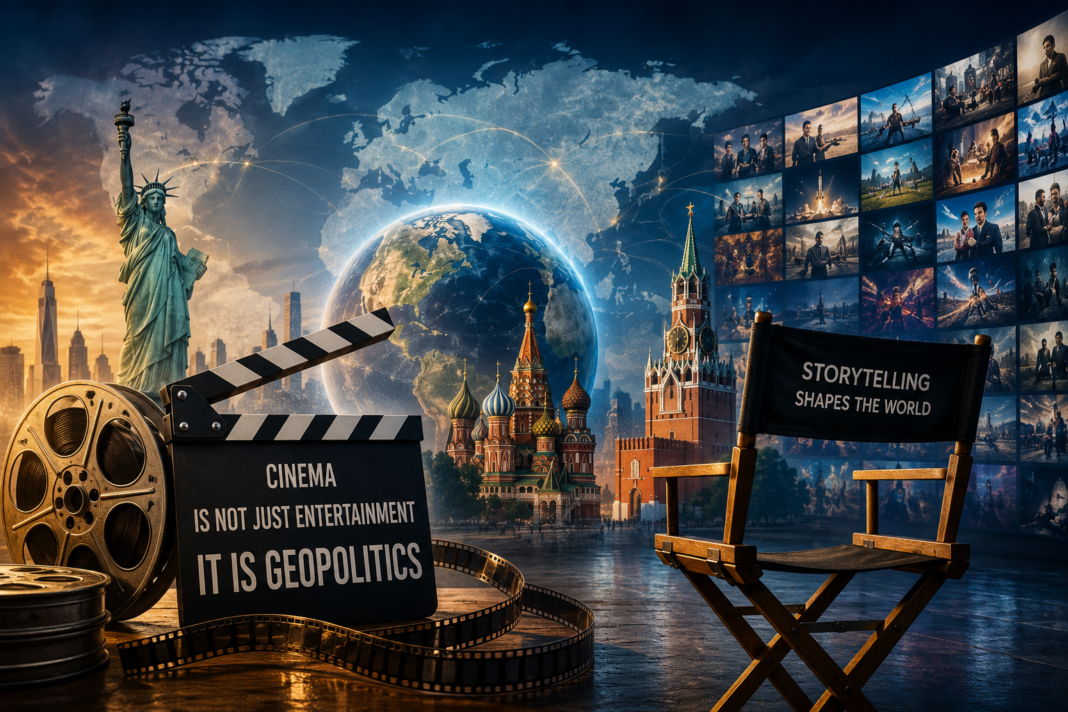
Many governments and educational institutions still classify films primarily as entertainment. This perception is outdated. In the twenty-first century, films must be recognised as a vital educational tool capable of improving comprehension, retention, emotional intelligence, cultural awareness, and critical thinking. As educational technology evolves, the integration of films into teaching is not merely desirable – it is essential.
Learning Through Multiple Senses
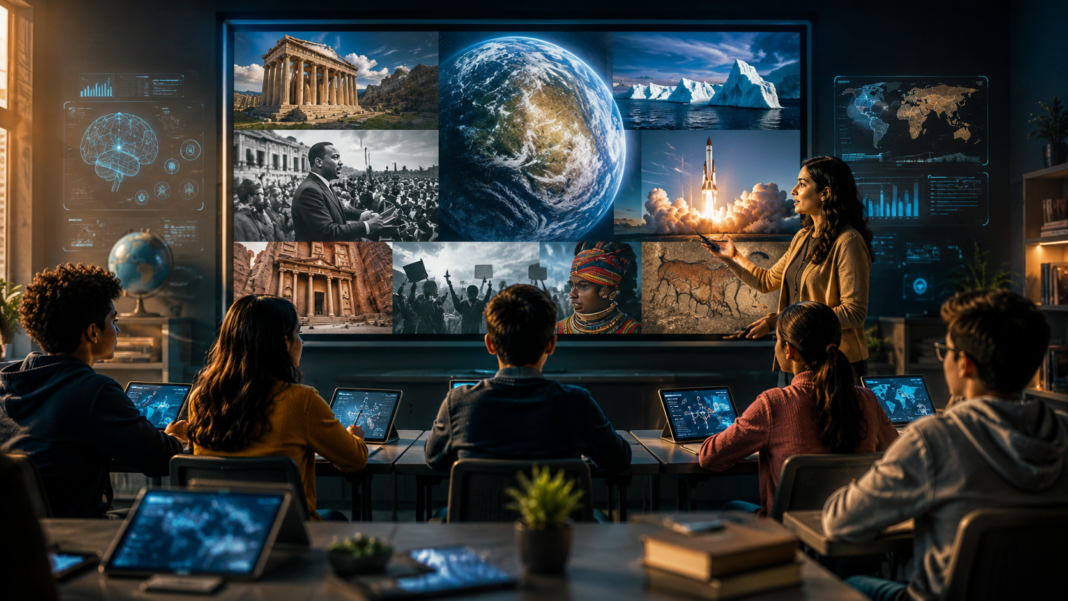
Research shows that multimodal learning is more effective than traditional classroom methods, engaging multiple senses to improve learning outcomes. Films combine visuals, sound, dialogue, music, movement, and storytelling into a single learning experience. This multimodal approach makes learning more engaging and memorable than text-only instruction.
Research on audio-visual learning has shown that students exposed to audio-visual teaching aids demonstrate improved understanding and academic performance compared to those relying solely on traditional classroom methods. Studies conducted in educational institutions have found positive correlations between the use of audio-visual content and improved learning outcomes.
A student reading about climate change may understand the concept intellectually. However, watching a documentary that visually depicts melting glaciers, rising sea levels, and affected communities creates a deeper and more lasting impact.
Better Retention of Information
One of the greatest challenges in education is retention. Students often memorise information for examinations but forget it shortly afterward. Films help address this challenge by presenting information in narrative form.
Stories are naturally remembered better than isolated facts. Neuroscientists have long established that the human brain is wired to process and retain stories more effectively than disconnected information. Films create emotional connections that reinforce memory.
For example, students may struggle to remember dates and events from history textbooks. However, a well-produced historical film can help them visualise the period, understand the social context, and remember key events through characters and narratives. The lesson becomes an experience rather than a memorisation exercise.
Meeting the Expectations of Digital Natives
Today’s students are digital natives. They grow up surrounded by smartphones, streaming platforms, social media, video content, and interactive media. Their learning habits differ significantly from previous generations.
The Organisation of Economic Co-Operation and Development (OECD’s) work on digital education highlights the importance of integrating modern digital technologies into educational systems to improve engagement and learning effectiveness. Educational strategies that ignore digital realities risk becoming increasingly disconnected from students’ learning preferences.
Students today consume hundreds of hours of video content annually. It is therefore logical that educational institutions should leverage the medium students already engage with rather than relying exclusively on centuries-old methods.
Films provide an educational bridge between traditional academic content and contemporary learning behaviour.
Developing Critical Thinking
Critics often argue that films simplify complex topics. The opposite can be true when films are used correctly.
A film should not replace teaching; it should complement it.
After viewing a film, students can analyse themes, evaluate perspectives, identify biases, discuss ethical dilemmas, and compare cinematic portrayals with historical facts. Such exercises promote critical thinking, media literacy, and analytical skills.
In an age where misinformation spreads rapidly across digital platforms, teaching students how to critically evaluate visual content is as important as teaching them to read and write.
Films provide an excellent platform for developing these essential twenty-first-century competencies.
Building Emotional Intelligence
Traditional education focuses heavily on cognitive development while often neglecting emotional development.

Films excel in teaching empathy because they allow audiences to experience situations through the eyes of others. Students can witness struggles, conflicts, cultural experiences, and moral choices that may be far removed from their own lives.
A film about refugees, poverty, discrimination, war, disability, or environmental destruction can create emotional understanding that textbooks alone may struggle to achieve.
Emotional intelligence is increasingly recognised as a critical life skill. Future leaders, professionals, and citizens must be able to understand perspectives different from their own. Films offer a powerful avenue for cultivating this ability.
Cinema as a Tool for Cultural Understanding
Cinema has a unique ability to transcend borders.
A student in India can learn about Russia through Russian films. A student in Brazil can understand Japanese culture through Japanese cinema. A student in Europe can gain insights into African societies through African storytelling.
This cultural exchange is particularly important in an increasingly interconnected world. Films expose learners to languages, traditions, values, and social realities beyond their immediate environment.
Such exposure reduces stereotypes, promotes tolerance, and strengthens global citizenship.
The educational value of cinema extends far beyond subject knowledge; it contributes to building more informed and empathetic societies.
Supporting Modern Educational Technology
Educational technology is increasingly moving toward video-based learning.
Online learning platforms, Massive Open Online Courses (MOOCs), virtual classrooms, and AI-powered learning systems rely heavily on video content. A comprehensive review of 257 studies on video-based learning found strong and growing interest in video as an effective educational medium, particularly when supported by good instructional design and interactive features.
The success of platforms such as YouTube Education, Coursera, and countless educational streaming services demonstrates the growing importance of visual learning.
Films represent a natural extension of this trend. They bring together storytelling, education, and technology in a format already proven to engage learners.
Beyond Entertainment
Governments often spend millions on awareness campaigns related to health, sanitation, environmental conservation, road safety, and social issues. Yet many of these campaigns rely on posters, brochures, and one-day events.
Films can communicate these messages far more effectively.
Imagine teaching environmental conservation through a powerful documentary rather than a chapter in a textbook. Imagine teaching civic responsibility through compelling narratives rather than rote memorisation. Imagine teaching public health through visual stories that demonstrate real-world consequences.
The educational potential is enormous.
The future of education will not be defined solely by artificial intelligence, digital platforms, or smart classrooms. It will be defined by how effectively these technologies communicate knowledge and inspire learning.
Films are among the most powerful communication tools ever created. They combine information, emotion, narrative, and technology into a single medium capable of transforming education. They engage multiple senses, improve retention, develop critical thinking, foster empathy, and prepare students for a visual and digital world.
As educational technology continues to evolve, the question is no longer whether films belong in education. The real question is why educational systems have taken so long to fully embrace them.
The classroom of the future should not see films as entertainment brought into education. It should recognise films as education itself.