

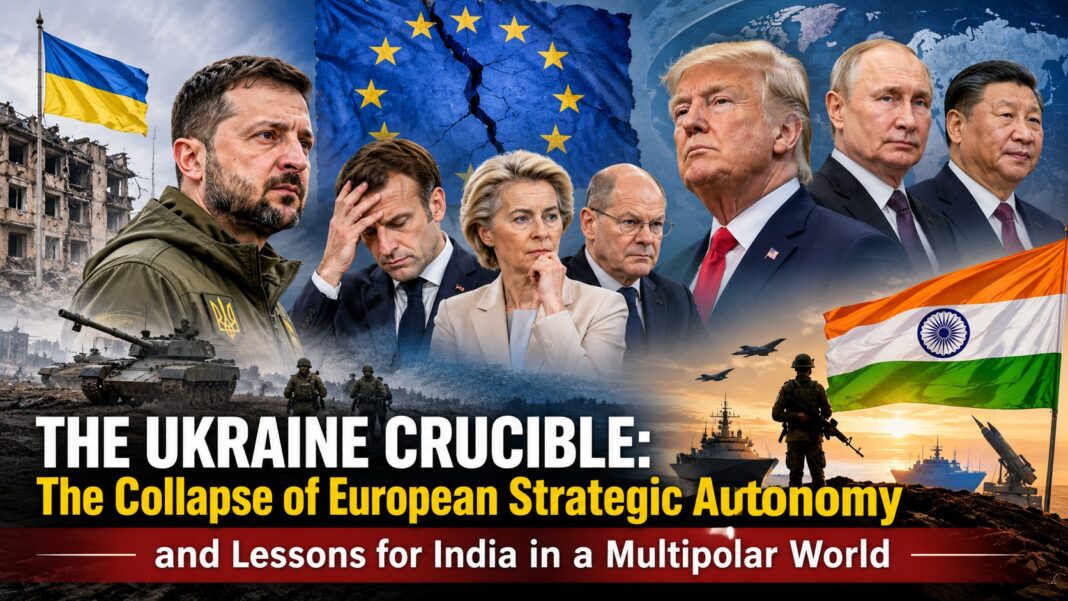

The Ukraine war has evolved into a test of military-industrial endurance, alliance credibility and strategic autonomy. Nearly five years into the conflict, Europe faces an uncomfortable reality: economic weight and political declarations have not translated into commensurate geopolitical influence.
Europe’s Strategic Autonomy: An Illusion Exposed
Europe’s dependence on American military power has withered its ability to act independently. Denied representation at the Abu Dhabi negotiations, the Dublin summit of November 12, 2026 exposed this weakness further. US envoys Steve Witkoff and Jared Kushner engaged Putin in Moscow and then briefed Zelenskyy in Dublin. European leaders failed to secure their representation in negotiations affecting their own security.
Leverage Determines the Terms of Peace
Russia’s battlefield endurance, manpower mobilisation and defence production have strengthened its negotiating position, despite substantial casualties and economic costs. The diplomatic debate has shifted from restoring Ukraine’s territorial integrity towards territorial concessions, security guarantees and a wider European security architecture. Moscow’s revival of its December 2021 (pre-invasion) security demands (now with indications of additional conditions) seeks to place NATO’s posture, rather than Russian withdrawal, at the centre of negotiations.
The Attrition Gamble: Europe’s Strategic Calculus
The argument that prolonging the war will exhaust Russia’s Soviet-era military stocks, while allowing Europe to expand defence production has merit. However, Europe’s fragmented policy making/implementation structures; procurement, industrial bottlenecks and dependence on American intelligence and advanced air defence undermine this calculation. Russia has demonstrated considerable replenishment capacity, while Ukraine continues to lose manpower and infrastructure. A stronger European defence industry may reinforce NATO, without necessarily delivering strategic autonomy. Neither Russia’s inevitable exhaustion nor Europe’s eventual industrial superiority can be assumed.
The Return of Great-Power Diplomacy
The confirmed Trump-Xi-Putin trilateral meeting on 19 November, on the sidelines of the APEC summit in Shenzhen, signals the return of leader-level great-power diplomacy. Although nuclear arms control and Iran are announced to be on the agenda, the meeting’s geopolitical implications extend beyond its formal subjects. This summit signals an international order increasingly shaped by transactional bargains, with Europe struggling to project an influential voice.
West Asia and the Indo-Pacific: Interconnected Crises
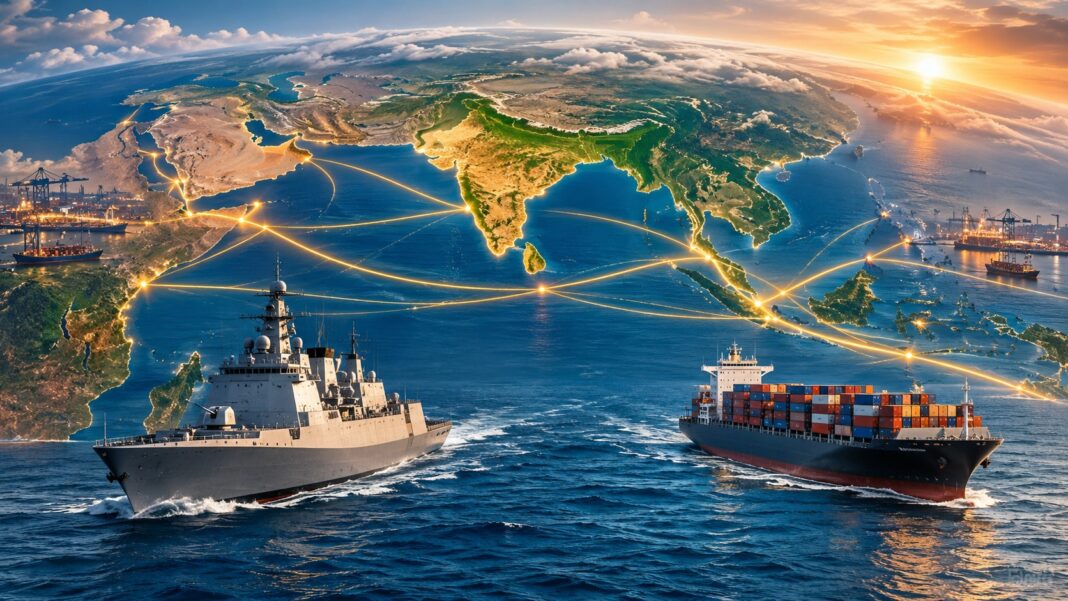
The US war on Iran and consequent instability in West Asia threaten maritime routes and global energy supplies. Simultaneously, China’s growing military pressure around Taiwan, including increased ADIZ activity, reinforces the prospect of concurrent crises. American military resources and diplomatic attention must accommodate all three theatres. Strategic overstretch has consequences.
Winter, Technology and Military Leadership
This winter Ukrainians will intensify their struggle over electricity generation, heating and transport infrastructure. Russian strikes threaten civilian resilience and consume scarce Ukrainian air-defence resources.

Ukraine’s operational difficulties imposed by SpaceX’s Starshield system offer a further warning. President Zelenskyy has again alleged that a 161 kmph terminal movement-speed restriction disrupts high-speed interceptor drones pursuing Russian jet-powered Shaheds. Dependence on foreign-controlled satellite systems creates an operational vulnerability, as peacetime access does not guarantee assured availability of their full capabilities during conflict. (India – Kargil – US GPS – constrained India).
Meanwhile, Ukrainian military leadership changes, dismissal of Defence Minister Mykhailo Fedorov, consequent replacement of Commander-in-Chief Oleksandr Syrskyi by Major General Mykhailo Drapatyi in July 2026, reveals a significant internal struggle over the direction and management of Ukraine’s war effort. Russian General Sergei Surovikin’s return to oversee operations in Ukraine and his reputation as General “Armageddon” underline Moscow’s experience in attritional warfare and current intent.
Türkiye: A Strategic Diplomatic Bridge
President Erdoğan has balanced military assistance to Ukraine with continued engagement with Russia, while brokering the Black Sea Grain Initiative. Türkiye’s NATO membership, EU accession aspirations and control of the Turkish Straits imply that it could remain an important intermediary in any settlement.
American Midterms: Constraints on Trump
The Democratic victories in both chambers of Congress in November 2026 will intensify scrutiny of Trump’s Ukraine policy. Although the President retains considerable foreign-policy authority, congressional control over funding, appropriations and oversight can constrain military assistance, sanctions decisions and executive flexibility. The likely outcome is greater political contestation, not necessarily a reversal of American policy.
Strategic Lessons for India
Ukraine offers India some strategic lessons:
- Defence self-reliance: Atmanirbharta must extend to aircraft engines, missiles, ammunition, satellites, drones, air defence and military communications. Partnerships cannot substitute for national capability.
- Industrial endurance: Prolonged warfare demands scalable production, adequate inventories and rapid replenishment, not merely sophisticated platforms.
- Technology sovereignty: Starshield illustrates the risks of dependence on foreign-controlled satellite networks, semiconductors, navigation and artificial intelligence. So, boost NAVIC (IRNSS) and semiconductor manufacture.
- Multi-alignment: Relations with diverse, often opposing stakeholders must continue, to preserve India’s freedom of strategic choice.
- Energy and economic security: Oil supplies, maritime routes, fertilisers, magnets, rare earths etc and resilient supply chains are integral to national security.
- Diplomacy backed by power: Credible deterrence and economic resilience give diplomatic positions substance.
- Concurrent contingencies: India must prepare for simultaneous challenges in the Himalayas, Indian Ocean, Taiwan Strait and West Asia, as also a variety of significant non-kinetic threats. The latter are more insidious.
The Strategic Bottom Line
Ukraine has exposed the limitations of Europe’s post-Cold War security model. Russia has gained negotiating leverage, Washington faces competing global commitments, and Beijing is expanding its diplomatic influence.
For India, the central proposition is clear: strategic autonomy is not a declaration of independence from great powers; it is the capacity to make independent choices and sustain them under pressure. In a multipolar world, enduring influence will belong to nations that convert economic strength, industrial capacity, military preparedness and diplomatic flexibility into strategic power.
**********************************
The author, an Indian Army veteran and a strategic analyst, is former Security Advisor, Ministry of Home Affairs, Government of India and former Advisor, Government of Seychelles. The views expressed are personal. He can be contacted at [email protected] , https://www.linkedin.com/in/brigsanjayagarwal/recent-activity/all/ and https://www.youtube.com/@Brig_Sanjay_Agarwal/videos )