



Key Takeaways
- Russia launched a Soyuz-2.1b rocket to deploy 55 satellites into orbit, including two ionosphere satellites to study Earth’s ionosphere.
- The Ionosphere-M satellites will operate at an altitude of 820 km and study structural changes, electromagnetic disturbances, atmospheric composition, and ozone distribution in the upper layers.
- The Soyuz-2.1b rocket carried a mix of scientific, educational, and commercial satellites, including 28 SITRO-AIS satellites and 16 student-built satellites from the Space-π science and education initiative.
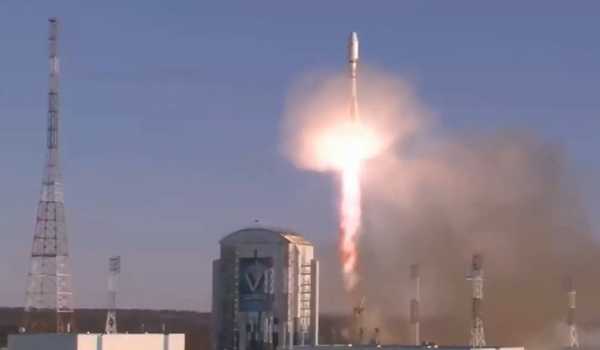
Russia launched a Soyuz-2.1b rocket from the Vostochny Cosmodrome in Russia’s Far East to deploy two heliophysics satellites and 53 smaller ones into orbit, as reported by Russia’s RIA Novosti news agency.
The primary payload, two “Ionosphere-M” satellites, are set to monitor Earth’s ionosphere to study structural changes, electromagnetic disturbances, atmospheric composition, and ozone distribution in the upper layers, as well as radiation conditions.

Each weighing 430 kg, the two satellites will operate at an altitude of 820 km, said the report. They are expected to reach the target orbit 56 minutes and 15 seconds after launch and be joined by the smaller satellites to expand scientific observation.
Of the 53 small satellites launched for scientific, educational and commercial use, 28 are SITRO-AIS satellites from Russian company Sputniks, designed for maritime identification. Also onboard were 16 student-built satellites from the Space-π science and education initiative, and the Kowsar and Hodhod satellites from private Iranian company Space Omid.